KARACHI: The government has decided to launch Pakistan’s first-ever National Diabetes Prevention and Control Program this month from Islamabad to curb the rising prevalence of the disease, while a mosque-based diabetes awareness and screening model will be introduced across 57 member states of the Organisation of Islamic Cooperation (OIC) starting with Pakistan in early 2027.
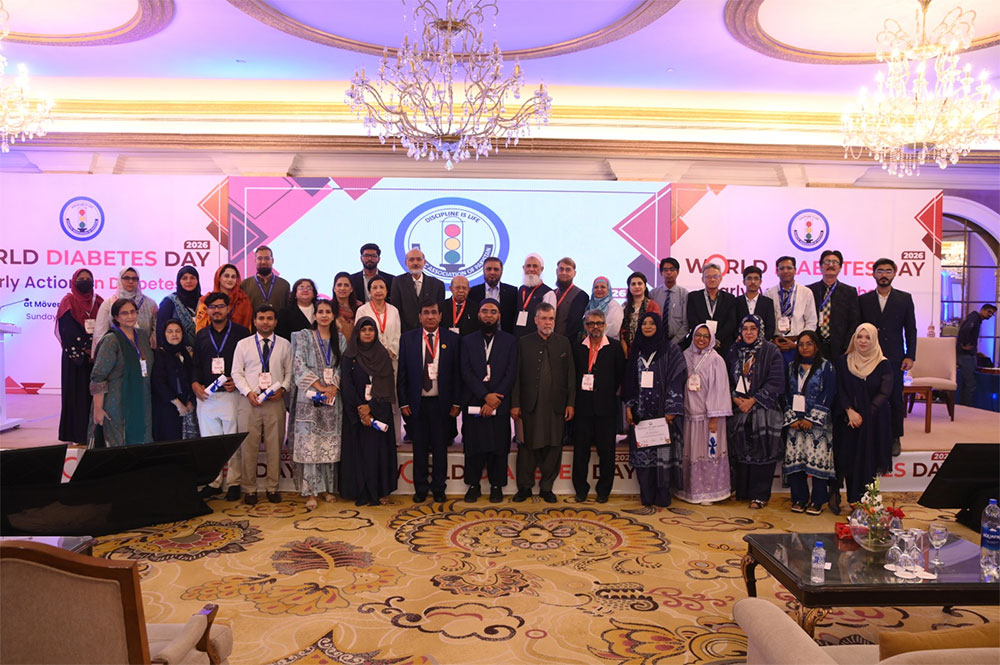
Leading diabetologists shared these developments during a one-day conference organized by the Diabetes Association of Pakistan (DAP) at a local hotel in Karachi to mark World Diabetes Day. Held under the theme "Early Action on Diabetes," the conference brought together prominent national and international experts and clinicians.
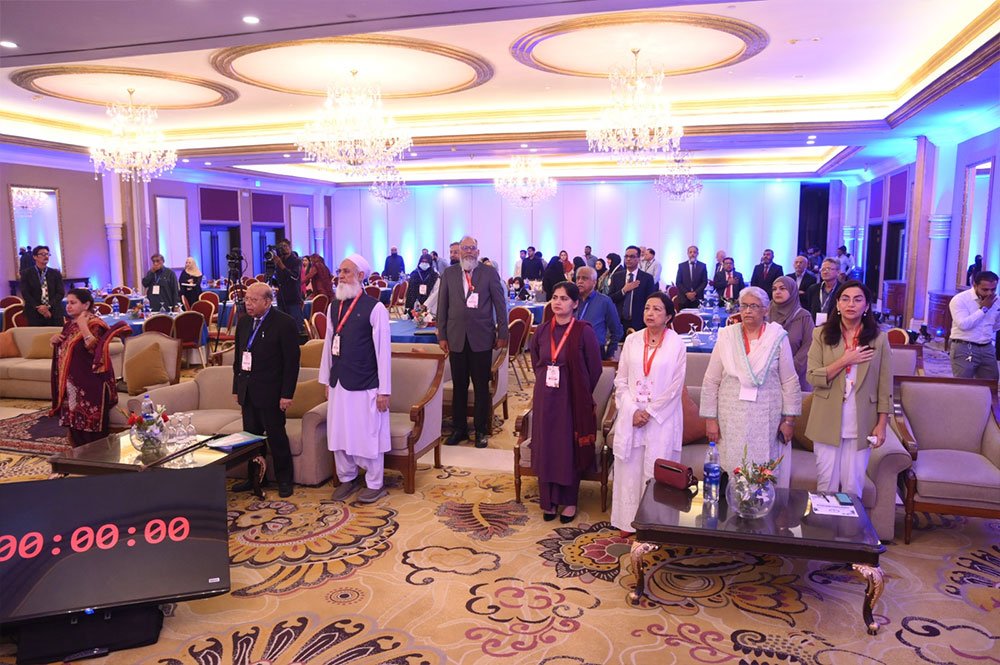
Speaking at the conference, DAP Secretary General Prof. Dr. Abdul Basit said that on the directives of the Prime Minister and in collaboration with the Ministry of Health, a formal national program has been designed for the first time in the country’s history. Spanning three to five years in various phases, the program aims to raise public awareness and enable citizens to conduct preliminary self-screening for diabetes risk using the RAPID Score, followed by the establishment of nationwide prevention, diagnosis, and treatment facilities. He added that details of the implementation committee would be announced within the next one to two weeks.

Prof. Basit further stated that Bangladesh’s successful mosque-based diabetes awareness and screening initiative is being expanded to 57 OIC member countries under the leadership of renowned diabetologist Prof. A.K. Azad Khan, with Pakistan serving as the starting point in early 2027. Under the Bangladeshi model, Imams and female family members were trained across 100 mosques to deliver a one-to-two-minute awareness message every Friday using sermons approved by the Ministry of Religious Affairs, Al-Azhar University, and the Imam of Makkah, alongside screening facilities outside mosques for men and in adjacent rooms for women. Research recorded a 42 percent reduction in new diabetes cases within a year, prompting the expansion of the campaign to roughly 300,000 mosques and reaching 20 to 40 million people every Friday.
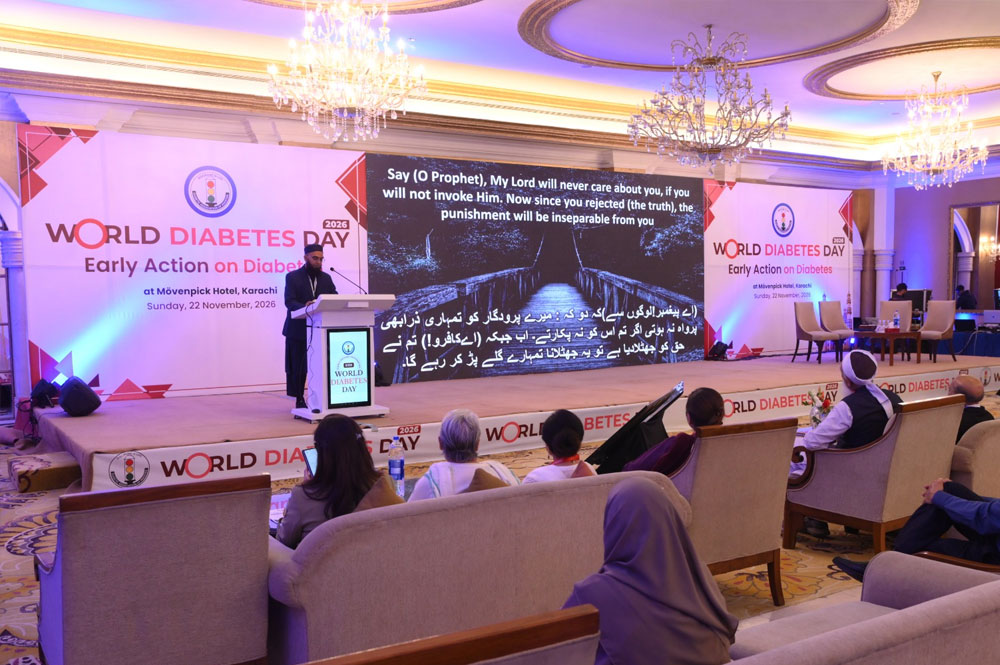
He noted that OIC’s standing committee COMSTECH has appointed him as its representative to replicate the initiative across all 57 Islamic nations. While a grant application has been submitted to the Higher Education Commission (HEC) with a decision expected in two to four months, Prof. Basit affirmed that the project would begin in early 2027 using personal resources even if the grant is not approved.
Addressing the moot, DAP Vice President Prof. Shabeen Naz Masood said every third citizen in Pakistan suffers from diabetes, warning that failure to diagnose and control blood sugar before and during pregnancy endangers both mother and child while increasing the risk for future generations. She stressed that preventive measures must begin when a woman plans to conceive rather than waiting for complications such as heart attacks, kidney disease, or hypertension. Because gestational diabetes rarely shows obvious symptoms, she called for mandatory three-stage blood sugar screening for pregnant women: before pregnancy or immediately upon confirmation in early months, between 22 and 24 weeks, and a third test between 34 and 36 weeks for Pakistani and Asian women due to high genetic susceptibility, even if the initial two tests are negative. She warned that ignoring gestational diabetes puts women at high risk of developing permanent Type 2 diabetes within three to four years.
DAP Vice President (Academics) Prof. M. Zaman Shaikh said Pakistan ranks among the worst-affected countries globally with a 33 percent prevalence rate. Describing diabetes as a silent killer that can damage the body for eight to ten years without noticeable symptoms, he noted that some patients ignore the condition even when blood sugar reaches 300 mg/dL. Blaming unhealthy lifestyles, fast food, sugary drinks, obesity, and stress, he pointed out that a single burger contains at least 500 calories while one cold drink carries as much sugar as six cups of tea, urging patients to adopt exercise, physical activity, and weight training alongside medication from the first day of diagnosis.
International Diabetes Federation (IDF) Vice President Irum Ghafoor highlighted the role of Continuous Glucose Monitoring (CGM) technology in managing diabetes and preventing pre-diabetic individuals from developing the chronic disease. Dispelling the impression that CGM devices are only affordable for the wealthy, she explained that these devices provide blood sugar readings every three to five minutes without repeated finger pricks and are available in Pakistan starting from around Rs 8,000, going up to Rs 17,000 to Rs 18,000, and Rs 150,000 to Rs 200,000, making them particularly useful for overweight individuals and those with a family history of diabetes.
The inaugural, closing, and scientific sessions of the conference were also attended by leading medical experts and faculty members from across the country, including Prof. Noorjahan Samad, Prof. Asher Fawwad, Prof. Yaqoob Ahmedani, Prof. Iqbal Afridi, Prof. Ahmed Bilal, Prof. Nusrat Shah, Prof. Dr. Shabnam Shamim Asim, Prof. Sonia Naqvi, Prof. Romaina Iqbal, Prof. Karim Qamaruddin, Prof. Seema N. Mumtaz, Prof. Muhammad Adnan Kanpurwala, Prof. Zeeshan Ahmed Junejo, Prof. Khair-un-Nisa Nizam, Dr. Riasat Ali Khan, Dr. Asma Khan, Dr. Fareeduddin, Dr. Asma Ahmed, Dr. Farah Naz Farooq, Dr. Zakir Alvi, Dr. Nadeem Naeem, Dr. Ali Asghar, Dr. Saima Zubair, Dr. Shaheen Zafar, Dr. Faiza Rauf, Dr. Sumaira Jabeen, Dr. Shabnam Naveed, Dr. Aqiba Sarfaraz, Dr. Sanobar Jamal, Dr. Ayesha Sheikh, Dr. Qamar Masood, Dr. Syed Adeel Zafar, Dr. Khalid Abdul Basit, and Dr. Shehla Naseem.