
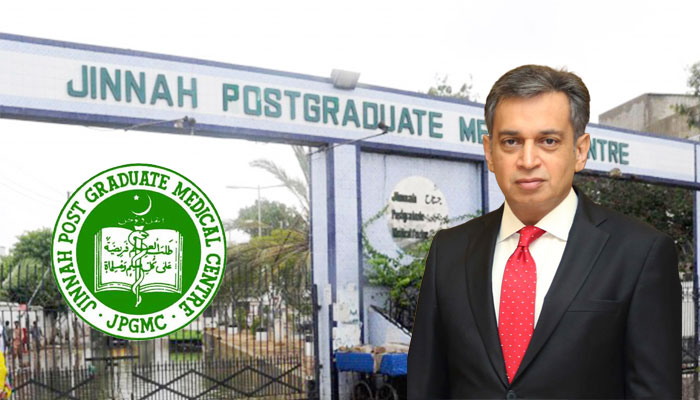
KARACHI: A major discrepancy has emerged in the 2025–26 house job selection process at the Jinnah Postgraduate Medical Centre (JPMC), Karachi, where only 182 MBBS candidates were listed on the merit list out of a total of 650 sanctioned and budgeted seats, leaving 118 posts unaccounted for according to available records. The Sindh Government’s official budget book for the fiscal year 2025–26 confirms that JPMC was allocated stipends for 650 house job officers, amounting to Rs 542.88 million under expenditure head A06102 – Others. The allocation clearly shows that the provincial government fully funded all these positions.
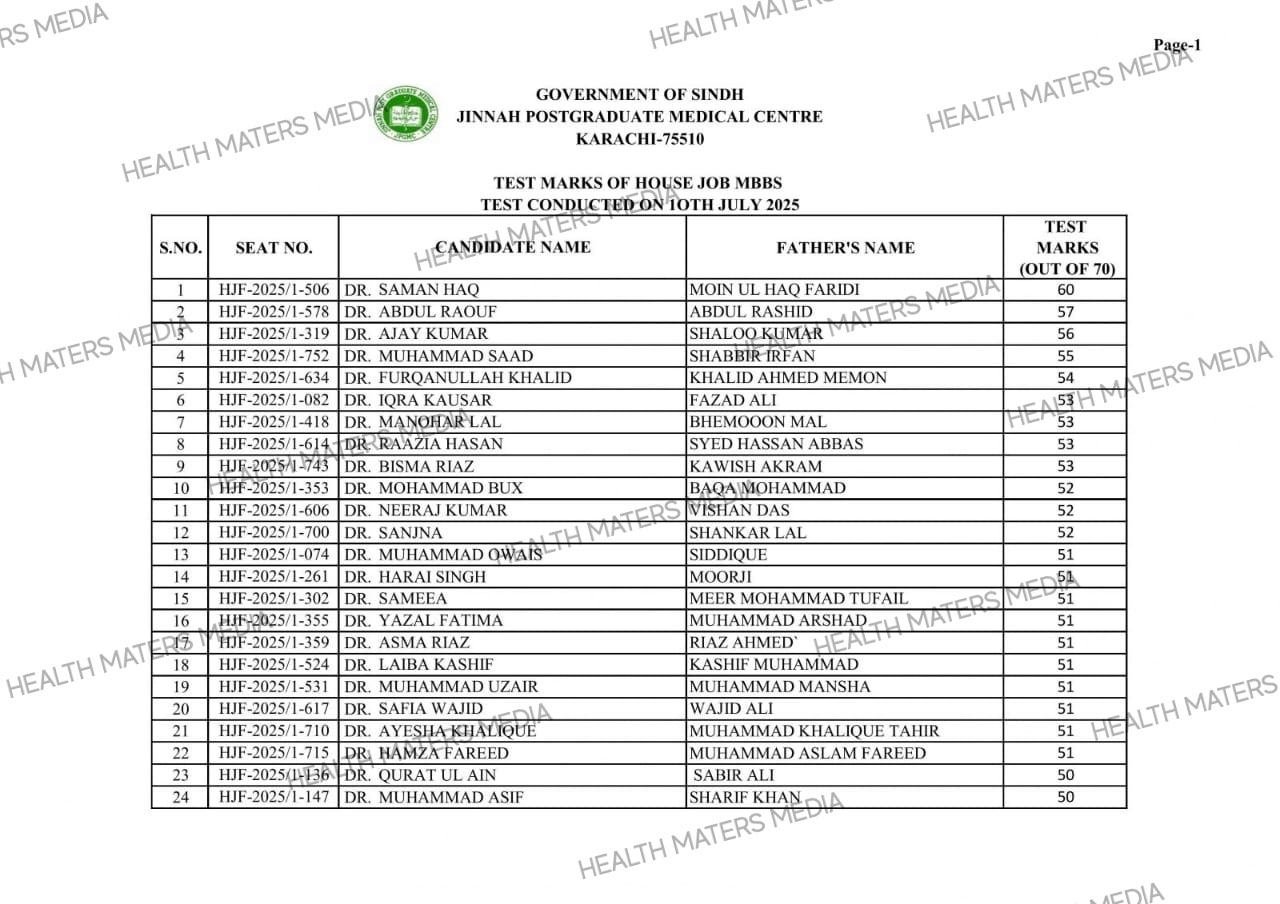
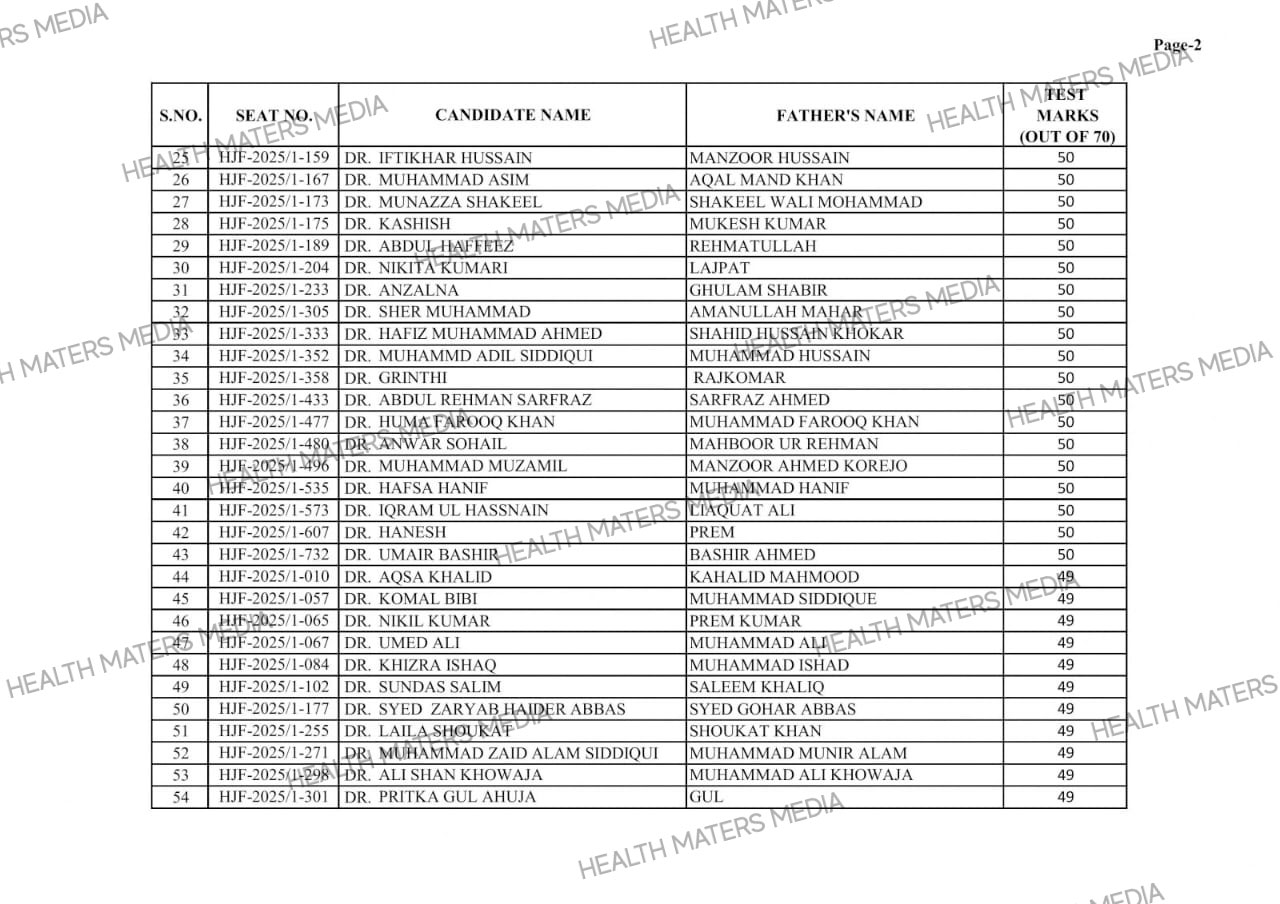
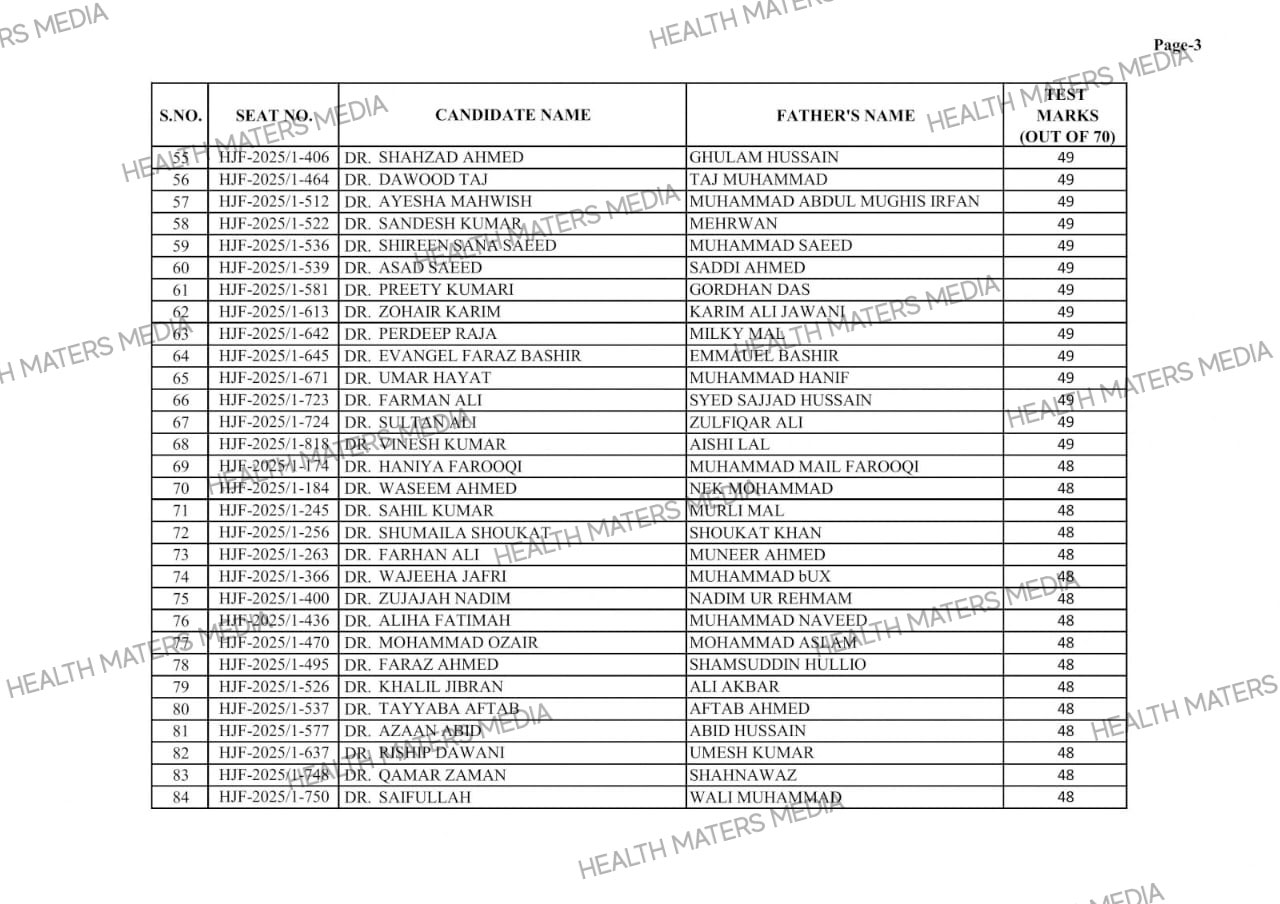
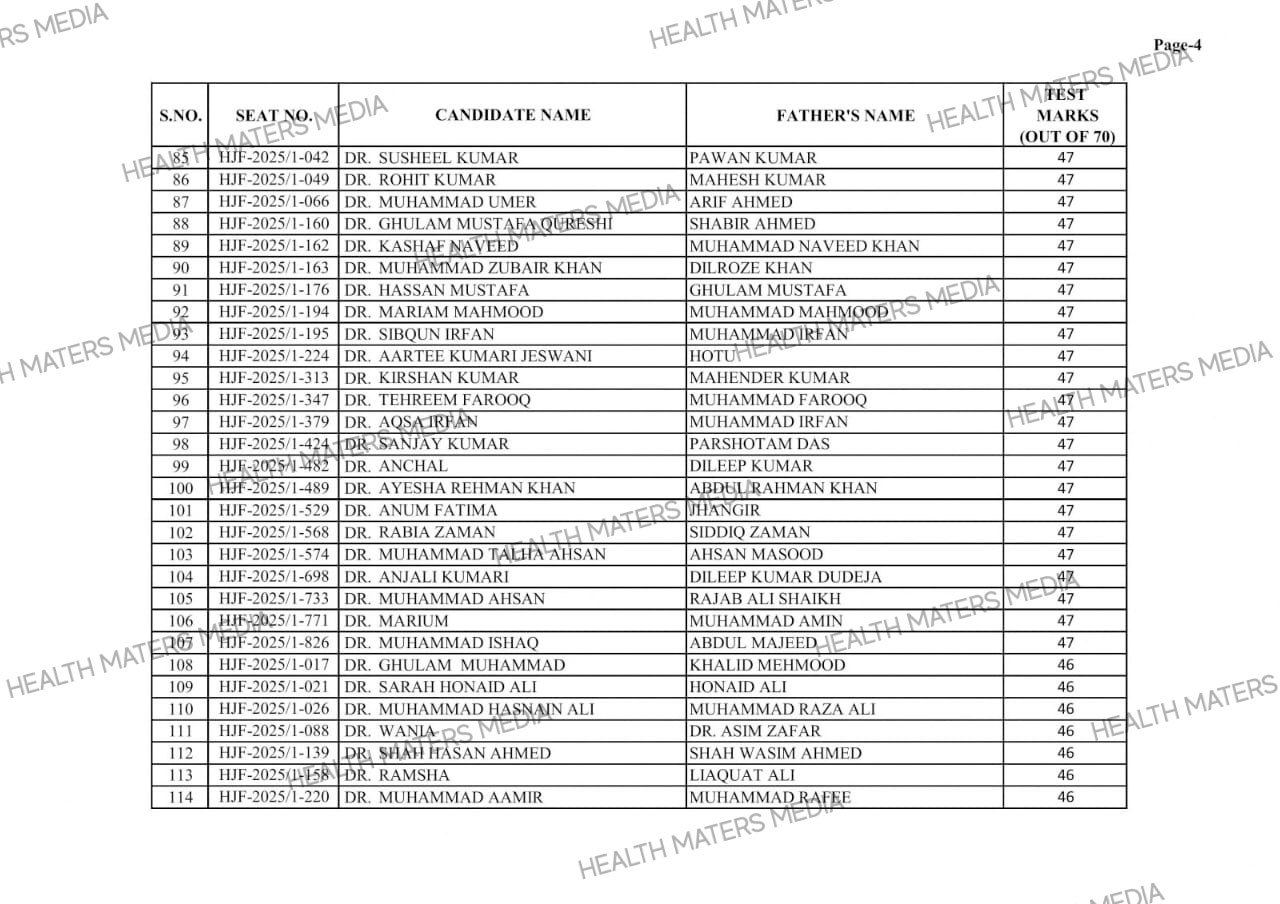
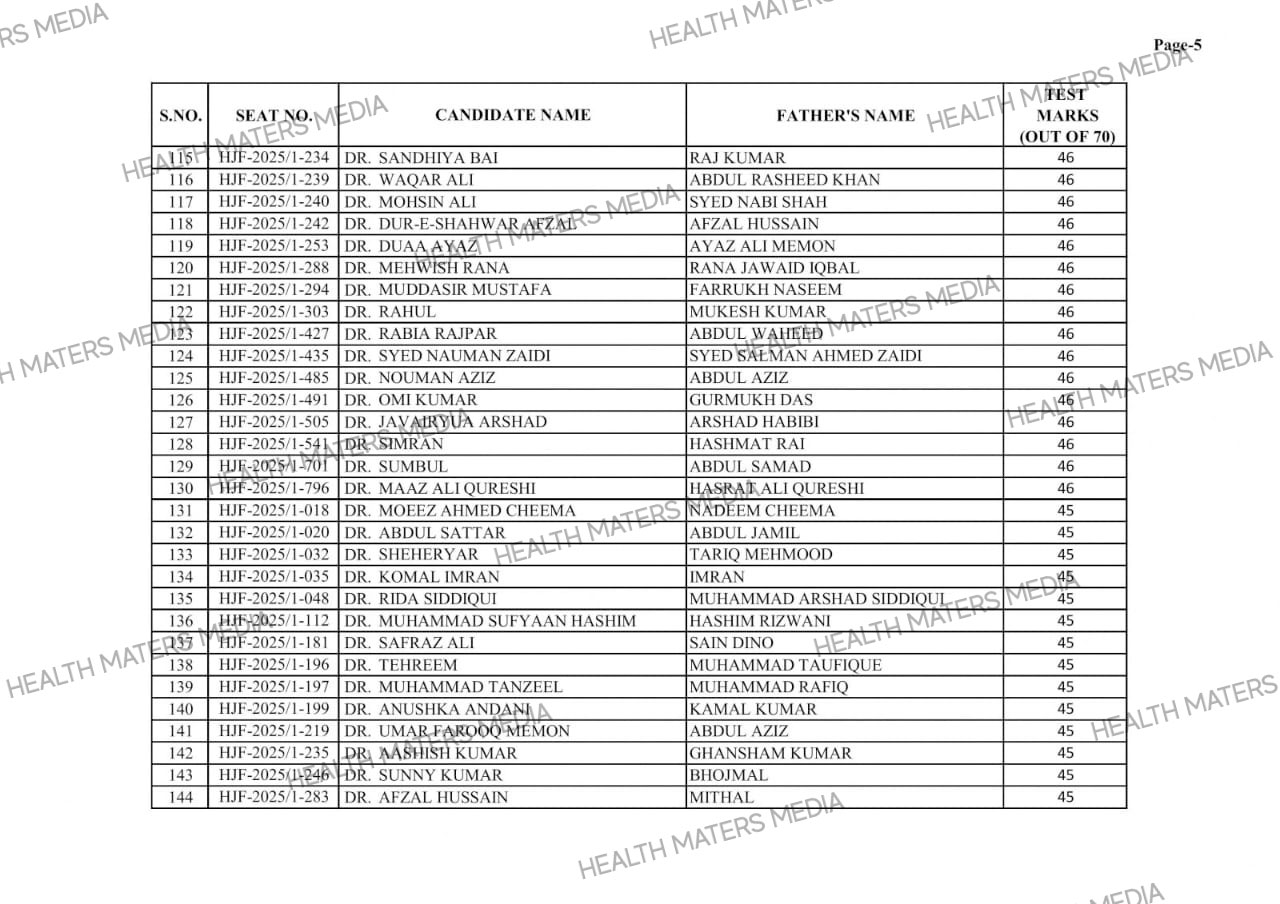
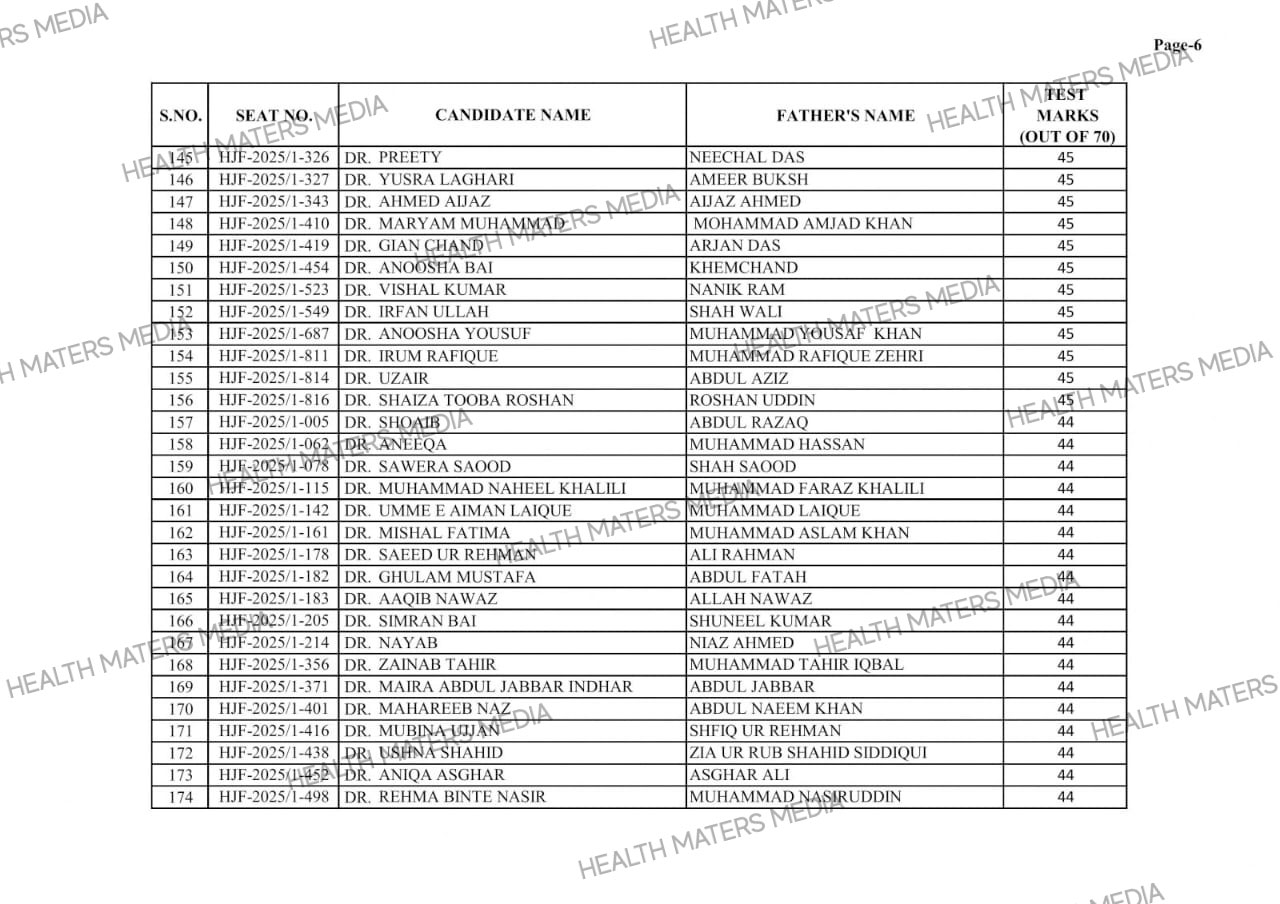
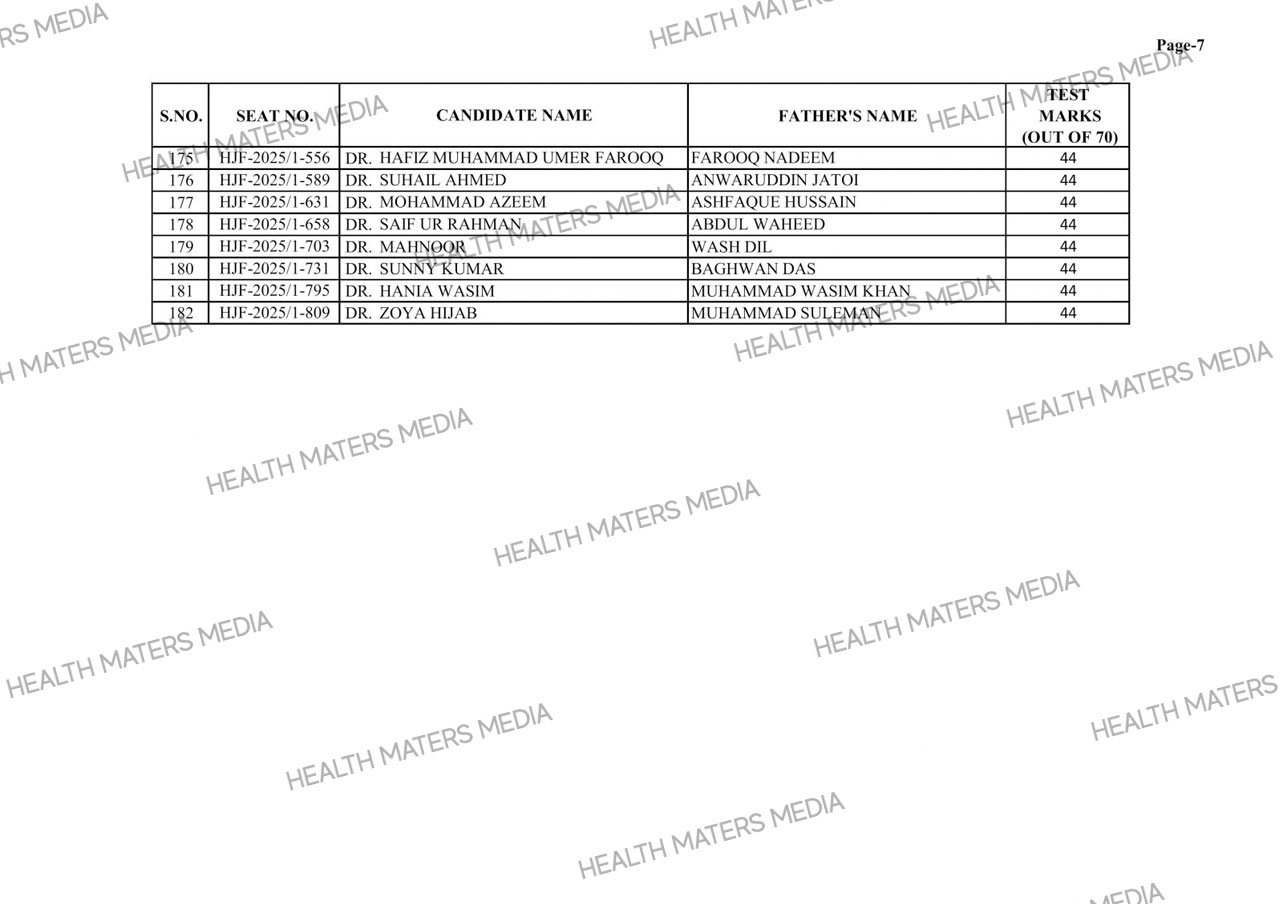
Despite this, JPMC issued a merit list of only 182 MBBS candidates following the entrance test held on July 10, 2025. When contacted, Prof. Dr. Shahid Rasul, Executive Director of JPMC, told Health Matters that “there are 182 MBBS and 20 BDS house jobs. The other slots are not vacant. Out of 650, 350 seats are for Sindh Medical College (SMC/JSMU) graduates. All outside SMC house jobs finish on different dates, and those slots are given to honorary house jobbers on the recommendation of the PGME committee.”
However, despite the Executive Director’s claim that 20 BDS seats exist, no separate merit list for BDS candidates has been released publicly to date. This lack of disclosure raises serious transparency concerns, particularly when the institution is already facing scrutiny over 118 unaccounted house job seats and the controversial 350-seat reservation for JSMU graduates, a practice prohibited under higher court directives which mandate a single, merit-based selection list. The Sindh Government Budget Book for FY 2025–26 confirms the availability of funds for all 650 paid house officers. Yet, multiple categories of “honorary” and “reserved” appointments appear to be operating outside the official merit system, creating a parallel structure that bypasses transparency and accountability.
Medical professionals warn that such practices not only deprive eligible graduates of their rightful training but may also result in budgetary misuse, since the government releases stipend funds based on sanctioned merit positions. Civil society groups and health organizations are urging the Sindh Health Department to immediately publish the full MBBS and BDS merit lists, along with the department-wise seat allocation and joining status for all 650 sanctioned house officer posts.
Health professionals across Sindh have also raised serious questions over the credibility of the current merit list and the overall transparency of the selection process. They ask where the 118 missing seats have gone when all 650 positions are fully funded by the government, and why a merit list was issued for only 182 MBBS candidates. They are also demanding to know why the BDS merit list has not been published despite the administration confirming 20 BDS house job seats, and on what legal basis 350 seats have been “reserved” for JSMU graduates when court orders clearly prohibit any institutional quota. Concerns have also been raised over the appointment of honorary house officers, with experts questioning why stipend-funded positions are being given to unpaid individuals and whether the stipend funds for these posts are being diverted elsewhere.
Health professionals insist that the JPMC administration must immediately release a complete department-wise joining status, disclose the total number of active and vacant seats, and make public all relevant documents to restore confidence in the institution’s merit-based selection process. They further urge the Sindh Health Department to conduct a comprehensive audit of stipend utilization, verify disbursement records against the budgeted Rs 542.88 million allocation, and ensure that no eligible candidate is deprived of their rightful house job opportunity.
Further investigations by the Health Matters team into the merit verification process, allocation of honorary appointments, and utilization of the stipend budget are currently under way.