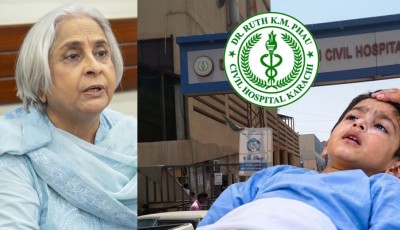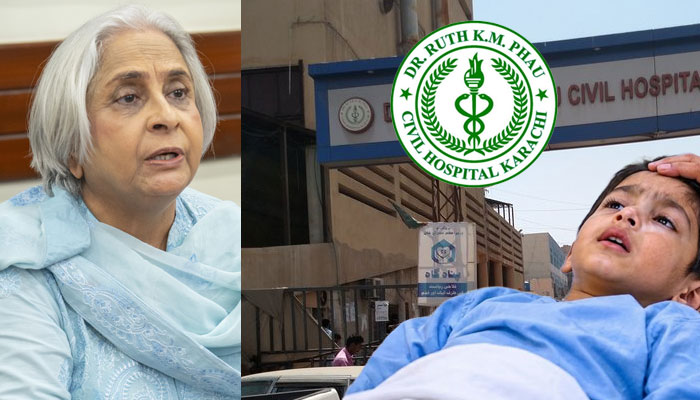
KARACHI: Serious concerns have emerged over the state of emergency healthcare services in Sindh after a five-year-old child suffering from seizures was referred from the Children's Emergency Department of Dr. Ruth K. M. Pfau Civil Hospital Karachi to another tertiary care hospital due to the unavailability of space, raising alarming questions about the capacity of one of the province's largest public-sector tertiary care institutions.
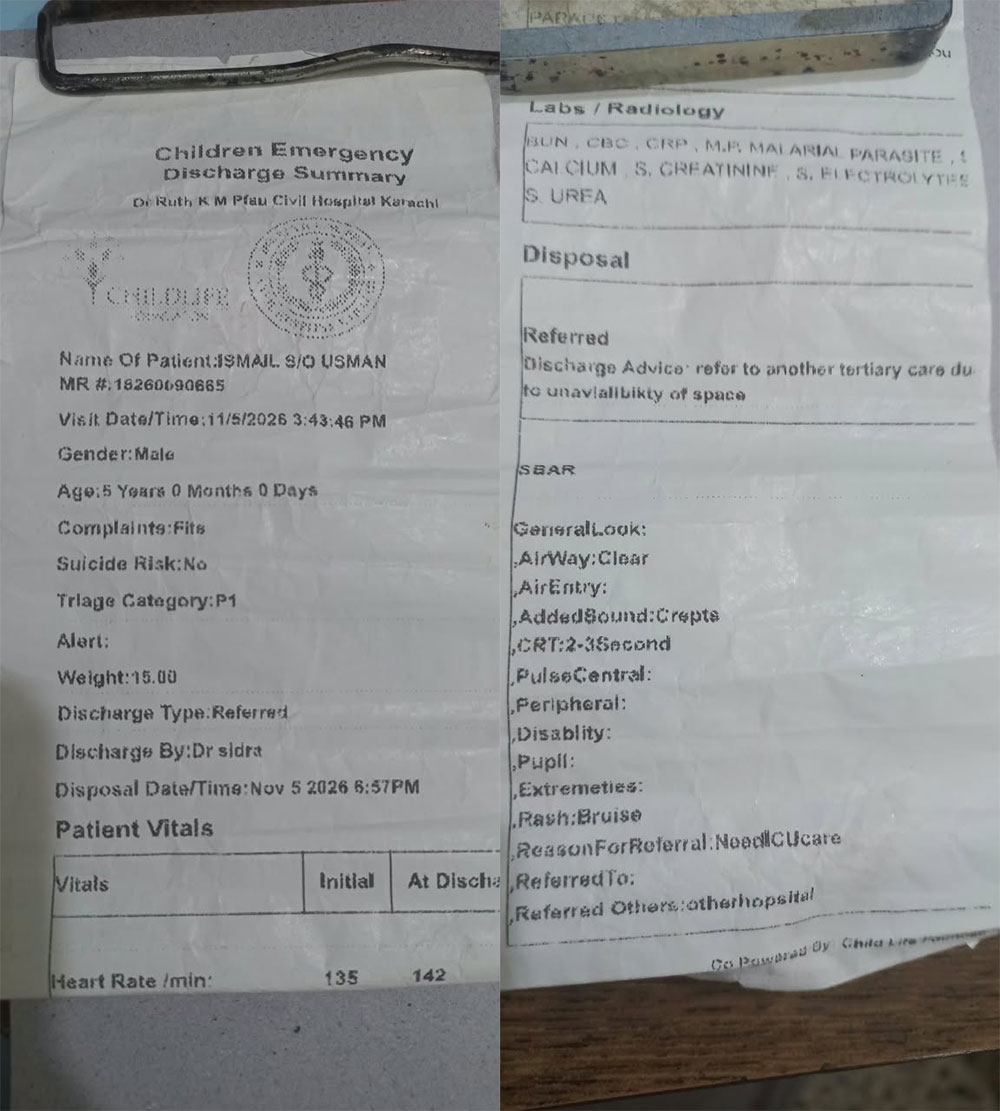
According to an official emergency discharge summary obtained by Health Matters Media (HMM), the child was brought to Civil Hospital Karachi on November 5, 2026, at approximately 3:43 PM with complaints of fits (seizures). The hospital classified the patient under Triage Category P1, indicating the highest level of emergency priority. However, more than five hours later, at approximately 8:57 PM, the child was referred to another hospital.
The most disturbing aspect of the case is that the hospital's own discharge document explicitly mentions "Unavailability of Space" as the reason for referral. The discharge advice further states that the child should be referred to another tertiary care facility.
The incident raises a fundamental question: If a major tertiary care hospital such as Civil Hospital Karachi, which is supposed to receive and manage complicated and critically ill patients referred from smaller healthcare facilities, itself starts referring emergency patients to other tertiary care hospitals because of insufficient space, where exactly are desperate parents supposed to go?
The situation becomes even more concerning because the Children's Emergency Department at Civil Hospital Karachi is operated by ChildLife Foundation, a non-governmental organisation working in partnership with the Sindh government to provide free pediatric emergency care.
ChildLife Foundation has been managing the children's emergency facility at Civil Hospital Karachi since 2011 and has highlighted its efforts to improve emergency services for critically ill children. The facility has been reported to have 24 emergency beds and to serve tens of thousands of children annually.
The foundation's work in pediatric emergency care has also received recognition for healthcare quality standards. However, the latest documented referral raises important questions about whether the existing infrastructure, staffing and emergency capacity are sufficient to meet the needs of children requiring urgent medical attention.
The incident demands answers from ChildLife Foundation, the Civil Hospital administration and the Sindh Health Department. Was the entire children's emergency facility occupied when the five-year-old child arrived? If so, what contingency arrangements were available for critically ill patients? Why could a child classified under the highest emergency priority category not be accommodated?
Another serious question concerns the responsibility of the organisation managing the facility. If ChildLife Foundation has been entrusted with operating pediatric emergency services at one of Sindh's largest tertiary care hospitals, what arrangements has it established to deal with overcrowding, emergency bed shortages and patients requiring immediate stabilization or intensive care?
The case also raises questions about the financial resources allocated to pediatric emergency services under the provincial government's public-private partnership arrangements. How much funding is being provided for the operation of the Civil Hospital children's emergency facility, how is its capacity assessed, and what mechanisms are in place to ensure that public funding translates into timely and accessible emergency treatment?
Equally important is the issue of patient safety. The available discharge summary shows that the child remained at the hospital for more than five hours before being referred. What treatment was administered during this period? Was the child medically stabilized before referral? Did the hospital contact another tertiary care facility to confirm bed availability and acceptance of the patient?
Was an equipped ambulance arranged for the transfer, and was appropriate medical supervision provided? Or was the family simply advised to find another hospital on its own?
The official discharge record does not clarify these critical aspects of the patient's management. It also remains unclear whether the child was subsequently admitted to another hospital and what his present medical condition is.
The incident highlights a broader concern regarding the referral system in Sindh's public healthcare sector. Tertiary care hospitals are intended to provide advanced medical services and serve as referral centres for patients whose conditions cannot be adequately managed at primary or secondary healthcare facilities. When such institutions themselves face capacity constraints, an effective and coordinated transfer mechanism becomes essential.
If a critically ill child is referred from one tertiary care hospital to another without confirmed admission arrangements, there is a risk of families being forced to move between multiple hospitals while seeking emergency treatment.
The Sindh Health Department must clarify whether a centralized emergency bed management and referral system exists to prevent such situations. It must also disclose how frequently pediatric patients are referred from Civil Hospital Karachi because of bed shortages and whether the department regularly monitors patient transfers, bed occupancy and emergency outcomes at facilities operated through public-private partnerships.
The incident also raises questions about accountability. Who bears ultimate responsibility when a patient cannot be accommodated in a government hospital's emergency department: the hospital administration, the NGO managing the facility, or the provincial health authorities responsible for planning and oversight?
Sindh Health Minister Dr. Azra Fazal Pechuho should seek a detailed report on the circumstances surrounding the child's referral and review the capacity of pediatric emergency departments at major government hospitals across the province.
The matter warrants particular attention because public-sector hospitals remain the primary healthcare option for millions of low-income families who cannot afford private medical treatment. For these families, a major tertiary care hospital is often their last hope during a medical emergency.
While ChildLife Foundation's contribution to expanding pediatric emergency services is significant, its achievements and healthcare quality recognitions must also be evaluated against the challenges faced by individual patients, particularly those requiring high-priority emergency care.
The documented referral alone does not establish medical negligence or misconduct. However, it raises legitimate concerns about emergency capacity, patient management, referral coordination and institutional accountability that require transparent explanations from the relevant authorities.
The detailed responses of Civil Hospital Karachi, ChildLife Foundation and the Sindh Health Department regarding this particular incident were not available at the time of filing this report.
The case serves as a serious reminder that the effectiveness of a healthcare system cannot be measured merely through budget allocations, infrastructure projects, international certifications or the number of patients treated annually. Its real performance is tested when a critically ill child arrives at an emergency department and needs immediate medical attention.
The central question remains unanswered: When a tertiary care hospital itself refers a five-year-old emergency patient because of a lack of space, where should the family go next, and who will take responsibility for ensuring that the child receives timely and potentially life-saving medical care?