
ISLAMABAD: Pakistan has moved up five places in the Global Gender Gap Index 2026, rising from 148th position in 2025 to 143rd, as the National Commission on the Status of Women (NCSW) reaffirmed its commitment to accelerating efforts towards gender equality across the country.
According to the World Economic Forum’s Global Gender Gap Report 2026, Pakistan’s overall gender parity score increased from 56.7 percent in 2025 to 59.5 percent in 2026. The country recorded its strongest year-on-year improvement in a decade, with educational attainment emerging as a major contributor to the progress.
Pakistan’s educational attainment parity reached a record 91.7 percent, while Economic Participation and Opportunity remained the country’s weakest-performing area, with a parity score of 36.4 percent.
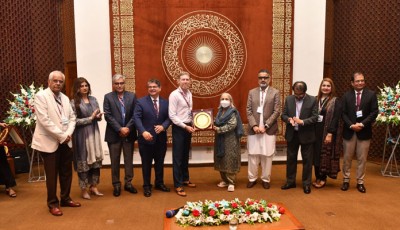
Welcoming the improvement, NCSW Chairperson Noureen Bano Lehri described it as an encouraging national achievement reflecting sustained collective efforts towards gender equality.
She acknowledged the contributions of former Interim Chairperson NCSW Ume Laila Azhar and former Secretary NCSW Humaira Zia Mufti, saying their efforts and engagement with national and international partners during the previous year helped strengthen Pakistan’s gender equality agenda. She also commended NCSW members and its team for carrying the work forward.
Following Pakistan’s lowest ranking in the Global Gender Gap Index 2025, NCSW initiated what it described as an urgent and comprehensive exercise to identify and address gaps in gender-disaggregated data and reporting.
The Commission constituted a National Gender Data Task Force and undertook a nationwide data-collection exercise in coordination with provincial governments and relevant departments and institutions, including Planning and Development Departments, Bureaus of Statistics, line departments and other data-generating organisations.
According to NCSW, the Ministry of Human Rights and UN partners also supported the process.
Data collected from across the country was compiled, reviewed, standardised and analysed to strengthen the national evidence base on gender equality. The findings were subsequently reflected in national and provincial gender parity reporting, including the ICT Gender Parity Report, Provincial Gender Parity Reports and Provincial Gender Forums, and shared with relevant government stakeholders.
NCSW said the coordinated exercise helped improve the availability, standardisation and visibility of gender-disaggregated data and provided a stronger evidence base for assessing progress and identifying areas requiring further action.
Lehri also acknowledged the continued efforts of the Government of Pakistan and federal and provincial institutions towards women’s empowerment and gender equality.
“The five-place improvement in 2026 is encouraging and reinforces the importance of sustained, evidence-based efforts. NCSW will continue strengthening Pakistan’s gender-data ecosystem so that progress and remaining gaps are accurately identified,” she said.
The NCSW Chairperson said the improvement should be viewed as the beginning of a broader effort rather than an endpoint.
“For NCSW, five places are not the finish line. They are the beginning of a much greater commitment,” she said, adding that the objective was to ensure gender equality was reflected not only in international rankings but also in women’s and girls’ opportunities, dignity, security, economic participation, education, decision-making and leadership.
NCSW said it would continue prioritising gender-disaggregated data, evidence-based policymaking, economic empowerment, education, political participation, leadership, legal protection and institutional accountability.
The Commission said it would work with the federal and provincial governments, Parliament, development partners, international organisations, UN agencies, civil society, academia and the private sector to advance the gender equality agenda.
“NCSW, hand in hand with its partners and stakeholders across Pakistan, stands fully committed to carrying this responsibility forward for every woman and girl of Pakistan,” the Commission said.