
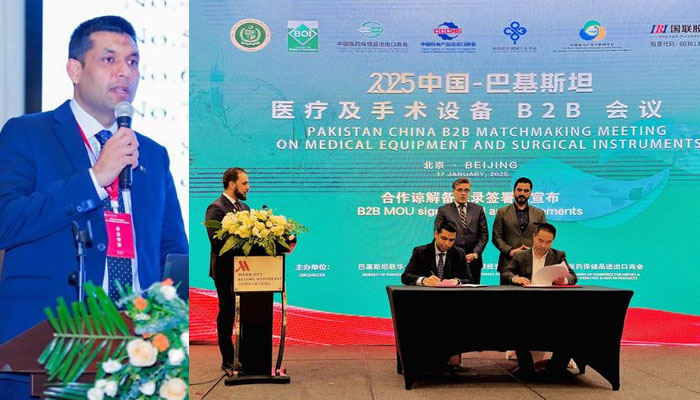
GUIYANG (Xinhua): Pakistani medical scientist Dr. Muhammad Shehbaz has dedicated his career to leveraging China’s medical innovations to help build a healthier Pakistan. Having lived in China for nearly two decades for education and professional work, he is now playing a leading role in fostering medical cooperation between the two countries.
Based in the southwestern Chinese city of Chongqing, the 38-year-old specialist heads the International Cooperation Department at the Frontiers of Developmental Sciences (FDS) Consortium. His work focuses on cutting-edge radiotherapy linear accelerator cancer technologies while promoting knowledge exchange and joint innovation among scientists and doctors from China, Pakistan and other countries.
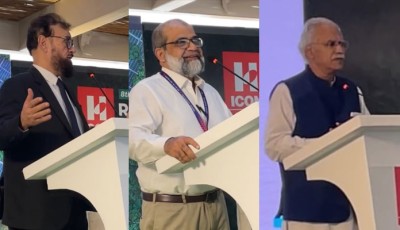
Speaking at a recent international forum on traditional medicine in Zunyi, Guizhou Province, Shehbaz said China possesses more than 5,000 years of traditional medicine expertise and has now achieved global leadership in fields such as artificial intelligence and big data. He noted that China has made remarkable advancements in telemedicine, integrative traditional-modern medicine, and advanced surgical techniques.
Shehbaz, originally from Sargodha, first arrived in China in 2006 for higher education and completed a PhD in Surgery from Shandong University’s Qilu Hospital in 2020. His long stay in China allowed him to closely observe the country’s rapidly evolving medical technology landscape.
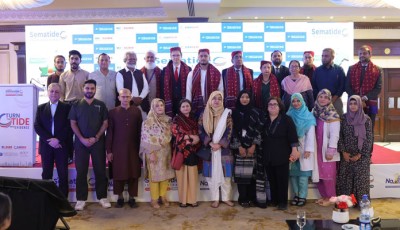
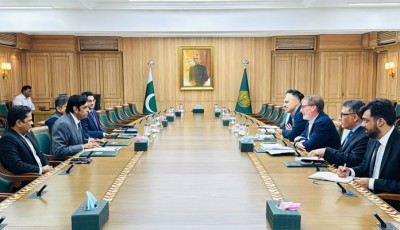
In 2021, he founded the Pakistan-China Medical Association, which has emerged as an important platform for medical exchange, education, research collaboration, and digital health cooperation between the two nations. The association is running structured training programs that enable Pakistani doctors and young medical graduates to receive advanced clinical training in Chinese hospitals.
Among the technologies he regards as most valuable for Pakistan, Shehbaz highlights telemedicine and digital health platforms. He explained that Pakistan’s biggest challenge is geographical disparity, with specialist doctors concentrated in major cities while large populations live in rural and remote areas. Telemedicine, he said, eliminates these barriers, enabling a doctor in Lahore to consult with a patient in a distant Sindh village, while cardiologists at the Chinese Academy of Medical Sciences’ Fuwai Hospital can remotely guide complex procedures in Rawalpindi. Patient data can be transmitted and analyzed within seconds.
Artificial intelligence is also playing a significant role in diagnostics. According to Shehbaz, a Chinese-developed AI imaging system can analyze CT scans, X-rays and MRIs with exceptional speed and accuracy, helping overburdened radiologists detect diseases such as tuberculosis and lung cancer more efficiently.
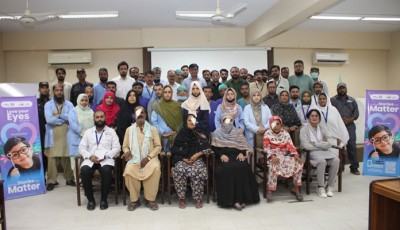
Beyond technology transfer, Shehbaz emphasized the need to strengthen Pakistan’s domestic medical capacity. The association is now planning institutional partnerships to support long-term talent development. He said the “Seeding the Future” physician exchange program is being significantly expanded through the Belt and Road International Medical Education Alliance and the Belt and Road Medical Device Innovation Application Alliance. These initiatives are evolving from short observational visits to fully structured one-year fellowships in oncology, cardiology and surgery at top-tier hospitals across China.
Discussing his current environment in Chongqing, Shehbaz said the city’s open and collaborative academic culture makes it an ideal place for innovation. Looking ahead, he said his long-term personal goal is to establish an advanced neutron medical center and a model hospital in Pakistan, along with a network of emergency clinics along the China-Pakistan Economic Corridor.