
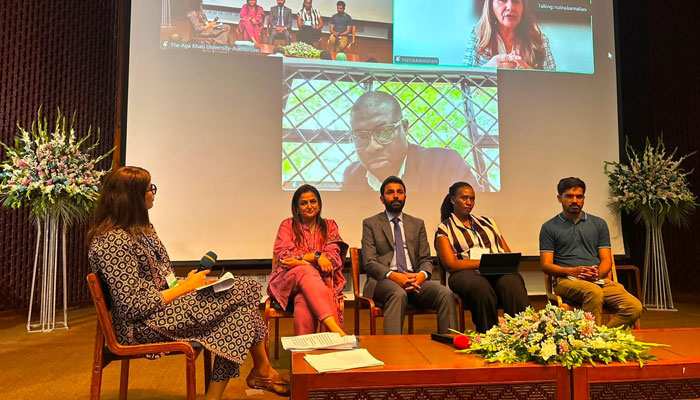
KARACHI: Policymakers, researchers and global health experts have called for evidence-informed decision-making, stronger health systems and the use of artificial intelligence (AI) to improve healthcare delivery in Pakistan during a two-day symposium held at the Aga Khan University (AKU).
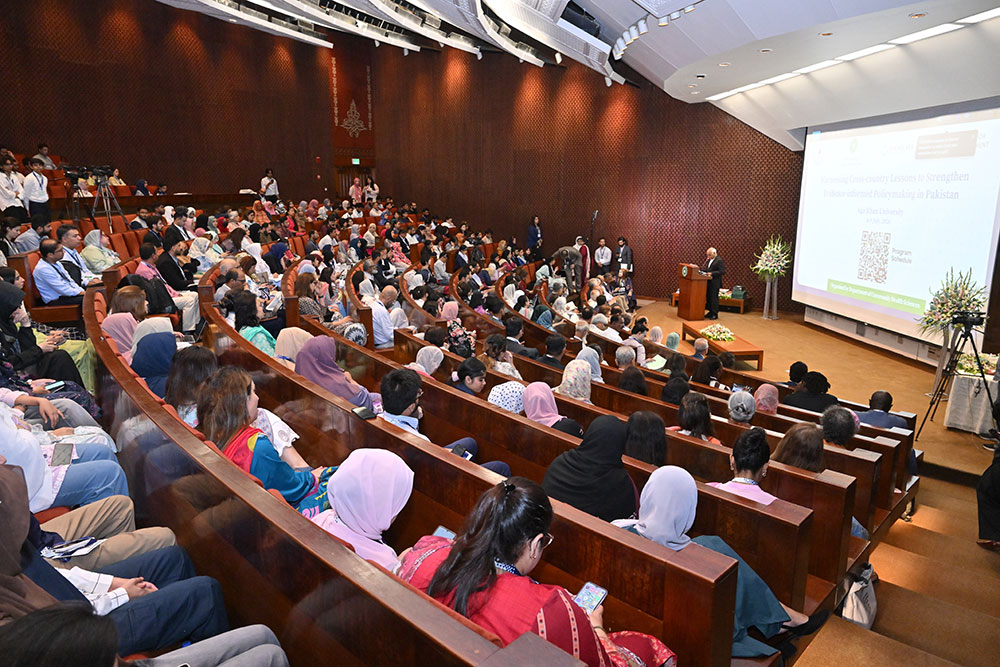
The symposium, organised by AKU in collaboration with Exemplars in Global Health and Results for Development (R4D), brought together federal and provincial policymakers, researchers, development partners, academics and family planning experts from Pakistan, Kenya, Malawi, Bolivia, Senegal and Sierra Leone to discuss strategies for improving health outcomes.
Participants reviewed successful policy experiences from several countries and agreed that sustainable progress depends on a combination of factors, including strong political commitment, supportive policies, increased domestic investment, strengthened health systems, wider access to contraceptive methods, community engagement, partnerships with non-governmental organisations and effective use of data in policymaking.
Speakers noted that these lessons could be adapted to Pakistan, where maternal health remains a major challenge. According to recent estimates, Pakistan's maternal mortality ratio stands at 186 deaths per 100,000 live births, while a woman dies from pregnancy-related complications approximately every 50 minutes.
Addressing the symposium, Dr Zahid Memon, Section Head of Health Policy and Management at AKU's Department of Community Health Sciences and the symposium convener, said improving health outcomes requires better quality services and stronger delivery systems supported by innovative approaches, including artificial intelligence.
Dr Muhammad Amjad Saqib, Founder and Chairman of Akhuwat, stressed that evidence must translate into meaningful impact, adding that people should remain at the centre of development. He highlighted Akhuwat's achievements, including the disbursement of $1.8 billion in interest-free loans to around four million families with a 99 percent recovery rate.
The symposium also focused on knowledge translation, adolescent reproductive health, implementation challenges and the role of universities in incorporating research evidence into health policy and practice.
Among the distinguished participants were Secretary Health Balochistan Mujeeb-ur-Rehman, Sindh Population Welfare Secretary Hafeezullah Abbasi, Balochistan Population Welfare Secretary Zafar Buledi, Dr Najam Shah, Chairperson of the Sindh Planning and Development Department, Dr Safi Malik, Health Advisor at the Ministry of National Health Services, Regulations and Coordination, Ms Nida Khuhro, Parliamentary Secretary for Health and Population Welfare Sindh, former Khyber Pakhtunkhwa Health Minister Taimur Jhagra, Professor Seye Abimbola of the University of Sydney, Professor Ali Cheema of Lahore University of Management Sciences, Professor Shahzad Ali of the Health Sciences Academy, Dr James Blanchard of the University of Manitoba, Canada, and Dr Zohra Lassi of the University of Adelaide, Australia.
The participants emphasised that stronger collaboration among governments, researchers, academia and development partners is essential for building a resilient and evidence-driven healthcare system in Pakistan.