
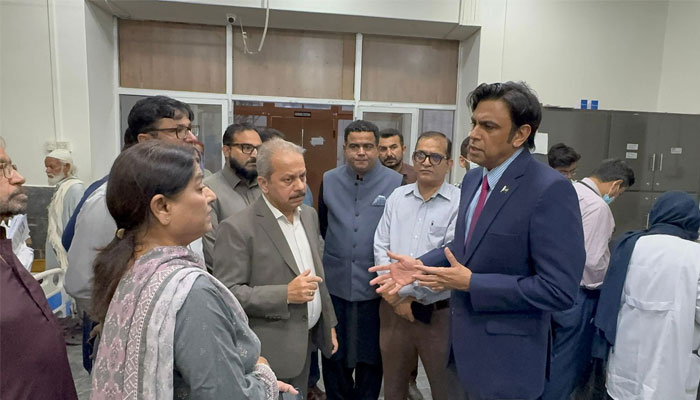
KARACHI: Chief Secretary Sindh, Asif Hyder Shah, on Wednesday conducted surprise visits to several major hospitals in Karachi, including Civil Hospital Karachi, Jinnah Postgraduate Medical Centre (JPMC), and the Sindh Government 50-Bedded Hospital Shah Faisal, to review arrangements for dengue patients.
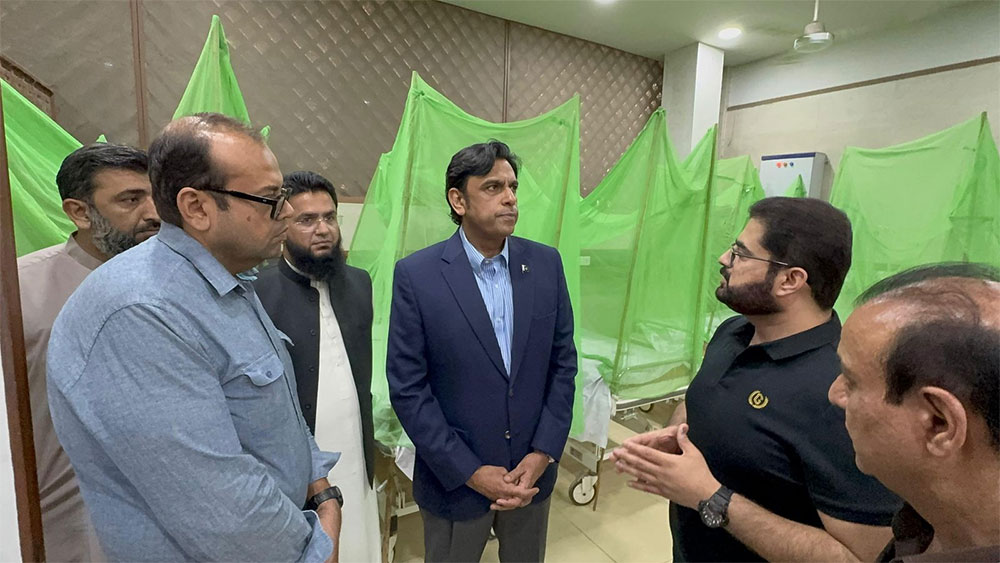
During his visit to Civil Hospital Karachi, the Chief Secretary expressed dissatisfaction over the absence of a designated dengue ward and directed the hospital administration to establish one immediately. He also inspected the pathology laboratory and other medical facilities, reviewing the availability of medicines, beds, and diagnostic services. Mr. Shah instructed the Deputy Commissioner to take action against encroachments and illegal parking around the hospital premises to ensure smooth access for ambulances and patients.
At the Sindh Government 50-Bedded Hospital Shah Faisal, he inspected the dengue ward and reviewed healthcare facilities, directing the Deputy Commissioner Korangi to submit a detailed report on the hospital’s requirements and maintenance needs to ensure all necessary facilities are available.
The Chief Secretary later visited Jinnah Postgraduate Medical Centre (JPMC), where he reviewed the dengue ward and received a briefing from senior officials regarding the current situation. It was informed that only a small number of dengue patients required hospital admission, while most were being treated as outpatients. No dengue patients were found admitted in JPMC’s dedicated ward, while only four were under treatment at Civil Hospital Karachi. Hospital administrations reported that around 16 to 17 dengue patients visit daily, most of whom receive treatment without admission.
Chief Secretary Asif Hyder Shah observed a communication gap between actual dengue data and media reporting and directed the Health Department to improve its communication strategy for timely and accurate public information. He also instructed Deputy Commissioners and the Local Government Department to intensify cleanliness drives, eliminate mosquito breeding sites, and enhance preventive measures. The Information Department was directed to launch a province-wide media awareness campaign on dengue prevention.
Following his visits, the Chief Secretary chaired a high-level meeting to review the overall dengue situation across Sindh. The meeting was attended by the Secretaries of Health, Local Government, and Information; Director General PDMA; Managing Director Sindh Solid Waste Management Board; Divisional Commissioners; Deputy Commissioners; District Health Officers; and Municipal Commissioners.
Divisional Commissioners presented detailed briefings on fumigation operations, hotspot identification, and contingency plans. The Chief Secretary directed all Deputy Commissioners to publicly share fumigation schedules through media and social media platforms for transparency and community engagement. He emphasized that each district must document field operations with before-and-after photographs and submit regular reports.
The Secretary Health informed that a real-time data linkage system has been established with all laboratories across Sindh for tracking dengue cases. The department will now issue daily dengue data through the Sindh Information Department. He reported that 219 dedicated beds are available for dengue patients in Karachi, with diagnostic and treatment facilities established in all districts. The Chief Secretary instructed the distribution of dengue testing kits to all rural health centers and district hospitals.
Commissioner Hyderabad, Fayyaz Abbasi, briefed that 30 dengue hotspots had been identified in the Hyderabad Division, with morning and evening fumigation drives ongoing. He reported 1,258 dengue tests conducted, 587 positive cases, and 209 patients currently under treatment across 17 hospitals with 267 allocated beds.
The Chief Secretary directed the PDMA to provide additional fumigation machines, mosquito nets, and dengue testing kits to high-risk districts, including Hyderabad. He emphasized that coordinated inter-departmental efforts, coupled with public awareness and timely response, are vital to curb the spread of dengue. Mr. Shah directed all departments to maintain strict vigilance, strengthen preventive measures, and ensure round-the-clock monitoring to safeguard public health.