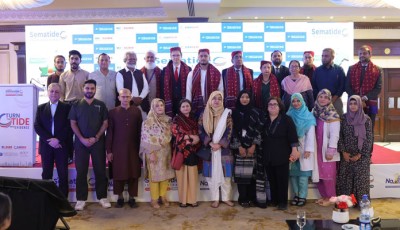

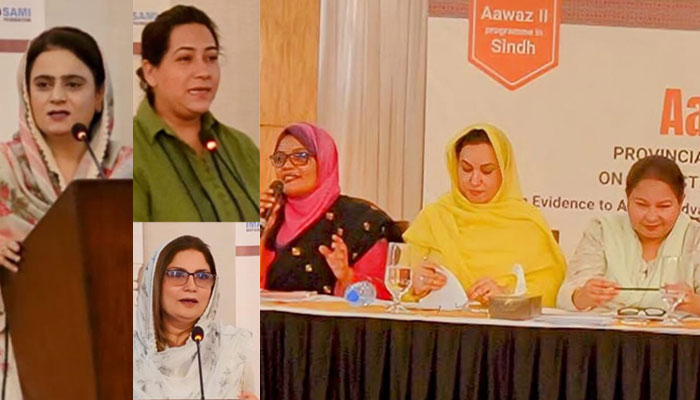
KARACHI: A provincial policy dialogue aimed at strengthening the implementation of the Sindh Domestic Violence (Prevention and Protection) Act, 2013 was held in Karachi, bringing together policymakers, parliamentarians, government officials, civil society representatives and members of marginalized communities.
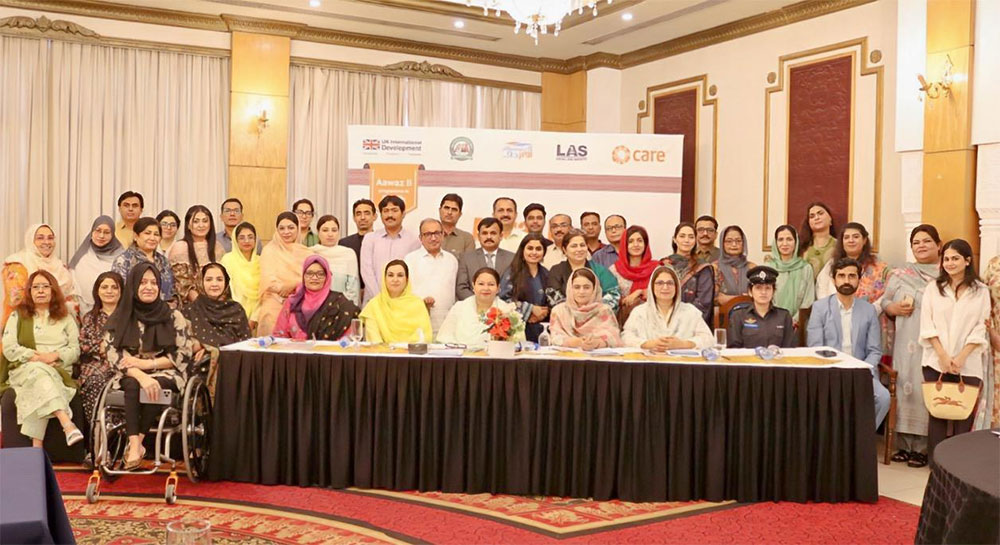
The dialogue was organized by the Sindh Commission on the Status of Women in collaboration with the Legal Aid Society under the Aawaz II Programme, implemented by CARE International with support from the Foreign, Commonwealth and Development Office.
A policy paper titled “Implementing the Sindh Domestic Violence (Prevention and Protection) Act, 2013: From Law to Protection” highlighted the need for urgent reforms, including legislative amendments, improved institutional coordination, better FIR procedures, strengthened referral systems, capacity-building of justice sector actors and increased investment in protection services.
Advocate Maliha Zia presented a Domestic Violence Protection Blueprint proposing stronger One-Stop Protection Centres, improved policing mechanisms, functional district-level protection systems and coordinated service delivery.
Chairperson SCSW Rubina Aman Brohi, in her remarks, appreciated the participation of stakeholders and stressed the importance of collective efforts to address domestic violence effectively. She noted that despite the passage of the law, its implementation has not been realized in its true spirit over the past 13 years and called for amendments proposed by the Commission, Women Development Department and civil society organizations. She emphasized the need to expand protection centres, complete One-Stop Protection Centres across all districts, strengthen women police stations, increase awareness budgets and empower rural women.
She also highlighted the Commission’s ongoing awareness campaign, “Know Your Laws, Know Your Rights,” which is being implemented at the grassroots level from Tharparkar to Shaheed Benazirabad.
In her concluding remarks, Provincial Minister Shaheena Sher Ali said that legal awareness remains limited in rural and marginalized communities, particularly due to the lack of laws available in Urdu and Sindhi. She proposed utilizing Lady Health Visitors for door-to-door awareness and underscored that empowering girls is key to preventing domestic violence. She added that the Sindh Commission on the Status of Women and the Women Development Department would work jointly to support women across the province.
The dialogue concluded with a shared commitment among stakeholders to strengthen coordination, enhance legal protections and ensure effective implementation of laws to safeguard women across Sindh.