
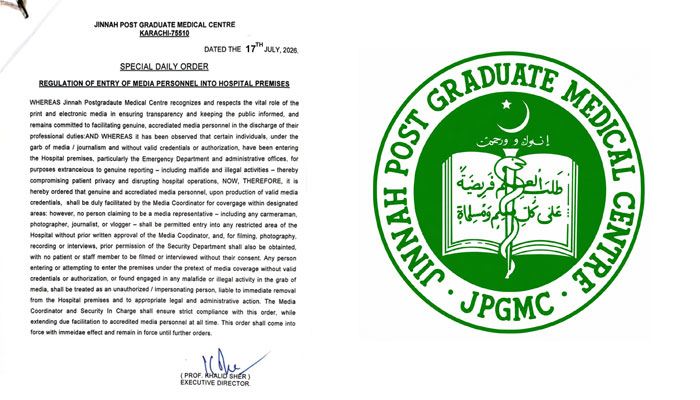
KARACHI: The Jinnah Postgraduate Medical Centre (JPMC) has issued a Special Daily Order imposing stringent restrictions on the entry and movement of media personnel within the hospital, alleging misuse of media identity, unauthorized access to sensitive areas, interference in hospital operations and violations of patients' privacy. The move has triggered a strong reaction from the Health Reporters Association (HRA), which has termed the order an attack on press freedom and journalists' professional responsibilities.
According to the order issued by JPMC Executive Director Prof. Khalid Sher, the administration has observed that individuals claiming to be journalists, cameramen, photographers and digital content creators have been entering the hospital without authorization, accessing restricted clinical and administrative areas, recording videos and photographs without permission, interviewing patients and attendants without consent, and disrupting medical services. The administration also alleged that some persons had misused media credentials, impersonated journalists and violated patients' right to privacy and confidentiality.
The order states that, with immediate effect, only accredited media personnel possessing valid press credentials will be allowed access through the hospital's designated Media Coordinator. Entry into operation theatres, emergency units, intensive care units, wards and other restricted areas, as well as photography, videography, live transmissions and interviews, will require prior approval from the competent authority. It further warns that unauthorized persons claiming to represent the media or violating the prescribed procedures may be removed from the premises and subjected to legal and administrative action.
The hospital maintained that the measures are necessary to protect patients' dignity and confidentiality, maintain security, prevent disruption of healthcare services and ensure an orderly environment for medical professionals to perform their duties.
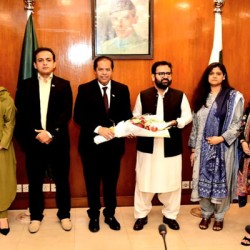
The directive drew immediate condemnation from the Health Reporters Association (HRA), which rejected the order and demanded its immediate withdrawal.
In a statement issued by HRA President Akhtar Shaheen Rind, Senior Vice President Safdar Butt, Vice President Imdad Soomro, General Secretary Imran Pirzada, Joint Secretary Shaheen Siddiqui, Finance Secretary Ibrahim Rind, Information Secretary Kanwal Jatoi, Deputy Secretary Naila Nizam and other office-bearers, the association said JPMC is the country's largest public-sector hospital and that reporting on emergencies, accidents, disease outbreaks, fires, explosions and other public health issues is not only the constitutional right of the media but also its professional obligation in the public interest.
The association argued that the order creates unnecessary barriers to newsgathering and could adversely affect timely reporting from one of Pakistan's busiest tertiary care hospitals. It called upon the administration to immediately withdraw the directive and instead develop a mutually agreed media coordination mechanism in consultation with journalists and other stakeholders.
HRA further warned that if the order remains in force, it will launch a protest campaign jointly with other journalist organizations to safeguard press freedom and the media's constitutional right to report on matters of public interest.
Responding to the criticism, JPMC issued a clarification stating that the Special Daily Order is not a ban on journalism or media coverage and does not curtail freedom of the press. The hospital said the directive merely establishes a lawful and transparent framework for responsible reporting while protecting patient rights, ensuring security and preventing unauthorized access to sensitive areas.
The administration reiterated that genuine and accredited journalists would continue to be facilitated through the Media Coordinator and maintained that the order regulates access—not reporting—and is consistent with legal and ethical standards followed by healthcare institutions worldwide. It reaffirmed its commitment to transparency, constructive engagement with the media and uninterrupted patient care.