
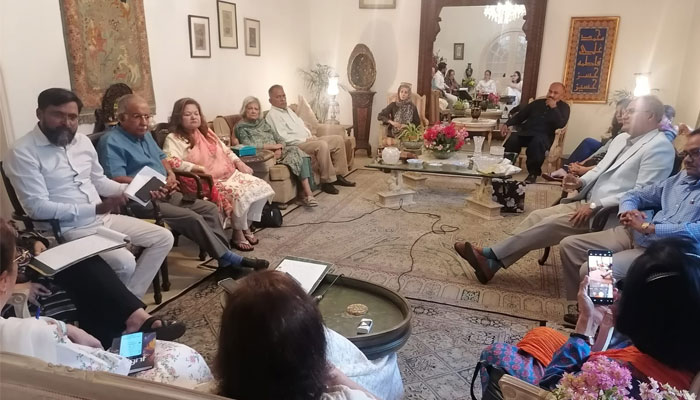
KARACHI: Concerned over Karachi’s deteriorating civic conditions, rising air pollution and collapsing infrastructure, the Karachi Citizens Forum (KCF) convened a high-level meeting to explore solutions and to discuss ways to compel government authorities to fulfill their constitutional responsibilities. The meeting, chaired by Convenor KCF Nargis Rahman, brought together leading civil society representatives including Nazim Haji (SABKA Foundation), Syed Khawar Mehdi (Concerned Citizens Alliance), Professor Dr Shahana Urooj Kazmi (President PSM), Mehmood Alam Khalid, Dr Zeba Irfanullah, Muhammad Toheed, Shanaz Ramzi (KCF, PWFFP), Bushra Rizvi (KCF, PWFFP), Rasha Tarek (activist), Dr Yasmeen Kazi (KCF, PWFFP), Zahid Farooq (Director Urban Research Centre, Karachi), Noreen Fatima (Climate March), Ahmad Shabbar (Garbage Can), Anushe Alam (PLT), and Rashida Shabbir (activist).
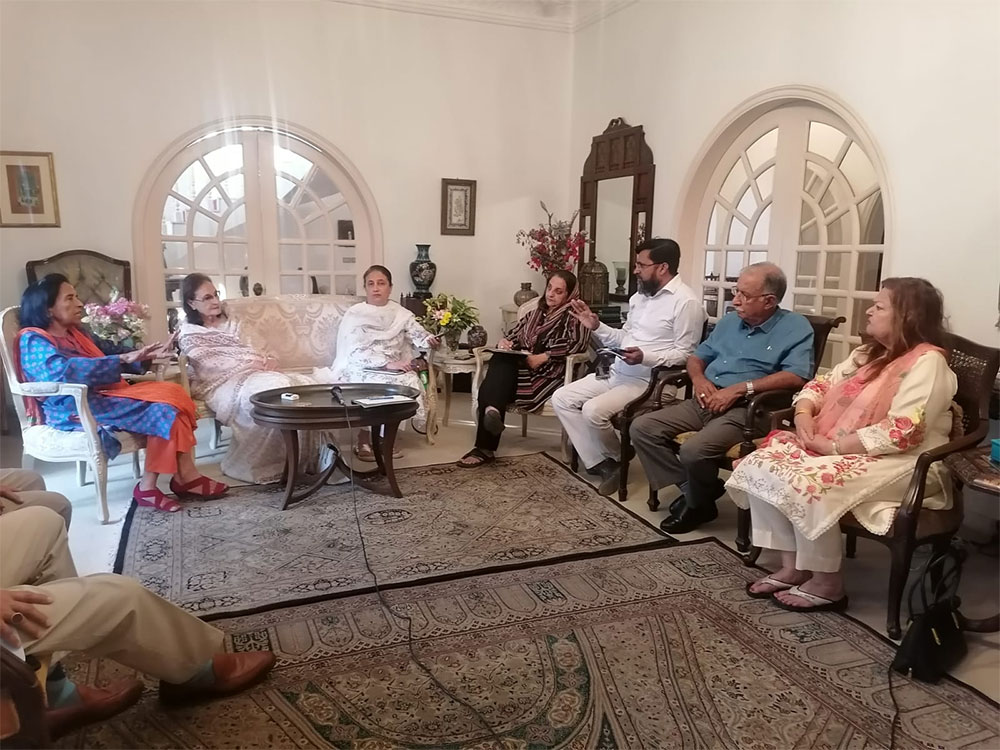
Opening the discussion, Nargis Rahman said that Karachi’s problems are well-known and have been extensively studied by senior town planners, experts, donor agencies and government-formed bodies over many years. She said citizens face daily hardship due to broken roads, sewage-flooded streets, garbage-littered neighborhoods, toxic fumes, noise pollution and the complete absence of promised civic services. She added that multiple civic agencies continue to engage in a blame game while absolving themselves of responsibility for governance failure. She noted that despite widespread protests, seminars, and community-driven proposals, no meaningful action is taken by the mayor or relevant authorities, even as Karachi repeatedly ranks among the world’s most polluted and unliveable cities.
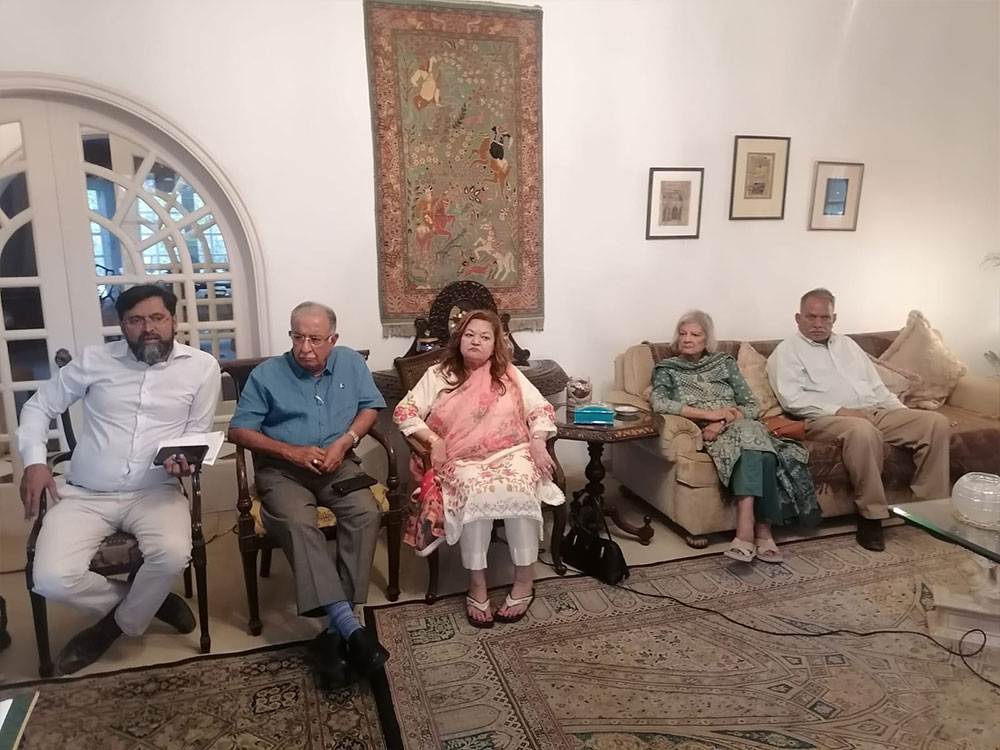
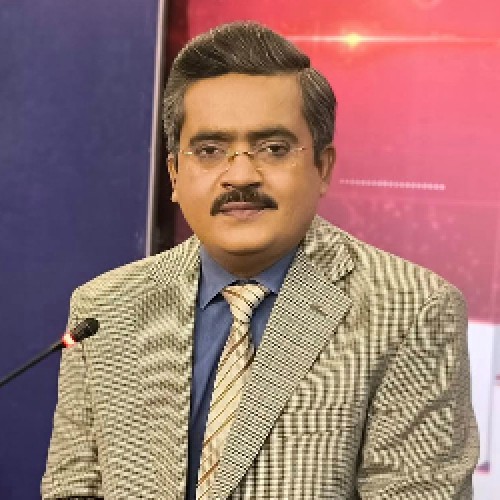
Former Secretary General PMA Dr Qaiser Sajjad highlighted the growing public health crisis caused by severe and prolonged air pollution. He said Karachi’s residents increasingly suffer from ENT diseases, chest infections, nasal allergies, bronchitis, asthma, laryngeal diseases, and even cancers linked to industrial emissions, vehicular smoke, generator fumes, garbage burning and construction dust.
Former Vice Chancellor Swabi University, Dr Shahana Urooj Kazmi, expressed concern over the long-delayed BRT project and the new K-IV water pipeline works that have choked a major road used daily by thousands of students studying at public universities. She said the proposed two-month closure and alternate routes will impose additional time and financial burden on middle-class students already struggling with transport challenges.
Urban planner Muhammad Toheed said fragmented governance remains Karachi’s biggest obstacle as different government sections undermine each other’s work. He noted that KMC controls 106 roads but has failed to maintain even these. Referring to the Greater Karachi Regional Plan, he said the National Stadium and Expo Centre should be moved outside city limits, with the existing sites used only for limited cultural and training activities. Zahid Farooq added that areas such as Sabzi Mandi, Jail and the airport were originally outside Karachi’s boundaries but have now merged due to unchecked urban sprawl, intensifying congestion.
Participants also discussed growing neglect of public parks in Clifton. Rasha Tarek, a resident of Clifton Block 5, said several parks are being systematically demolished to construct padel courts, including parks inaugurated by former administrator Murtaza Wahab. She said despite securing temporary court stays, municipal authorities have stopped maintaining the green spaces, leading to dying plants. Rashida Anjarwalla said that nine parks in Clifton are currently under threat of being torn down. Anushe Alam from Clifton Block 2 said the area’s residents face overflowing gutters, drug addicts and uncollected garbage, and stressed the need for united community action despite risks of intimidation and pressure faced by activists.
Syed Khawar Mehdi said that while corruption exists nationwide, cities like Lahore still show progress, whereas political turmoil in Karachi continues to derail improvement efforts. He said civil society must offer workable models and make political leaders answerable for failing to act. He also recalled earlier work done with Mustafa Kamal and Faisal Siddiqui on governance reforms, which was abandoned due to political instability.
Noreen Fatima highlighted the example of the Gujjar Nullah community, which fought a long legal battle and secured partial displacement compensation despite ethnic and religious diversity. She said such success stories should inspire further mobilization. Ahmad Shabbar said the focus must also shift to positive civic movements to motivate citizens who have previously taken action.
Concluding the meeting, Convenor Nargis Rahman assigned responsibilities for a coordinated civic strategy. Nazim Haji and Dr Syed Khawar Mehdi will work on drafting a constitutional amendment and preparing a white paper to advocate for a dedicated chapter on local government. Urban planner Muhammad Toheed and environmentalist Mehmood Alam will mobilize students to design environmental improvement models. Zahid Farooq, Ahmad Shabbar and Rasha will connect with community groups that have successfully worked with their town councillors to address civic issues, so these examples can be replicated across Karachi. Participants agreed that meaningful and sustainable progress cannot be achieved without a structured partnership between government agencies and citizens.