
KARACHI: National and international scientists at the 9th International Symposium-cum-Training Course on Molecular Medicine and Drug Research (MMDR-9) underscored the significant role of advanced technologies in tackling complex diseases and improving therapeutic outcomes.
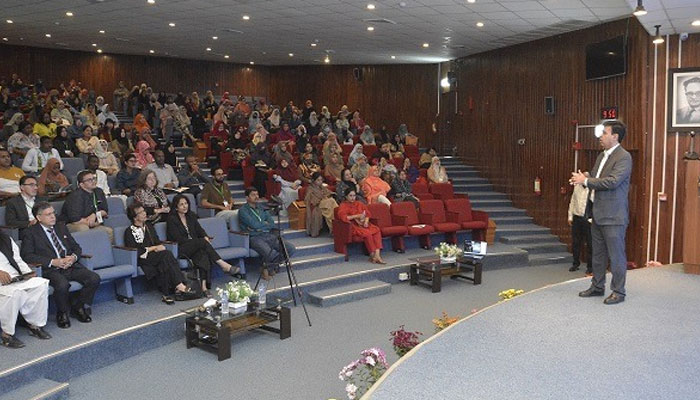
Experts stated that modern technological tools are revolutionizing approaches to cancer therapy, neurological and ocular disorders, and oral drug delivery. The third day of the global scientific event began with a lecture by Prof. Dr. Muhammad Raza Shah, Director of the International Center for Chemical and Biological Sciences (ICCBS), University of Karachi, at the Prof. Salimuzzaman Siddiqui Auditorium. The symposium is being organized by the Dr. Panjwani Center for Molecular Medicine and Drug Research (PCMD), University of Karachi, with around 600 scientists — including 42 international participants — in attendance.
Prof. Raza Shah highlighted that recent advancements in nanotechnology, polymer engineering, 3D printing, and artificial intelligence now enable researchers to design intelligent drug carriers that offer targeted, controlled, and sustained drug release. He said this paradigm shift from conventional dosage forms to personalized and precision-based drug delivery systems marks a major breakthrough in therapeutic science.
Traditional drug delivery methods, he observed, face challenges such as low bioavailability and non-specific distribution, often resulting in reduced effectiveness and potential side effects. However, modern delivery systems are designed to enhance therapeutic impact, minimize adverse effects, and improve patient compliance. Ongoing research, he added, is now focused on tailoring delivery mechanisms according to drug characteristics, disease nature, and individual patient needs.
Addressing neurological disorders, Dr. G. Rasul Choudhary from the USA said that the global rise in neurodegenerative diseases remains a serious challenge. Conditions such as multiple sclerosis, amyotrophic lateral sclerosis, Huntington’s disease, Alzheimer’s disease, and Parkinson’s disease involve irreversible neuronal damage, chronic inflammation, and impaired motor functions — with no definitive cure presently available, he noted.
Prof. Dr. Farzana Shaheen from ICCBS shared that her team is investigating the structural diversity and biological potential of natural product peptides to identify new drug candidates. She emphasized that proline-rich cyclic peptides, found in various natural sources, exhibit unique structural attributes and promising biological activity, making them valuable leads for therapeutic development.
The third day of MMDR-9 also featured lectures by Andrew M. Hemmings from China, Canadian researcher Walid A. Houry, and other international experts, focusing on frontier technologies reshaping the future of molecular medicine.
The symposium continues to provide a platform for global collaboration and innovation in modern healthcare research.