
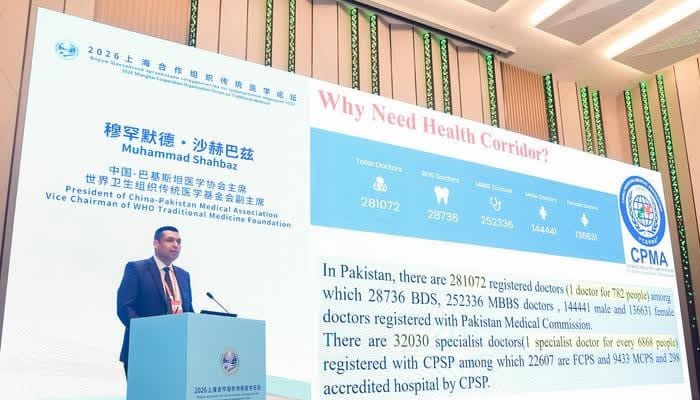
NANCHANG: Pakistan is accelerating efforts to comprehensively integrate traditional medicine into its national healthcare system under the upcoming National Health and Population Policy 2026–2035 and is looking to China for advanced technologies to support research, development and production in the sector.
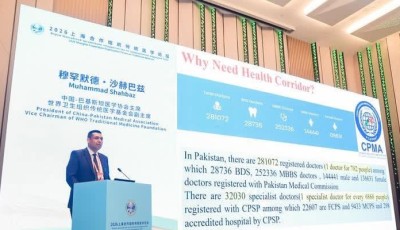
Muhammad Shahbaz, Executive Director of the World Health Organization Traditional Medicine Foundation and President of the China-Pakistan Medical Association, made the remarks while addressing the recently concluded Shanghai Cooperation Organisation (SCO) Forum on Traditional Medicine.
Shahbaz said 2026 is an important year for reforms in Pakistan’s public health policy. As part of efforts to strengthen the pharmaceutical industry and keep pace with global developments in healthcare, Pakistan is working on its National Health and Population Policy 2026–2035, which envisages the integration of traditional medicine into the national health system.
He said the government attaches considerable importance to the development of traditional medicine and has established a national centre for traditional medicine to strengthen institutional frameworks, product management, education, accessibility and standard-setting while promoting integration with modern evidence-based medicine.
Highlighting Pakistan’s large rural and agricultural population and rich medicinal plant resources, Shahbaz said technological limitations have prevented many medicinal plants from being effectively transformed into usable healthcare products.
He said the Drug Regulatory Authority of Pakistan is working with the agriculture sector, pharmaceutical industry and other stakeholders to develop an alliance aimed at protecting medicinal plants and strengthening the sourcing of raw materials.
Shahbaz said Pakistan is particularly interested in introducing new Chinese technologies in areas including medicinal-material sourcing, standardised production and artificial intelligence to improve research, development and manufacturing capabilities in traditional medicine and enable Pakistani patients to benefit from a wider range of traditional Chinese medicine products.
Referring to longstanding Pakistan-China relations, he said cooperation in traditional medicine has developed into an important area of bilateral engagement. Pakistan seeks to further deepen collaboration with Chinese traditional medicine institutions in scientific research, training of medical professionals, technology transfer, academic exchanges and education.
He said Pakistan also looks forward to drawing further on Chinese traditional medicine standards during 2026. He cited Pakistan’s advance approval of traditional Chinese medicine for the treatment of chronic bronchitis as an example of medical cooperation between the two countries.
Shahbaz called on the SCO and governments of member countries to expand practical cooperation by developing a health and medical corridor, university-based training centres and hospitals, while making greater use of information technology and big-data platforms to broaden the benefits of traditional medicine.