
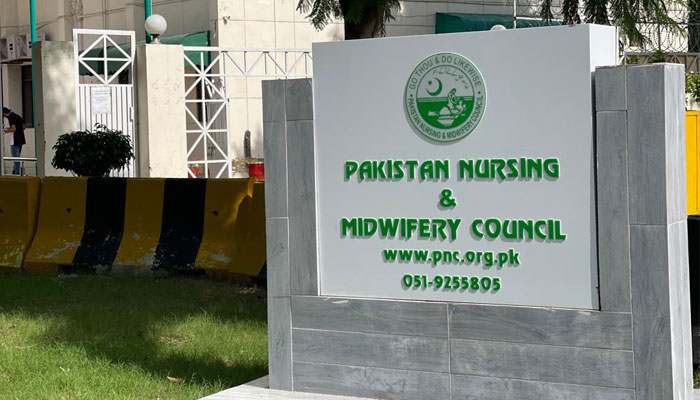
KARACHI: Serious concerns are being raised within the nursing community and among health sector stakeholders regarding the governance structure, decision-making control, and level of professional representation within the Pakistan Nursing and Midwifery Council.
At the center of the debate is the composition of the council and the manner in which key positions have been filled. Multiple stakeholders have questioned whether the current structure adequately represents qualified nursing professionals or if administrative influence has overshadowed the role of elected and field-experienced members.
Observers note that several individuals holding key positions within the council are understood to have been nominated rather than elected through a broad-based, transparent process. This has led to concerns about the inclusiveness and credibility of the institution, which serves as the primary regulatory authority for nursing education, licensing, and professional standards in Pakistan.
Particular attention is being drawn to the perceived concentration of influence in the hands of a limited group, including individuals linked with government structures. Critics argue that such arrangements may impact the independence of the council and raise questions about whether decisions are being made in the best interest of the nursing profession or influenced by administrative considerations.
Questions have also been raised regarding the mechanism through which the leadership of the council, including its president, is selected. Traditionally, regulatory bodies are expected to follow defined procedures ensuring that leadership emerges through representative processes. However, stakeholders claim that the current system lacks sufficient clarity and transparency in this regard.
Importantly, the council holds significant regulatory authority, including the power to recognize and de-recognize nursing institutions, approve new colleges, determine seat allocations, and regulate licensing of nursing professionals. Given the extent of these powers, any concerns related to governance, transparency, or decision-making processes carry far-reaching implications for nursing education and the broader healthcare system in Pakistan.
Concerns are also being voiced regarding the process through which the current council has been reconstituted, with questions emerging about whether due legal and institutional procedures were fully adhered to in forming the new body and appointing its members. Observers note that the pace of structural changes, coupled with recurring controversies, has raised apprehensions about the credibility and institutional reputation of the council at both national and international levels.
Adding to these concerns, there is limited publicly available information regarding the professional backgrounds, qualifications, and selection criteria of several council members. Experts believe that greater transparency in these areas is essential to build trust among nursing professionals and ensure accountability in a body that directly impacts thousands of practitioners across the country.
The issue of tenure has also come under discussion, with concerns about whether current members are serving within defined terms or continuing beyond standard durations. Clear communication on tenure policies and adherence to established rules is seen as critical for institutional credibility.
Responding to queries, Pakistan Young Nurses Federation President Sajad Hussain said the current structure does not adequately represent the nursing workforce, particularly public-sector nurses and male professionals, who he said remain largely excluded. He emphasized that council members should be elected through a transparent process and that key leadership positions must be held by qualified nursing professionals.
He further pointed to a “serious transparency deficit” in areas such as college approvals and seat allocations, alleging that decisions often lack clear, merit-based criteria and publicly available standards, which undermines trust in the regulatory system.
Separately, Prof. Khair-Un-Nisa, General Secretary of the Provincial Nurses Association Sindh, stressed the need to restore a more representative governance structure in line with the original framework defined under the Pakistan Nursing Council Act 1973. She highlighted concerns within the community regarding transparency in appointments and decision-making processes, calling for stronger regulatory oversight and inclusive participation of nurses and midwives.
Stakeholders also noted that beyond licensing and institutional approvals, the council’s broader mandate — including regulation of education and clinical practice, promotion of research, and international engagement — requires more active implementation.
The nursing community, which plays a vital role in Pakistan’s healthcare system, has long advocated for stronger professional representation in regulatory decision-making. Many stakeholders emphasize that a council governing such a critical workforce must reflect the voices, expertise, and interests of practicing professionals across regions.
Despite repeated attempts, no official response was received from the Pakistan Nursing and Midwifery Council or relevant officials at the Ministry of National Health Services regarding the concerns raised by stakeholders.
The evolving situation raises broader questions about institutional governance, including who effectively controls the council, the extent of professional representation in its decision-making processes, and how transparency and confidence can be strengthened in a body central to Pakistan’s healthcare system.
Experts and stakeholders are calling for greater clarity, openness, and inclusive reforms to ensure that the council operates in a manner that is representative, transparent, and aligned with the needs of the nursing profession.