
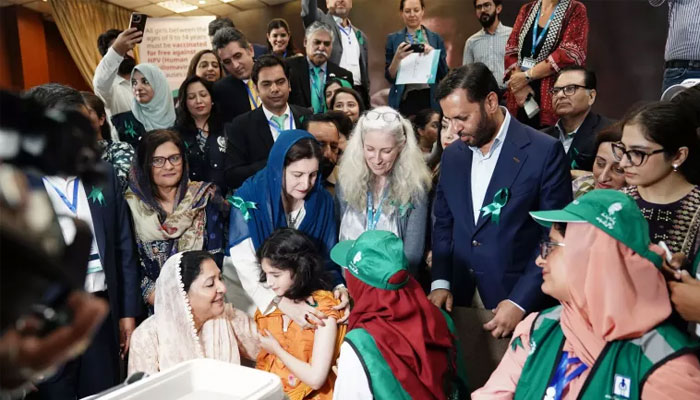
KARACHI: Pakistan has launched a nationwide Human Papillomavirus (HPV) vaccination campaign to protect girls aged 9–14 from cervical cancer—the third most common cancer among Pakistani women. The first phase (15–27 September 2025) is underway in Punjab, Sindh, Islamabad Capital Territory and AJK, aiming to reach about 13 million girls, before expanding nationwide and into routine immunisation.
Why this matters
Cervical cancer kills thousands of Pakistani women every year—roughly eight women daily—and most deaths are preventable with vaccination and screening. The drive aligns Pakistan with more than 150 countries using WHO-prequalified HPV vaccines and contributes to WHO’s global strategy to eliminate cervical cancer.
What exactly is being rolled out?
Target group: Girls 9–14 years (adolescents most likely to benefit before exposure to HPV).
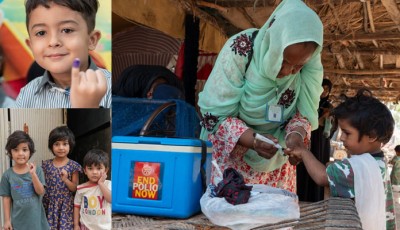
Where/how: Schools, fixed/outreach sites, and special/mobile teams to reach out-of-school girls.
Workforce: WHO supported training for ~49,000 vaccinators to deliver the first campaign safely and at scale.
Is one dose really enough?
Yes—WHO’s 2022 guidance allows a single-dose schedule for girls 9–14 (and 15–20), with 2–3 doses reserved for older or immunocompromised individuals. Single-dose protection simplifies delivery and expands coverage.
Is the vaccine safe?
Global monitoring systems and 160+ studies show an excellent safety profile for HPV vaccines. WHO and CDC reiterate that serious adverse effects are rare, while the benefits for cancer prevention are substantial.
What’s in it?
The widely used Gardasil-9 contains purified HPV proteins with common vaccine ingredients such as aluminum adjuvant, polysorbate-80, L-histidine, sodium borate, and water—no preservative, no antibiotics, and no porcine gelatin listed in the US FDA label. (Different provinces may procure different WHO-prequalified brands; all must meet international quality standards.)
Misinformation Watch: Viral Claims Debunked
Claim 1: “Girls fainted after the HPV shot.” A widely shared video is not from an HPV session. Fact-checks show it was footage of schoolgirls affected by tear gas during a protest in AJK (May 2024), miscaptioned to stoke fear.
Claim 2: “The vaccine causes infertility.” Large studies and WHO’s vaccine-safety committee find no link between HPV vaccination and infertility/primary ovarian insufficiency. In fact, preventing cervical cancer can protect fertility by avoiding treatments that may impair child-bearing.
Claim 3: “It’s a Western plot against Muslims.” HPV vaccination is used in 150+ countries, including many Muslim-majority nations, with WHO-prequalified vaccines introduced to save lives. Pakistan’s roll-out is a government-led public-health program with WHO, UNICEF and Gavi partners.
Claim 4: “Side effects are severe.” Expected reactions are usually mild and temporary (sore arm, low-grade fever). Serious events are extremely rare and continuously monitored by global and national safety systems.
Key Questions Parents Are Asking
Who should get the vaccine now?
Girls aged 9–14 years in Punjab, Sindh, ICT and AJK during the first phase (free of cost). Later phases will extend to KP, Balochistan and GB, and the vaccine is planned for routine immunisation of future cohorts.
What if my daughter is out of school?
The programme is using neighbourhood sites, outreach and mobile teams so out-of-school girls can be vaccinated too—check with local EPI/health facilities for schedules.
Do older teens or immunocompromised girls need more than one dose?
WHO recommends two doses for women over 21 and at least two for immunocompromised individuals; clinicians may advise additional doses based on health status.
Will screening still be needed later in life?
Yes. Vaccination prevents most—but not all—HPV-related cancers. Regular screening remains essential.
The Real Implementation Challenges
Even with strong evidence, Pakistan must overcome:
- Awareness gaps and stigma around HPV and sexual health.
- Misinformation (infertility rumours, miscaptioned videos, “conspiracy” narratives).
- Reaching out-of-school girls and hard-to-reach areas.
- Sustaining funding and integrating HPV into routine EPI.
- Trust-building through female vaccinators and culturally sensitive communication.
The Bottom Line
HPV vaccination is a safe, single-dose, life-saving intervention that Pakistan has now joined much of the world in adopting. Parents who vaccinate their daughters today are protecting them from a cancer that often strikes silently decades later. Ignore the rumours—check facts from WHO/UNICEF/FDI, talk to your healthcare provider, and use official campaign channels to find your nearest vaccination site.