
KARACHI: The Pakistan Islamic Medical Association (PIMA) strongly condemned the murder of Dr. Mehwish Hasnain in Kohat and demanded nationwide legislation along with strict implementation measures to ensure the protection of doctors and healthcare providers, warning that continued violence and poor working conditions are accelerating the migration of medical professionals abroad.
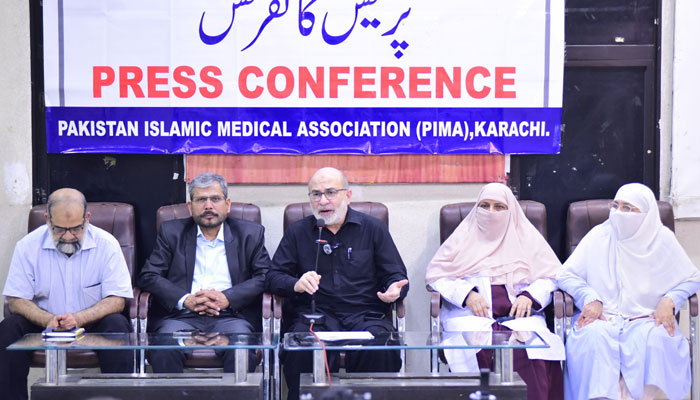
Addressing a press conference at the Karachi Press Club, PIMA Central President Prof. Atif Hafeez Siddiqui said Dr. Mehwish was shot dead outside a hospital while performing her professional duties. He stated that although Doctors Protection Bills exist in Sindh and Khyber Pakhtunkhwa, their implementation remains ineffective. He said doctors have become soft targets and cautioned that if the situation persists, the country will face a severe shortage of qualified and experienced doctors.
The press conference was also attended by President PIMA Women Branch Dr. Zakia Aurangzeb, President PIMA Sindh Prof. Abdullah Muttaqi, President PIMA Karachi Dr. Ahmar Hamid, and Dr. Azra Jameel.
Prof. Atif Hafeez Siddiqui said that the prevailing circumstances are adversely affecting the physical and mental health of doctors, while the tendency toward suicide among students is also rising. He noted that frustration stemming from a lack of facilities in hospitals is often directed at doctors. He further stated that software installed in government teaching hospitals in Punjab is technically flawed and creating serious difficulties for both patients and doctors. He added that doctors have played a key role in establishing institutions such as SIUT, Indus Hospital and POB, and continue to strive for improvements in the public sector through self-help initiatives.
Dr. Zakia Aurangzeb said that approximately 80 percent of students enrolled in medical colleges are female, but a dropout rate of over 35 percent is alarming and continues to increase. She said that instead of facilitating greater participation of female doctors in active practice, conditions are deteriorating. She stated that incidents have escalated from harassment to murder, making it increasingly difficult for female doctors to continue practicing. Ensuring the security of female doctors, she emphasized, is the government’s fundamental responsibility.
Prof. Abdullah Muttaqi said the healthcare system is currently being sustained by around 38,000 trainee doctors, with 60 percent working in the public sector and 40 percent in the private sector. He stated that female doctors are already reluctant to serve in remote areas, and incidents such as the one in Kohat further intensify this reluctance. He added that many doctors now prioritize leaving the country after completing their training. The widening gap in training slots, shortage of trainee doctors and growing brain drain, he warned, are pushing the country toward a critical situation.
PIMA office-bearers demanded the establishment of effective and practical security systems in hospitals, improvement in doctors’ salaries and service structures in line with inflation, and the provision of safe, dignified and proper working conditions to healthcare professionals across the country.