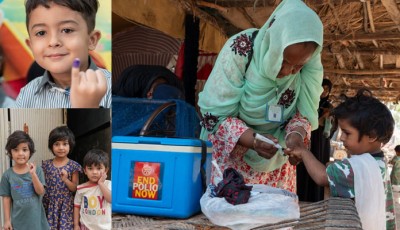

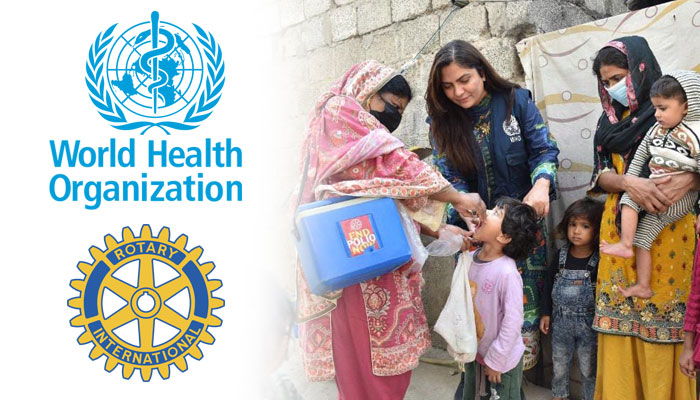
ISLAMABAD: Rotary International has provided a grant of US$ 9.9 million to the World Health Organization in Pakistan to support polio vaccination activities targeting 27 million children in high-risk districts across the country.
According to WHO, the funding will strengthen the operations of the Government of Pakistan-led Polio Eradication Initiative, which conducts multiple nationwide and sub-national door-to-door vaccination campaigns each year, reaching more than 45 million children. The grant forms part of a broader US$ 14.9 million contribution by Rotary International towards polio eradication efforts in Pakistan.
Rotary International is a founding partner of the Global Polio Eradication Initiative, a global public-private partnership led by national governments along with six core partners, including WHO, UNICEF, the US Centers for Disease Control and Prevention, the Gates Foundation, Gavi, the Vaccine Alliance, and Rotary International.
Pakistan launched its Polio Eradication Initiative more than three decades ago and has since achieved a 99.8 per cent reduction in polio cases, declining from an estimated 20,000 cases in 1994 to 31 cases reported in 2025. Globally, polio cases have dropped by 99.9 per cent since 1988. Wild poliovirus type 1 remains endemic in only two countries worldwide: Pakistan and Afghanistan.
To date, Rotary International has contributed approximately US$ 3 billion to global polio eradication efforts, including nearly US$ 500 million in Pakistan, in addition to sustained advocacy and volunteer support.
WHO Representative in Pakistan Dr Luo Dapeng said Rotary’s contribution demonstrated the strength of long-standing partnerships in protecting millions of children from paralytic polio. He emphasized that sustained collective action is essential to achieving a polio-free world, noting that the detection of wild poliovirus in Germany last year underscored the global risk posed by any remaining transmission.
WHO stated that the latest grant will support immunization campaigns in high-risk districts of Balochistan, Sindh, Khyber Pakhtunkhwa, and Punjab. The funds will be utilized for campaign operations, including recruitment and incentives for frontline workers, training, transportation, supplies, vaccine carriers, and other essential operational costs to ensure uninterrupted vaccination activities.