
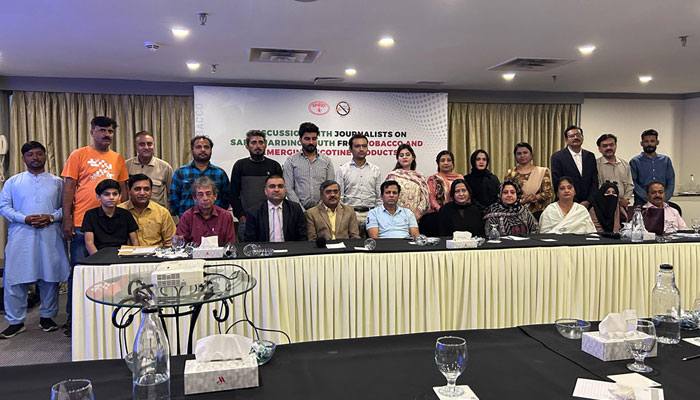
KARACHI: The Society for the Protection of the Rights of the Child (SPARC) organized an interactive session with journalists in Karachi to highlight the increasing dangers posed by tobacco use and emerging nicotine products among children and youth in Pakistan. The session focused on strengthening media advocacy, countering misinformation, and accelerating public awareness to protect the younger generation from addiction.
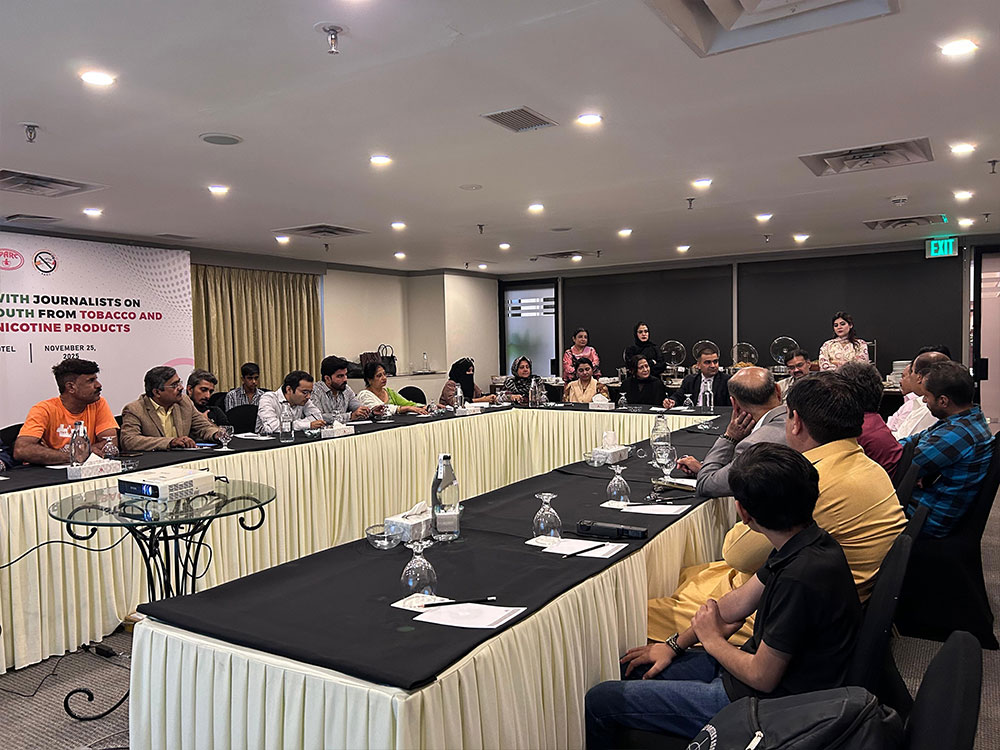
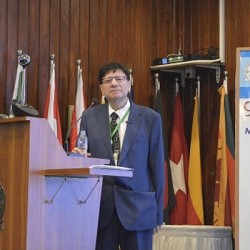
Speaking at the event, Dr. Khalil Ahmad Dogar, Program Manager at SPARC, cited worrying national trends and said Pakistan continues to face a serious tobacco burden. He said that according to the WHO Report 2025, 20.6 percent of men and 2.6 percent of women in Pakistan are smokers. He further shared that cigarette smoking is rising rapidly among children below the age of ten, while a significant surge has also been observed among youth aged 15 to 24 years. Almost five percent of the elderly population is also affected. Dr. Dogar added that nearly 1,200 Pakistani children begin smoking every day, which reflects both the gravity of the crisis and the aggressive strategies used by the tobacco industry.
The discussion also highlighted that media and social media platforms often portray cigarette smoking as glamorous, brave and stylish, leading children and teenagers to imitate their favourite actors and influencers. Young viewers begin to believe that smoking is not harmful and may even be a symbol of confidence or heroism. It was pointed out that most individuals start smoking casually, but eventually fall into addiction and then turn to other nicotine products, falling deeper into the cycle without fully understanding its health consequences.
In her remarks, Shumaila Muzammil Vistro, Manager SPARC, said that Pakistan is trying to curb tobacco consumption through taxation, awareness campaigns and the implementation of graphic health warnings on packaging, but stronger enforcement and consistent media support are required. She underscored that cigarette addiction often begins with ‘curiosity’ but later turns into dependency, and stressed that children and youth must be made aware that this slow addiction eventually damages their health, personality and future.
Prominent journalist and media representative Akhtar Shaheen Rind, Senior Anchorperson, Editor-in-Chief Health Matters Media and President Anchors Club, actively participated in the session. He proposed regular engagement with anchors and health journalists to strengthen youth-focused advocacy, and suggested involving celebrities, artists and sports figures to spread the message more powerfully across society. He also shared that he and his colleagues from the Tobacco-Free Cities Coalition successfully prevented a vape expo from being held at the Karachi Expo Centre by raising its health concerns and urging authorities to intervene just a day before the event.
Participants appreciated the contributions of Akhtar Shaheen Rind and his coalition partners, while SPARC officials acknowledged his suggestions and assured continued collaboration in future efforts. The session concluded with a collective resolve to expand media advocacy, strengthen youth awareness and support Pakistan’s commitment to building a tobacco-free future.