
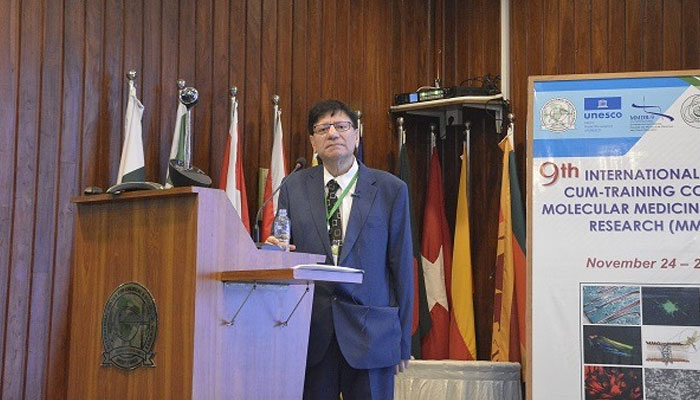
KARACHI: International scientists have underscored the therapeutic potential of aged garlic extract, highlighting its ability to protect against multiple disease processes, including cancer, diabetes, and drug-induced cardiotoxicity. The remarks were made on Tuesday during the 9th International Symposium-Cum-Training Course on Molecular Medicine and Drug Research (MMDR), being held at the Prof. Salimuzzaman Siddiqui Auditorium, University of Karachi.
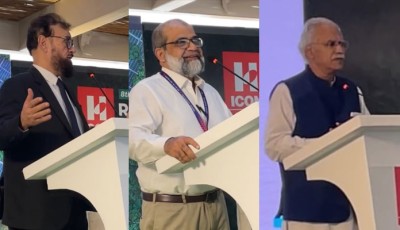
Addressing the packed auditorium of around 600 scientists — including 42 international participants — Prof. Dr. Nessar Ahmed from the UK delivered the day’s first lecture, explaining that aged garlic extract is produced by aging raw garlic for 20 months to create an odorless and palatable form rich in antioxidants. He said his laboratory has demonstrated its antiglycation and antioxidant properties, including evidence of protection against doxorubicin-induced cardiotoxicity.
Prof. Ahmed stressed that aged garlic extract deserves greater scientific attention, particularly for its potential in reducing advanced glycation end-products (AGEs) in diabetic patients and preventing heart damage in cancer patients receiving chemotherapy. He said garlic has also been reported to exhibit hepatoprotective and anticarcinogenic effects.
In another lecture, Dr. Ikram Burney stated that tumors may change over time and differ from one area of the body to another, which makes repeated or large biopsies challenging for both physicians and patients. Prof. Dr. Luciana Dini added that glioblastoma multiforme (GBM) remains one of the most difficult cancers to treat due to its rapid growth and limited treatment options.
Prof. Dr. Zhen-Feng Chen highlighted the biological significance of alkaloids — active ingredients in traditional Chinese medicine — and discussed a new approach that combines a potent natural product with a hypoglycemic drug to treat cancer patients who also suffer from diabetes.
UNESCO Chairs Summit Held at MMDR-9
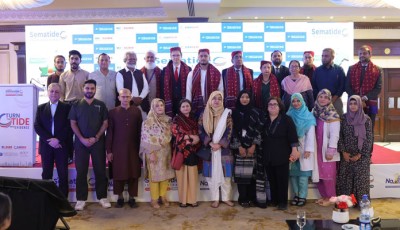
On the sidelines of the symposium, a special scientific event titled “The UNESCO Chairs Summit of Scientific Solidarity – Building Bridges Across Borders” was held as part of MMDR-9. Participants included Bilquees Gul, Dean, Faculty of Science, University of Karachi; Prof. Dr. Adnan Noor Mian, Prof. Dr. Asif Ali, and Prof. Dr. Syed Javaid Zaidi — all UNESCO Chair holders.
Welcoming the participants, Prof. Dr. Muhammad Raza Shah, Director of ICCBS and UNESCO Chair Holder at ICCBS, said it was his distinct honor to host the summit, which brought together leading UNESCO Chairs to explore collaborative pathways for advancing science as a tool for peace, sustainability, and inclusive development. He added that the initiative aligns with UNESCO’s mission and supports the proposal to designate 2028 as the International Year of Science for Peace and Sustainable Development, recommended for inclusion in the agenda of the 42nd General Conference.
The MMDR-9 symposium continues to host leading experts, scientists, and researchers from around the world to deliberate on emerging trends and challenges in molecular medicine and drug research.