
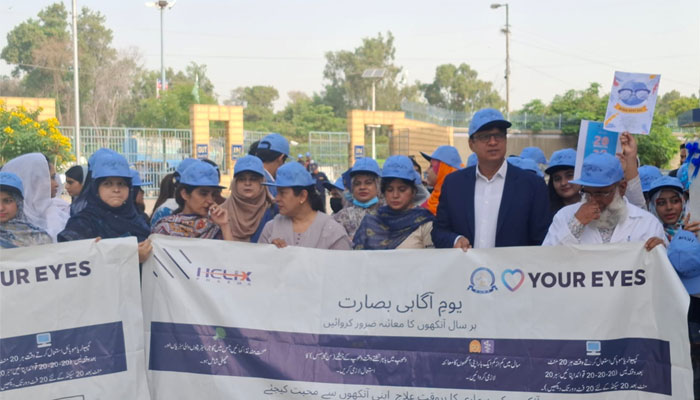
KARACHI: Nearly 40 million people in Pakistan suffer from various eye diseases, said Professor Jehan Ara Hasan, Pro-Vice Chancellor of Dow University of Health Sciences (DUHS), during an awareness event held to mark World Sight Day on Thursday.
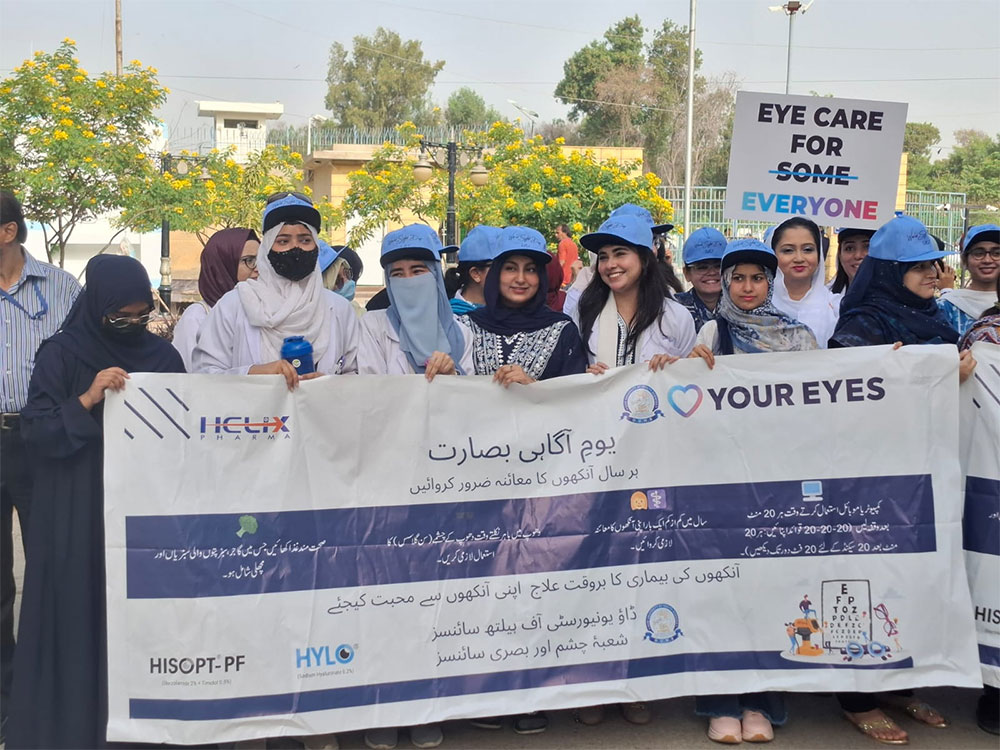
Citing recent data, Prof. Jehan Ara said that 49 percent of blindness cases in Pakistan are caused by cataract, while the remaining 51 percent are due to other eye conditions, including glaucoma, diabetic retinopathy, and macular degeneration.
She noted that despite the high prevalence of diabetes in the country, most patients neglect regular retinal examinations, which are crucial for those aged forty and above. “Early diagnosis and timely intervention can prevent irreversible vision loss,” she stressed.
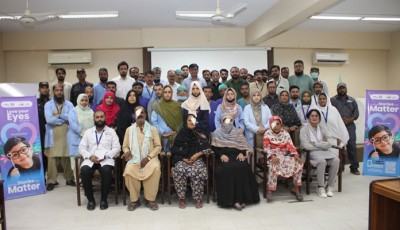
The event — featuring an awareness walk and seminar — was organized by the Department of Ophthalmology at Dow University Hospital. The walk was led by Prof. Jehan Ara, beginning from the Trauma Center and concluding at the National Institute of Diabetes and Endocrinology (NIDE).
Addressing the seminar, Professor Iftikhar Ahmed, Principal of Dow International Medical College, emphasized that the purpose of observing World Sight Day is to raise awareness about eye health and promote preventive measures against blindness. He added that this was the first time Dow University celebrated the day on such a large scale, underscoring the importance of regular eye check-ups and timely treatment.
Professor Nisar Ahmed Sial highlighted that at NIDE, special focus is given to the eye health of diabetic patients, as they face a higher risk of vision impairment. He explained that glaucoma (commonly known as black water), often linked to diabetes or high intraocular pressure, remains a major cause of blindness in Pakistan.
According to the Pakistan Survey Report 2022, approximately 485,000 people in the country are completely blind, while around 9 million suffer from weak eyesight and require corrective lenses.
A stall set up by the Dow Organ Support Society also promoted awareness about eye donation, where volunteers informed participants about the significance of organ and tissue donation in restoring sight.
The event concluded with the distribution of certificates and flower bouquets to speakers, doctors, and staff members who played a key role in organizing and celebrating World Sight Day at Dow University.