
KARACHI: The Faculty of Nursing & Midwifery at Ziauddin University successfully hosted the 2nd International Nursing Research Conference 2025, themed “Navigating Artificial Intelligence in Nursing Research, Education and Practice: Preparing the Next Generation.” The event brought together distinguished national and international experts who emphasized that while artificial intelligence (AI) is transforming healthcare, the essence of nursing remains deeply rooted in compassion, empathy, and ethical care.
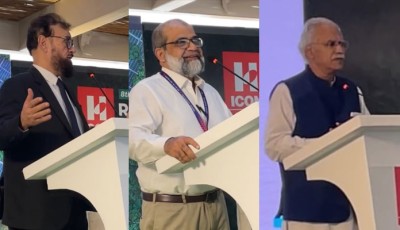
Chief Guest Prof. Dr. S. M. Tariq Rafi, Chairman of the Sindh Higher Education Commission (SHEC), highlighted the irreplaceable role of humanity in healthcare, stating that “AI is a machine-based technology that can support decision-making, but at the end of the day, it is the human connection — the care, comfort, and kindness that nurses provide — which helps patients heal rapidly.” He stressed the importance of integrating technology without compromising core values, adding that AI-powered monitoring systems enable early detection of patient changes, reduce hospital stays, and minimize medical errors. However, he noted that “technology cannot replace human intelligence, compassion, and empathy that define nursing.”
Delivering the keynote address, Dr. Tracie Risling, Associate Dean of Innovation at the University of Calgary, Canada, provided a forward-looking perspective on AI’s impact on nursing practice. She shared that AI-enabled tools — from intelligent monitoring to predictive systems — support timely, evidence-based decision-making. Emphasizing responsible adoption, she said, “Artificial intelligence should support our judgment, not replace it. Because at the end of the day, it is human intelligence, compassion, and ethical care that define nursing.”
In her introductory remarks, Dr. Yasmin Amarsi, Advisor to the Chancellor, Ziauddin University, affirmed that AI enhances efficiency but will never replace the human touch. She noted that “the essence of nursing remains rooted in humanity,” and urged collective efforts to prepare the next generation of nurses for a future shaped by both innovation and values.
The conference featured insightful contributions from international experts. Prof. Dr. Pammla Petrucka from the University of Saskatchewan, Canada, underlined AI’s transformative role in nursing research, describing it as a tool that “unlocks new frontiers for evidence and discovery.” Meanwhile, Dr. Jessica M. Gordon, a Pediatric Nurse Practitioner from Washington, DC, discussed AI’s impact on direct patient care and its potential to improve outcomes through enhanced support to nurses.
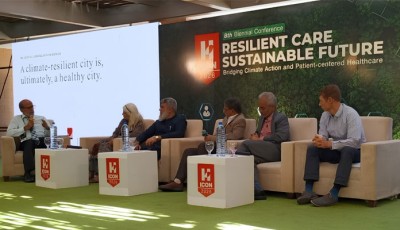
A panel discussion moderated by Dr. Sumaira Khowaja Punjwani, Principal of the College of Nursing and Midwifery, Ziauddin University, gathered leading voices from the nursing profession. Panelists included Prof. Dr. Dildar Muhammad (KMU), Prof. Dr. Tanseer Ahmed (DUHS), Dr. Khalil Ahmed (Al-Hamd College of Nursing and Health Sciences, Bhakkar), and Ms. Khairunnissa Hooda (AKUH). They collectively emphasized that AI offers tremendous potential in streamlining workflows, supporting nurses in high-pressure environments, and enhancing patient safety.
Earlier, Dr. Pamela Marshall, Dean of the Faculty of Nursing & Midwifery, welcomed the participants and highlighted the need for capacity building in nursing education. She stressed that as healthcare systems become smarter, nurses must be equipped with the skills, confidence, and vision to lead this digital transformation.
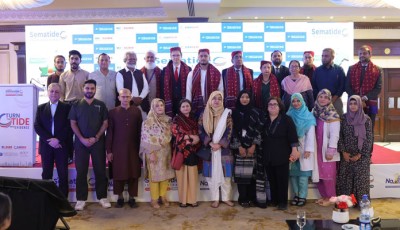
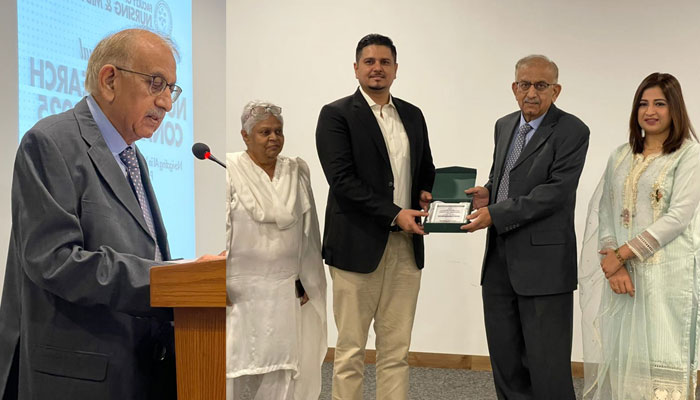
The conference also included vibrant student-led cultural performances and concluded with a shield and award distribution ceremony to recognize outstanding contributions from speakers, participants, and organizers.