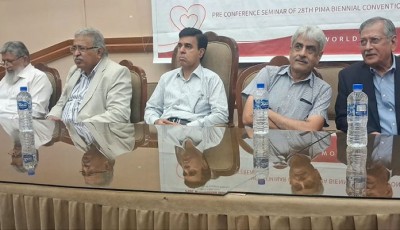


KARACHI: Around 485,000 people in Pakistan are blind, while nearly nine million suffer from visual impairment and require corrective spectacles, Principal Dow International Medical College (DIMC), Dr Uzma Bukhari, and leading ophthalmologists said while addressing an awareness seminar held in connection with World Sight Day.
The experts warned that while cataract remains a leading cause of blindness, glaucoma is another serious eye disease that can cause permanent and irreversible vision loss if not diagnosed and treated in time. They stressed that early detection, regular eye examinations and appropriate treatment could help prevent avoidable blindness.
The seminar was preceded by an awareness walk led by Dr Uzma Bukhari, which started from the Trauma Centre and concluded at the National Institute of Diabetes and Endocrinology (NIDE).
The event was attended and addressed by Director NIDE Dr Mussarat Riaz, Director Dow University Hospital Professor Zeba Ahmed, Professor Nisar Ahmed Sial and other medical experts.
Addressing the participants, the speakers said that approximately 39 million people worldwide are blind, while 285 million experience various forms of visual impairment. They added that an estimated 80 million people globally are living with glaucoma, highlighting the growing burden of eye diseases.
The ophthalmologists explained that glaucoma is particularly dangerous because it often develops without noticeable symptoms during its early stages. Patients may experience neither pain nor discomfort and may remain unaware of progressive damage to their eyesight until significant vision loss has already occurred.
They emphasised that individuals above the age of 40, patients with diabetes and those with a family history of glaucoma should undergo regular comprehensive eye examinations to ensure early diagnosis and timely treatment.
Speaking on the occasion, Dr Mussarat Riaz said that special attention was being given to eye examinations of patients with diabetes visiting the National Institute of Diabetes and Endocrinology, as diabetes significantly increases the risk of developing sight-threatening complications.
She said that glaucoma, commonly associated with increased pressure inside the eye, could lead to irreversible damage to the optic nerve. She stressed that patients with diabetes should not ignore routine eye screening, as early detection could help protect their vision.
Professor Nisar Ahmed Sial said that according to available data, cataract accounted for approximately 49 per cent of blindness cases, while the remaining 51 per cent were associated with other causes, including glaucoma, diabetic retinopathy and macular degeneration.
He expressed concern that despite the high prevalence of diabetes in Pakistan, a large number of patients did not undergo regular retinal examinations, increasing their risk of preventable vision loss.
Professor Sial stressed that regular eye examinations, particularly after the age of 40, were essential for identifying potentially sight-threatening conditions before permanent damage occurred.
The speakers urged healthcare professionals, institutions and the public to promote awareness about eye health, encourage routine screening and ensure timely access to ophthalmic services.
They emphasised that greater public awareness, early diagnosis and appropriate medical intervention could significantly reduce the burden of avoidable blindness and visual impairment in Pakistan.