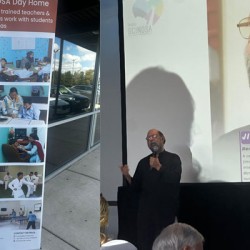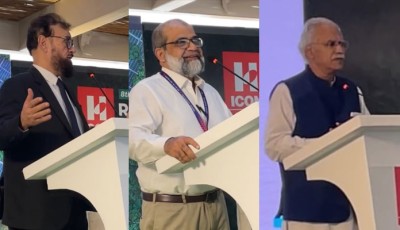


KARACHI: Alzheimer’s disease is not just a disorder of memory but a deeply complex illness that affects the very essence of human identity, said Dr. Fowzia Siddiqui, a renowned neurophysician and President of the Epilepsy Foundation Pakistan. She was addressing the 26th National PPS Psychiatric Conference 2025 held in Karachi.
Dr. Fowzia, who serves as a Neurologist and Epileptologist at Aga Khan University Hospital Karachi, explained that Alzheimer’s is the leading cause of dementia worldwide and should be viewed as both a neurological and psychiatric condition. “It is a loss of one’s self — the insight of who we are,” she said, emphasizing that the disease affects not only memory but also emotions, behavior, and personality.
She noted that as neurodegeneration advances, it disrupts the brain’s limbic system and frontal cortex, leading to neuropsychiatric symptoms that are often more distressing than memory decline. “Depression, anxiety, apathy, irritability, paranoia, delusions, and hallucinations are among the common symptoms,” she said, adding that up to 90 percent of patients experience at least one of these during the course of their illness.
Early in the disease, depression and anxiety may arise due to awareness of memory loss, while later stages bring psychosis and agitation as cognitive control weakens. Once defined mainly by amyloid plaques and tau tangles, Alzheimer’s is now understood as a condition that begins decades before symptoms appear, influenced by genetic, vascular, metabolic, and inflammatory factors.
Dr. Fowzia highlighted new research in biomarkers and neuroimaging that enables earlier and more accurate diagnosis, along with emerging therapies—such as anti-amyloid and anti-inflammatory treatments—designed to slow disease progression rather than only manage symptoms.
She advocated for a holistic “Mind plus Memory” approach that promotes physical activity, mental engagement, emotional well-being, and social connection to foster brain resilience and delay disease onset.
“While a cure remains elusive,” Dr. Fowzia concluded, “today’s advances offer hope—transforming Alzheimer’s from an inevitable decline into a condition we can better understand, manage, and, one day, perhaps prevent. The goal is to preserve not just memory, but the mind that defines our humanity.”