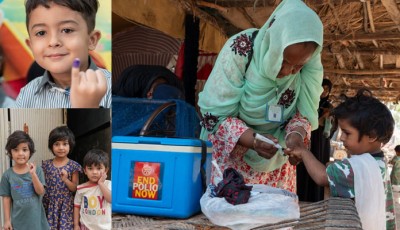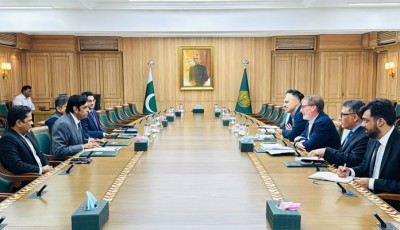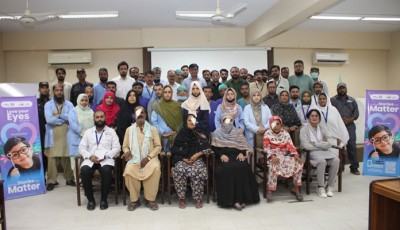

KARACHI: International and national health experts have affirmed that Pakistan is on the brink of eradicating polio, concluding that decades of scientific data and public health efforts strongly indicate that eliminating the virus in the country — and worldwide — is now achievable. The assessment came during a high-level event titled “How Close Are We? The Last Mile to Polio Eradication,” jointly organized by the World Health Organization (WHO) and the Aga Khan University (AKU) in Karachi.
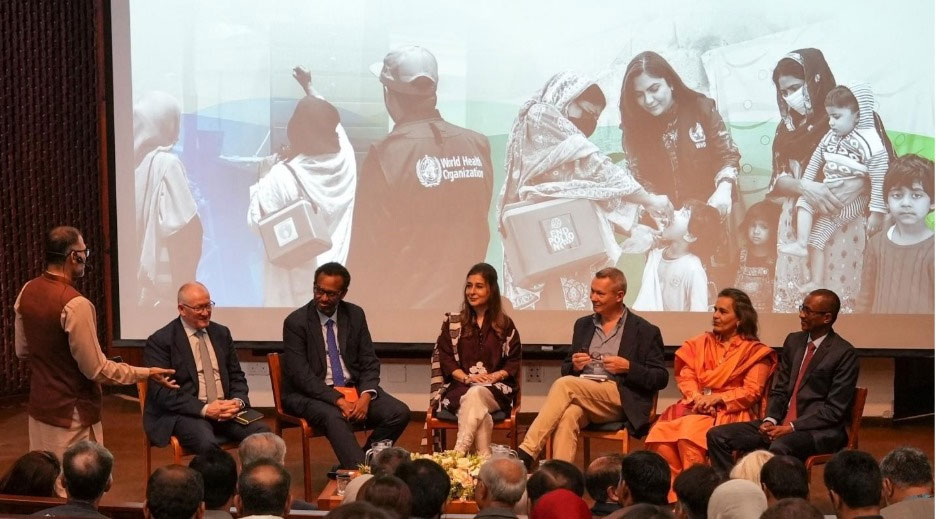
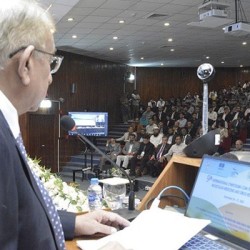
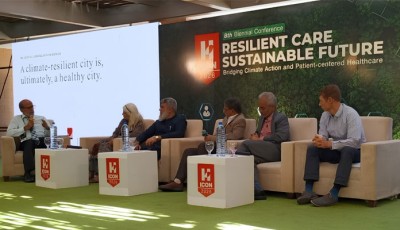
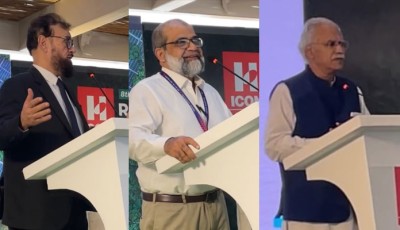
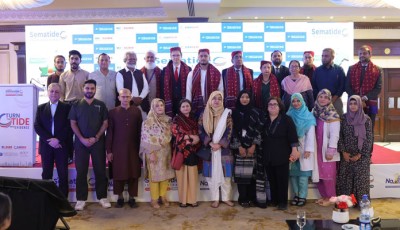
Over 400 participants, including leading specialists, government representatives, partners, and medical students, took part in the panel discussion moderated by Dr Ali Faisal Saleem of AKU Hospital. Speakers warned that the recent detection of wild poliovirus in Germany is a stark reminder that the cost of inaction is far greater than the cost of continued efforts — and that polio remains a global threat as long as it exists anywhere in the world.
WHO Representative in Pakistan, Dr Luo Dapeng, said science has proven that vaccines work and that polio eradication is both morally and strategically essential. “Eradicating polio forever, and for every child, is not just the right thing to do. It is also the smartest. The poliovirus knows no borders and the future of millions of children is at stake. Science tells us that it is not time to quit,” he stressed.
Sindh State Health Minister Dr Azra Fazal Pechuho emphasized that the fight against polio is a shared responsibility. “This is the last mile, and we need all the help we can get to reach every child. It is not only an issue for Pakistan; it is an issue for the world,” she said.
Prime Minister’s Focal Person for Polio Eradication, Ms Ayesha Raza Farooq, highlighted that Pakistan has reduced polio cases by 99.6% — from 20,000 cases annually in the 1990s to just 30 so far in 2025. She said that data-driven emergency operation centres and one of the world’s most sensitive surveillance systems have helped Pakistan stay ahead of the virus. “While there is polio anywhere, nobody is safe. We will be able to cross the finish line very soon. It is not time to quit; it is time to recommit,” she noted.
WHO Director for Polio Eradication and Chair of the Global Polio Eradication Strategy Committee, Dr Jamal Ahmed, reiterated that there is no medical doubt about the effectiveness of vaccines. “The question of whether eradicating polio is medically possible is gone. The vaccine does work. What we need is to believe in it and mobilize to finish it — starting here, in Karachi,” he said.
Panelists, including Professor Dr Shahnaz Ibrahim, Head of Paediatric Neurology at AKU and Chair of the National Polio Certification Committee, called for stronger public and community engagement. “The last mile is the most difficult. I have seen terrifying polio cases. It is so hopeful that we are going to go to zero. We are going to do it,” she said.
Former Chief Scientist of the Global Polio Programme, Dr Christopher Maher, noted the remarkable sophistication of Pakistan’s surveillance tools today compared to earlier decades. “Eradicating polio is like wrestling a gorilla. Even when you have the gorilla down, you cannot let go. If we relax now, it will return and haunt us forever,” he warned.
Dr Sebastian Taylor, member of the Technical Advisory Group for Polio Eradication, also praised the tireless efforts of health workers and the efficacy of Pakistan’s surveillance network, calling the results “extremely positive.”
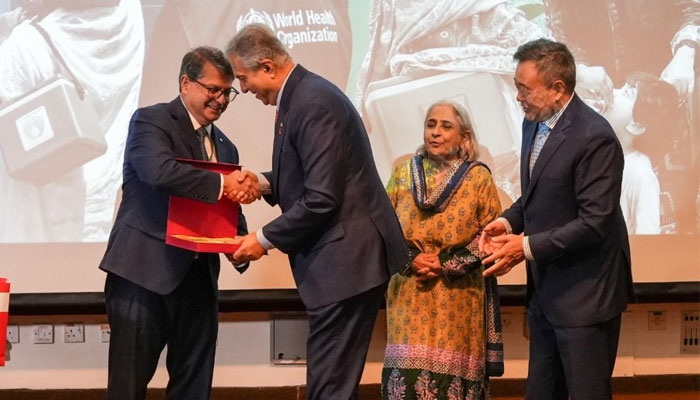
During the event, WHO Pakistan Representative Dr Luo, AKU Medical College Dean Dr Karim F. Damji, and Sindh Health State Minister Dr Azra pechuho presented a recognition shield to Mr Aziz Memon, Chairman of the National Polio Plus Committee for Rotary International. Mr Memon said Rotary has no intention to stop working until the world is polio-free. “From 125 endemic countries, only Pakistan and Afghanistan remain. The virus cannot hide from us. As Nelson Mandela said, it is always impossible until it is done. We will make the world polio-free,” he said.
In his closing remarks, Dr Karim F. Damji said collaboration remains central to defeating polio. “Polio eradication is within sight. It demands persistence, empathy, innovation, and above all — partnership. When leadership and communities walk together, even the most challenging environments can change.”
Experts agreed that the world is close to witnessing one of the greatest public health victories in history — but only if the momentum and commitment continue during the final mile.