
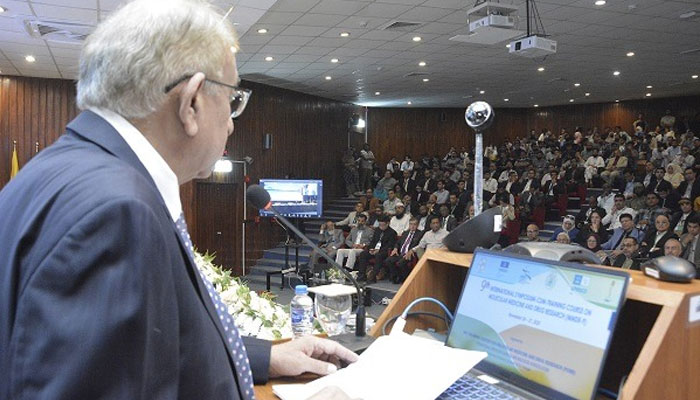
KARACHI: Sindh Higher Education Commission (HEC) Chairman, Prof. Dr. S. M. Tariq Rafi, on Monday inaugurated the four-day 9th International Symposium-Cum-Training Course on Molecular Medicine and Drug Research (MMDR) at the Prof. Salimuzzaman Siddiqui Auditorium, Dr. Panjwani Center for Molecular Medicine and Drug Research (PCMD), University of Karachi.
Speaking at the opening ceremony, Prof. Dr. Tariq Rafi said that molecular medicine is a futuristic discipline that represents the future of modern healthcare. He noted that rapid advancements in this area will redefine diagnostics and therapeutic care, stressing the need for high-quality research that directly benefits humanity.
Expressing concern over Pakistan’s growing burden of oral cancer, he said reducing its prevalence is an urgent national priority. He emphasized the importance of producing quality researchers and scholars to combat emerging health challenges. Highlighting the crucial role of international cooperation, he termed global research partnerships as the backbone of any scientific institution and appreciated the organizers for hosting this important scientific event.
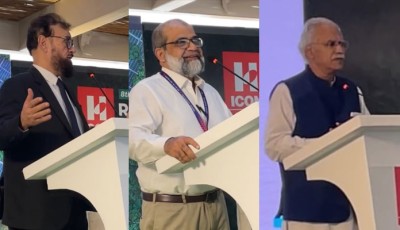
The ceremony was also addressed by Prof. Dr. Muhammad Raza Shah, Director ICCBS; Prof. Dr. M. Iqbal Choudhary, Coordinator General OIC-COMSTECH; Ms. Nadira Panjwani, Chairperson Dr. Panjwani Memorial Trust; and Prof. Dr. Asmat Salim, Symposium Coordinator.
Prof. Dr. Raza Shah welcomed national and international scholars and acknowledged the participation of the Sindh HEC Chairman. He said the significant presence of international researchers reflects the scientific stature of PCMD and ICCBS, which he described as one of the region’s leading research institutions. He expressed hope that the symposium would further strengthen global scientific collaboration.
Prof. Dr. Iqbal Choudhary underscored the value of knowledge, stating that it becomes meaningful only when it serves humanity. He described ICCBS as among the finest research centers in the world, adding that PCMD strives to achieve international recognition in research and graduate training aligned with national needs.
Addressing the audience, Ms. Nadira Panjwani said molecular medicine is redefining modern healthcare and that PCMD is playing a pivotal role in advancing this discipline in Pakistan. She noted that the center is committed to improving both the quality and quantity of scientific training in molecular medicine and rational drug design, aiming to develop effective diagnostic and treatment techniques for prevalent diseases.
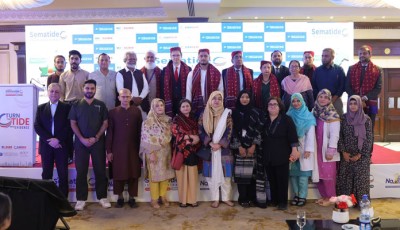
In her vote of thanks, Prof. Dr. Asmat Salim welcomed all national and international delegates participating in the 9th MMDR symposium.