
KARACHI: Three students from the University of Karachi have developed an innovative and environmentally sustainable solution to address the city’s growing organic waste crisis, earning the Texitech Best Pitch Award.
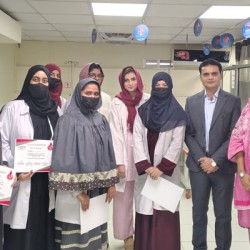
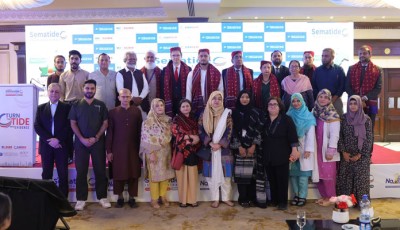
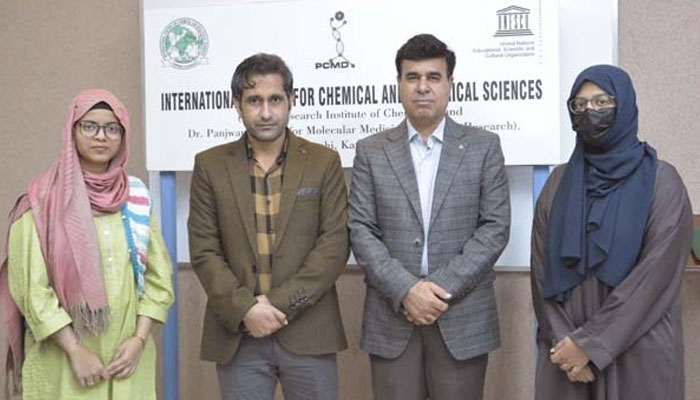
According to a spokesperson for the International Centre for Chemical and Biological Sciences (ICCBS), the award, established by Dr. Amtul and sponsored by Mr. Sohail-ur-Rahman, CEO of Texitech Pakistan, was presented to Wahid Ullah from ICCBS and Anabia Siddiqui and Sarah Zafar from the Department of Biotechnology for their project proposal.
Prof. Dr. Muhammad Raza Shah, Director of ICCBS, congratulated the students on their achievement during the award distribution ceremony. Speaking on the occasion, the students highlighted that Karachi generates more than 12,000 tons of solid waste daily, a significant portion of which consists of organic waste such as leftover food from households, markets, hotels, and restaurants. They noted that most of this waste is dumped at already overburdened landfill sites including Jam Chakro and Gond Pass, where open decomposition leads to foul odors, pest infestation, emission of harmful gases, and long-term damage to soil and groundwater.
The students emphasized that the city’s waste challenge, though substantial, does not necessarily require expensive or imported technologies. They stated that sustainable solutions can be achieved by working with natural biological processes. Their proposal outlines an eco-efficient method to convert urban organic waste into protein-rich animal feed, organic bio-fertilizer (frass), and valuable biochemical compounds through the use of nutrient-rich larvae of the Black Soldier Fly.
They explained that this technology is already being implemented in several countries across Asia and Africa. The process does not involve genetic modification and does not pose disease transmission risks. The larvae, rich in protein, can be used as animal and poultry feed, reducing dependence on costly imported feed products. The residual material, known as frass, can be utilized as a natural fertilizer to enhance soil health and agricultural productivity.
The students expressed hope that their initiative could contribute toward transforming Karachi’s waste burden into an economic and environmental opportunity.