
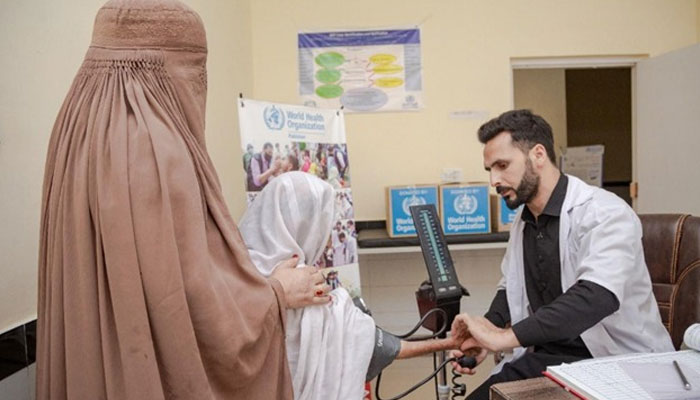
ISLAMABAD: Pakistan has expanded universal health coverage (UHC) to an additional 51 million people over the past decade, raising the total number of people covered from 87 million in 2015 to 138 million in 2023, according to a new global report released by the World Health Organization (WHO) and the World Bank Group ahead of Universal Health Coverage Day 2025.
Marking UHC Day under the theme “Unaffordable health costs? We are sick of it,” WHO praised Pakistan for its significant progress achieved in partnership with international organizations. Since 2021, WHO has supported the country in piloting a primary health care–oriented model in Islamabad Capital Territory, Charsadda, and Kotli, benefiting over one million people.
The 2025 global monitoring report shows that Pakistan’s service coverage index has improved from 40 in 2015 to 56 in 2023. However, the report notes that stronger and more coordinated efforts will be required for Pakistan to meet the global target of 80 by 2030.
Despite the improvements, major financial challenges remain for millions of citizens. In 2024, around 14.8 million people experienced catastrophic health expenditures, while 11.1 million were pushed below the $2.15-per-day poverty line due to out-of-pocket medical costs, according to Pakistan’s Universal Health Coverage Monitoring Report developed by the Ministry of Health with support from WHO and the British High Commission/FCDO.
“Today, on Universal Health Coverage Day, the World Health Organization reaffirms its commitment to work with Pakistan and its people to expand access to health care for all,” said WHO Representative in Pakistan Dr. Luo Dapeng. “Despite progress, for millions of people, access to health care remains unaffordable. No one should be forced to choose between providing life-saving treatment to their child because they cannot pay the medical bill. WHO will stand with Pakistan every day to build a healthier future for all.”
WHO reiterated that it will continue collaborating with Pakistan to address remaining gaps and strengthen access to essential health services, especially for vulnerable populations, as part of efforts to achieve the 2030 Sustainable Development Goals.