
KARACHI: Pakistan is home to an estimated 6,000 species of medicinal plants with a centuries-old tradition of therapeutic use, offering immense potential for sustainable development and modern healthcare, according to Prof. Dr. Zabta Khan Shinwari, Vice Chancellor of the Federal Urdu University of Arts, Science & Technology (FUUAST).
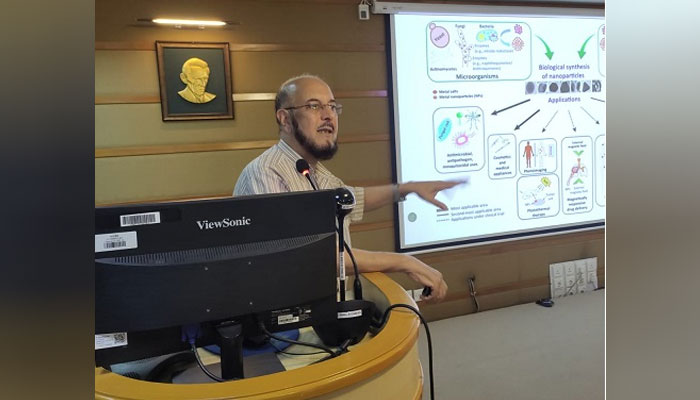
Speaking at a special lecture titled “From Lab to Lifestyle: Advancing Herbal Medicine Through Nanotechnology and Clinical Trials” at the International Center for Chemical and Biological Sciences (ICCBS), University of Karachi, Prof. Shinwari said that combining traditional herbal knowledge with cutting-edge nanotechnology could transform natural medicine into a globally competitive industry. The event was organized by the UNESCO Chair on Medicinal and Bio-Organic Natural Product Chemistry and attended by students, researchers, and faculty members.
Prof. Shinwari explained that nanotechnology—a multidisciplinary science integrating biology, engineering, physics, and chemistry—can enhance the effectiveness of medicinal plants by improving bioavailability and precision delivery of natural compounds. He highlighted that the global herbal medicine market is projected to reach USD 532 billion by 2030, with 80 percent of the world’s population using herbal remedies and usage in developing countries as high as 95 percent.
He emphasized the need for herbal clinical trials to ensure evidence-based practices and announced plans for a Herbal Clinical Trial Institute in Pakistan. He cited the Qarshi-FUUAST Clinic as a model for promoting wellness through scientifically validated herbal treatments.
Addressing the rising global burden of cancer, Prof. Shinwari noted that the disease caused 8.8 million deaths worldwide in 2015 and that one in eight women in Pakistan suffers from breast cancer, with nearly 40,000 fatalities annually.
In his remarks, Prof. Dr. Muhammad Raza Shah, Director of ICCBS and UNESCO Chair Holder, stressed the importance of integrating traditional medicine with modern science to meet the growing demand for safe and effective natural healthcare solutions.
Prof. Shinwari urged researchers and industry partners to work together to identify valuable bioactive compounds, scale up production, and advance Pakistan’s capacity in diagnostics, research, and holistic health.