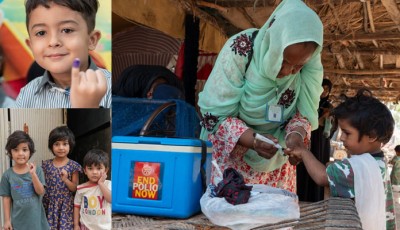

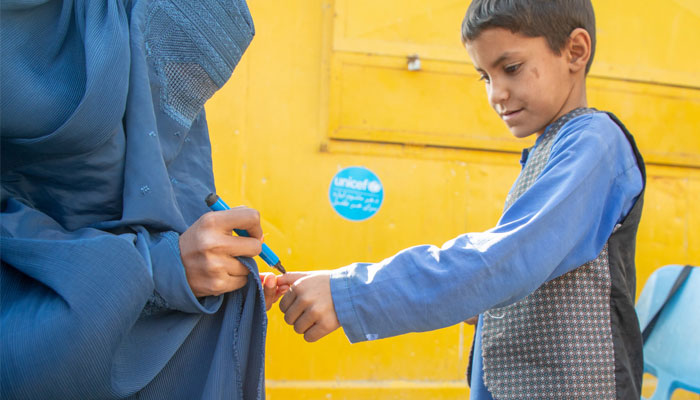
ISLAMABAD: The Pakistan Polio Eradication Programme has reaffirmed its commitment to strengthening operations and implementing the recommendations of the Independent Monitoring Board (IMB) to eliminate poliovirus once and for all, preserving the 99.6% reduction in cases achieved over the past three decades.
The Programme welcomed the report of the 24th IMB meeting of the Global Polio Eradication Initiative (GPEI) held in July 2025 in Geneva and expressed gratitude for the consistent and valuable feedback from the IMB.
“The Pakistan Polio Programme values the guidance of globally recognized science-based forums like the IMB, Polio Oversight Board, and Technical Advisory Group,” a spokesperson stated. “We are committed to prioritizing these recommendations to ensure the virus is eradicated and that the remarkable progress of reducing cases from an estimated 20,000 annually in 1994 to just 74 in 2024—and only 27 so far this year—is preserved.”
Strong Government Ownership
The IMB report commended Pakistan’s renewed commitment to polio eradication through a whole-of-government approach. The Prime Minister is personally leading stock-take sessions, while provincial authorities and district commissioners are actively monitoring campaign performance to ensure frontline delivery. This leadership demonstrates the Government’s determination to achieve a polio-free Pakistan.
Operational Gains
The report acknowledged significant progress, including:
- Six large-scale vaccination campaigns between September 2024 and July 2025.
- Four synchronized cross-border drives with Afghanistan to interrupt virus transmission.
- Systematic improvements in campaign quality and efforts to reduce the number of children missed in security-compromised areas.
- Digitization of zero-dose children’s data and enhanced engagement with local influencers to reach previously inaccessible populations in southern Khyber Pakhtunkhwa.
- A decline in positive environmental samples in Quetta block and several areas of Punjab and Balochistan.
Key Challenges
Despite these gains, the IMB highlighted persistent virus transmission in Karachi, Lahore, central Pakistan, and southern KP. Challenges include:
- Indigenous circulation in Lahore.
- Population movement in Karachi affecting coverage.
- Low immunization rates in Balochistan.
- Cross-border virus transmission.
- Increased risk of virus spread due to ongoing flood-related displacement.
Innovative Strategies
The Programme is integrating IMB recommendations into its strategic plans using technology, advanced analytics, and risk modelling to track population movements, identify hidden immunity gaps, and enable faster, data-driven responses.
Key initiatives include:
Integrated Service Delivery (ISD) combining polio vaccination with nutrition, primary healthcare, and WASH services to build trust and reduce vaccination barriers.
Community-led vaccination drives in security-challenged areas, which have reached 83% of previously missed children in southern KP.
Expanded collaboration with the Expanded Programme on Immunization (EPI) to improve routine immunization rates, particularly in Balochistan and KP.
Roadmap to Zero Polio
Looking ahead, the National Task Force has endorsed a detailed roadmap to achieve zero polio cases by the end of the upcoming low transmission season. The plan prioritizes targeted campaigns in persistent reservoirs, deeper integration with routine immunization, and new operational models to overcome access and acceptance challenges.
About the Pakistan Polio Eradication Programme
The Programme is a partnership between the Government of Pakistan, GPEI, WHO, UNICEF, Rotary International, and the Bill & Melinda Gates Foundation. It remains steadfast in its mission to protect every child and ensure a polio-free future for Pakistan and the world.