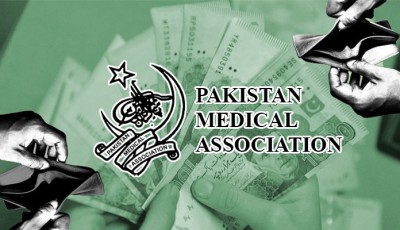

KARACHI: Marking World AIDS Day under the global theme “Overcoming Disruption, Transforming the AIDS Response,” the Pakistan Medical Association (PMA) has issued a stark warning to the federal and provincial governments, calling for urgent intervention to stop the alarming rise of HIV cases across Pakistan. The Association cautioned that the country now has the second fastest-growing HIV epidemic in the Asia-Pacific region, a development it termed “a national health emergency in the making.”
PMA Secretary General Dr. Abdul Ghafoor Shoro said the worsening situation reflects decades of complacency and widening inequalities in healthcare access. “Pakistan is heading towards a dangerous public health crisis,” he warned. “We cannot afford silence, inaction or reliance on shrinking foreign assistance. The government must immediately step up and protect its people.”
According to the PMA, global UNAIDS figures show 40.8 million people living with HIV worldwide, with 1.3 million new infections recorded in 2024 and 630,000 deaths linked to HIV-related causes. Locally, Sindh has reported 3,995 registered HIV-positive children, while Karachi recently witnessed a disturbing episode in which more than 15 children tested positive at a single hospital—an incident the PMA says points to “massive failures in infection control and unsafe medical practices.”
In Balochistan, 462 new cases were recorded last year, bringing the number of registered patients to 2,823, though estimates suggest the real figure ranges between 7,000 and 9,000 due to limited screening and weak surveillance.
The PMA highlighted a collapsing response infrastructure, particularly after the Global Fund reduced its financial support by $27 million. The Association noted that the National AIDS Control Programme (NACP) has been rendered “nearly stagnant” due to resource shortages, severely undermining national data collection and targeted intervention planning. It warned that unsafe injections, contaminated medical equipment, and poorly regulated blood transfusions continue to drive new infections, reminiscent of the 2019 Larkana outbreak.
Citing UNICEF–UNAIDS modelling, Dr. Shoro said the consequences of inaction could be catastrophic. “If programme coverage declines by half, more than one million additional children worldwide could acquire HIV by 2040,” he said. “Pakistan cannot allow itself to move in that direction.”
The PMA issued several urgent demands, calling on the government to fill the $27m funding gap, immediately revive and resource the NACP, enforce strict blood safety and sterilization protocols, and adopt a rights-based approach to reduce stigma and discrimination. It also urged aggressive screening in high-risk areas to detect undiagnosed individuals and connect them to antiretroviral therapy.
Dr. Shoro appealed to political leadership, civil society, and the media to recognize the severity of the crisis. “The warning signs are clear,” he said. “With a fragile healthcare system and shrinking donor support, Pakistan must take ownership of its HIV response. The time to act is now.”