
KARACHI: Russian health officials and researchers at the Gamaleya National Center have announced plans to begin administering a personalized mRNA cancer vaccine—initially targeting melanoma—in clinical experiments this autumn.
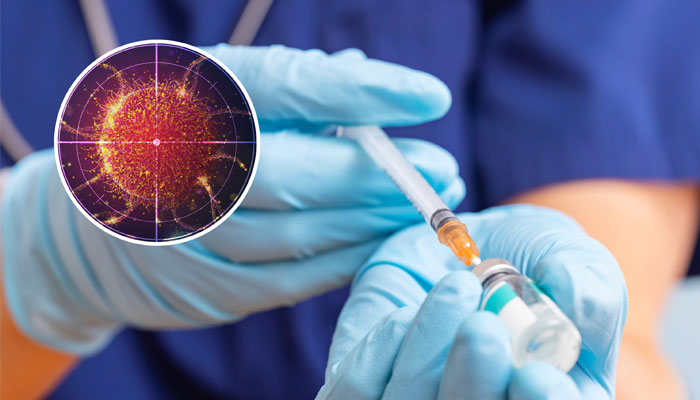
The novel therapy, developed by the same team behind the widely used Sputnik V COVID-19 vaccine, is designed to create a custom-tailored immunotherapy for each patient. Using genetic sequencing of the individual’s tumor and artificial intelligence to identify target neoantigens, scientists then manufacture a unique mRNA injection intended to train the immune system to recognize and destroy cancer cells.
According to state officials, the cost per dose is estimated at approximately 300,000 rubles (roughly US $2,800–$3,000), but the therapy will be provided free of charge to Russian citizens as part of a government-funded medical program.
At a press briefing, a Gamaleya spokesperson indicated that initial treatments are expected to begin between September and October 2025, ushering in a new phase of highly individualized cancer care.
Experts caution, however, that the approach remains experimental. While personalized mRNA cancer vaccines are already in late-stage testing in other countries, Russia’s initiative marks a domestically developed effort that has yet to demonstrate clinical efficacy in humans.
Key facts at a glance:
- Developer: Gamaleya National Center (of Sputnik V fame)
- Therapy type: Personalized mRNA vaccine directed at tumor-specific neoantigens
- Target condition: Initially melanoma
- Technology: AI plus tumor genetic sequencing
- Estimated cost to state: ~300,000 rubles (~US $2.8k) per dose
- Access: Free for Russian citizens
- Expected rollout: Autumn 2025 (likely September–October)
Background:
Personalized cancer vaccines, particularly mRNA-based ones, represent a cutting-edge frontier in oncology. They work by encoding patient-specific tumor antigens to elicit a tailored immune response. Global pharmaceutical collaborations (e.g., Moderna & Merck’s V940) are now in phase-III trials. Russia’s effort stands out for being entirely homegrown and potentially accelerating personalized oncology access within the country.
As the countdown to the first human treatments nears, the scientific community will be watching closely for safety and efficacy data. If successful, this could herald a significant breakthrough in individualized cancer therapy—provided results live up to early expectations.