
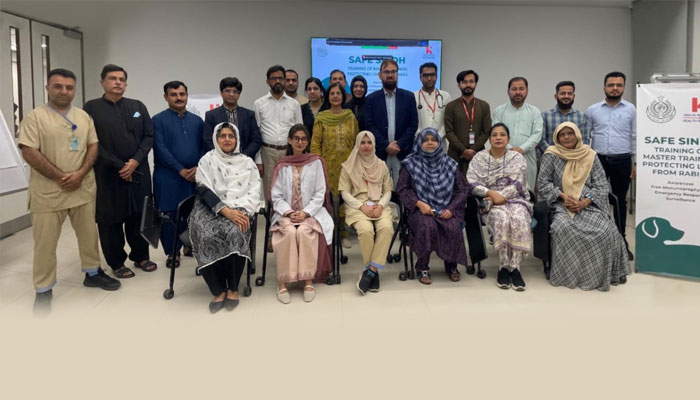
KARACHI: The SAFE Sindh Rabies Program, a joint initiative of the Government of Sindh and the Indus Hospital & Health Network (IHHN), has successfully concluded its first batch of a five-day Training of Master Trainers, marking a key milestone in strengthening rabies prevention and response systems across the province.
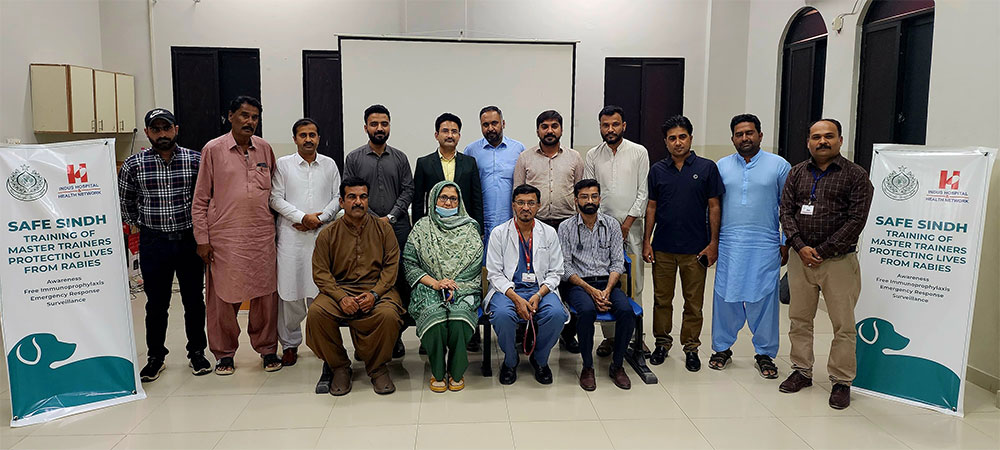
The training was conducted simultaneously at the Rabies Prevention and Training Center, Indus University Hospital Karachi, and Dr. Sikandar Ali Mandhro Civil Hospital, Badin. A total of 22 healthcare professionals from 10 hospitals in Karachi and Hyderabad divisions participated in the program, which combined theoretical learning with intensive hands-on clinical training.
Launched under the SAFE framework—Surveillance, Awareness, Free Immunoprophylaxis, and Emergency Response—the initiative aims to build a coordinated and sustainable system to achieve zero rabies deaths in Sindh. Rabies remains a preventable yet fatal disease, and the program focuses on strengthening frontline healthcare capacity to effectively manage and respond to cases.
The training commenced with opening remarks by Dr. Abdul Bari Khan, President of IHHN, who emphasized the importance of a system-based approach to tackling rabies. This was followed by a session led by renowned expert Dr. Naseem Salahuddin, who provided an overview of the rabies situation in Pakistan and shared standardized protocols for Post-Exposure Prophylaxis (PEP).
The technical lead for the training was Muhammad Aftab Gohar, Manager of the Rabies Prevention and Training Center at Indus University Hospital Karachi, who has received international certifications from WHO, Institut Pasteur (Amol), and QSMI Bangkok. He supervised and mentored participants throughout the program, ensuring alignment with WHO-recommended clinical standards and practices.
From the second day onward, the training focused on practical clinical skills, including wound care, wound classification, patient assessment, risk analysis, and administration of anti-rabies vaccines (ARV) and rabies immunoglobulin (RIG). Participants were also trained in proper documentation and patient counseling to ensure comprehensive care.
As the program progressed, trainees engaged in real-life clinical scenarios under expert supervision. By the fourth day, they transitioned to independent clinical practice and were assessed against WHO standard guidelines to evaluate their readiness in managing rabies and dog bite cases.
On the final day, certificates were awarded to the participants in recognition of their successful completion of the training. These Master Trainers are now equipped to further train healthcare workers across more than 278 health facilities in Sindh, enhancing the province’s capacity for rabies prevention and PEP management.
Health officials noted that the Training of Master Trainers represents a critical step toward developing a scalable and sustainable model for rabies control. By strengthening frontline healthcare systems and expanding access to life-saving treatment, the SAFE Sindh Rabies Program aims to move closer to eliminating rabies-related deaths in the province.
The initiative underscores a shared commitment to public health, focusing on prevention, awareness, and timely clinical response to ensure that no life is lost to rabies.