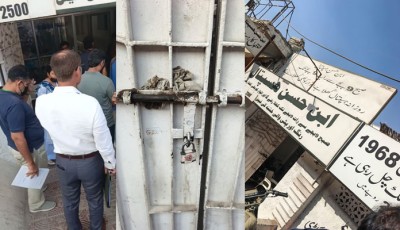
KARACHI: The Sindh Healthcare Commission (SHCC) has sealed an illegally operating hospital in Malir 15 following the confirmation of monkeypox (mpox) in a 20-day-old infant who reportedly contracted the infection after undergoing circumcision with contaminated surgical instruments.
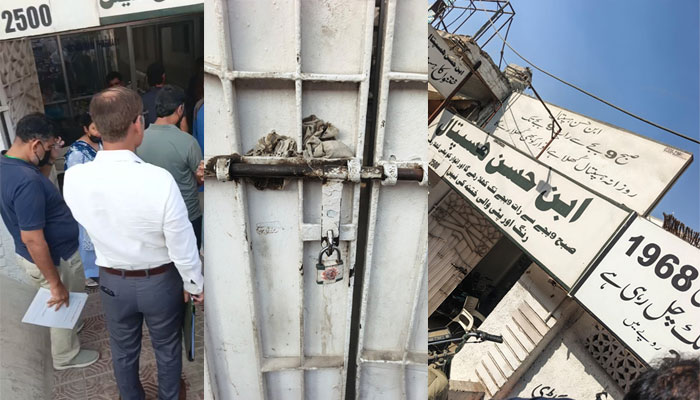
According to the SHCC, the action was taken against Ibn-e-Hassan Hospital, located within the jurisdiction of Saudabad Police Station, following a report received from the District Health Officer (DHO) Korangi regarding a laboratory-confirmed case of mpox in the newborn.
The infant had reportedly undergone circumcision at the facility, where contaminated scissors were allegedly used during the procedure. The child's samples were subsequently tested at Dow Laboratory, which confirmed the presence of the mpox virus.
Following the report, SHCC officials, in coordination with the DHO Korangi and senior police authorities, conducted an inspection of the hospital and found that the facility was operating illegally with unqualified staff and individuals allegedly engaged in quackery.
During the operation, the person running the facility allegedly resisted the SHCC officials and called supporters to obstruct the inspection team from performing its official duties.
The situation was subsequently brought under control with the assistance of Korangi police, allowing the SHCC team to complete its operation and seal the hospital.
According to the commission, the facility was found to have poor hygiene standards, inadequate infection prevention and control (IPC) measures, and alleged illegal medical practices that posed serious risks to patients and public health.
The SHCC stated that the action was carried out with the cooperation of the DHO Korangi and SSP Korangi to prevent further unsafe medical practices at the facility.
The incident has raised serious concerns over the operation of unregistered healthcare facilities, the involvement of unqualified practitioners in surgical procedures, and the potential transmission of infectious diseases through improperly sterilised medical instruments.
The reported circumstances surrounding the infant's infection also highlight the need for strict enforcement of healthcare regulations, proper sterilisation of surgical equipment, and effective monitoring of healthcare establishments to protect patients, particularly newborns, from preventable infections.