
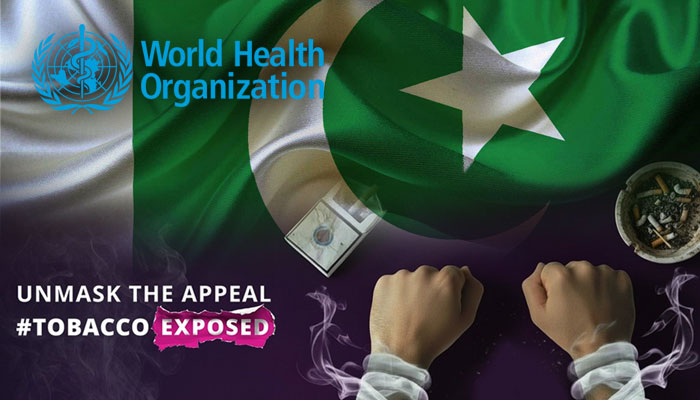
ISLAMABAD: Ahead of World No Tobacco Day, the World Health Organization (WHO) has warned that tobacco use causes an estimated 164,000 deaths annually in Pakistan and inflicts economic losses exceeding PKR 1,800 billion (approximately US$6.6 billion) each year, far outweighing the tobacco industry’s total tax contribution to the country.
In a statement issued on Tuesday, WHO said the economic burden caused by tobacco in Pakistan is nearly seven times higher than the industry’s tax contribution, which stood at around PKR 265 billion in 2025. The organization expressed serious concern that children and young people are being deliberately targeted by tobacco and nicotine industries through strategies designed to trap them in lifelong addiction.
Ahead of World No Tobacco Day, observed globally on May 31, WHO launched its international campaign under the theme “Unmasking the appeal – countering nicotine and tobacco addiction,” aimed at exposing tactics used by tobacco and nicotine companies to attract younger generations while evading stricter tobacco control measures.
WHO said extensive scientific evidence shows that all tobacco and nicotine products, including cigarettes, smokeless tobacco, e-cigarettes, and other nicotine delivery products, are harmful to health and pose significant risks, particularly to children and adolescents.
According to WHO, tobacco remains one of the leading causes of preventable deaths worldwide, contributing to cardiovascular disease, lung disease, stroke, and multiple forms of cancer. It noted that tobacco kills up to half of users who do not quit.
WHO Representative in Pakistan Dr Dapeng Luo said tobacco is destroying lives, families, public health, and national economies, stressing that all tobacco products, whether legal or illegal, are dangerous and toxic.
WHO also highlighted alarming global figures, stating that at least 40 million children aged 13 to 15 currently use at least one tobacco product, including 20 million cigarette smokers, 10 million smokeless tobacco users, and 15 million e-cigarette users. In countries where data is available, children are reportedly nine times more likely than adults to use vaping products.
The organization said Pakistan has an opportunity to strengthen tobacco control, noting that Federal Excise Duty rates on cigarettes have not increased since February 2023, making tobacco products more affordable. WHO added that current taxation levels remain below its recommended benchmark of 75 percent of retail price.
WHO reaffirmed its support for the Government of Pakistan in reducing tobacco use through stronger taxation policies, track-and-trace implementation, and enforcement of the WHO Framework Convention on Tobacco Control, which Pakistan ratified in 2004.
Globally, WHO estimates that tobacco kills more than 7 million people annually, including around 1.6 million non-smokers exposed to second-hand smoke.