
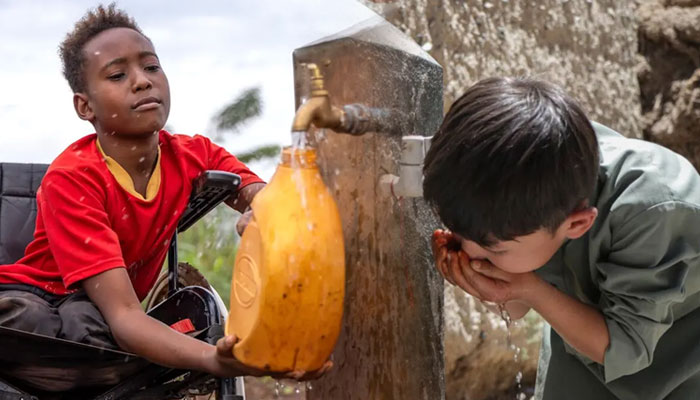
NEW YORK: Despite decades of progress, a quarter of the world’s population — 2.1 billion people — still lack access to safe drinking water, according to a newly released report by the WHO/UNICEF Joint Monitoring Programme (JMP) for Water Supply, Sanitation and Hygiene. The report, Progress on Household Drinking Water and Sanitation 2000–2024: Special Focus on Inequalities, paints a stark picture of global disparities in basic human needs.
The findings reveal that:
- 2.1 billion people remain without safely managed drinking water, including 611 million with no services at all.
- 3.4 billion people lack access to safe sanitation, with 354 million still practicing open defecation.
- 1.7 billion people do not have basic hygiene facilities, including 611 million without any services.
A Disproportionate Burden on Women and Girls
The report underscores the gendered impact of water scarcity. In many regions, women and girls spend hours daily collecting water. Adolescent girls, in particular, face school absences and social restrictions due to inadequate menstrual health facilities, perpetuating cycles of exclusion and inequality.
Beyond Infrastructure: A Public Health and Economic Crisis
UNICEF officials warn that these deficits extend beyond infrastructure challenges — they directly undermine child survival, education outcomes, economic growth, and gender equality. Without urgent action, hundreds of millions of children will still grow up without safe water or toilets by 2030, deepening poverty and vulnerability for generations.
Key Recommendations from the Report
Accelerate Universal Access: Governments must increase investments to ensure every household, school, and health facility has safe water, sanitation, and hygiene services.
Address Inequalities: Development partners should prioritize fragile contexts, rural areas, and marginalized communities.
Ensure Gender-Sensitive Solutions: WASH systems must reduce the daily burden on women and girls while supporting menstrual health and school participation.
Strengthen Data and Evidence: Governments and partners must build robust monitoring systems to track inequities and guide climate-resilient solutions.
A Call to Action
“With bold, equity-focused, and evidence-driven acceleration, universal access to safe water, sanitation, and hygiene by 2030 may still be within reach if we act now,” UNICEF emphasized. “Without it, the world risks failing children’s health and well-being — and locking in inequality for decades to come.”