
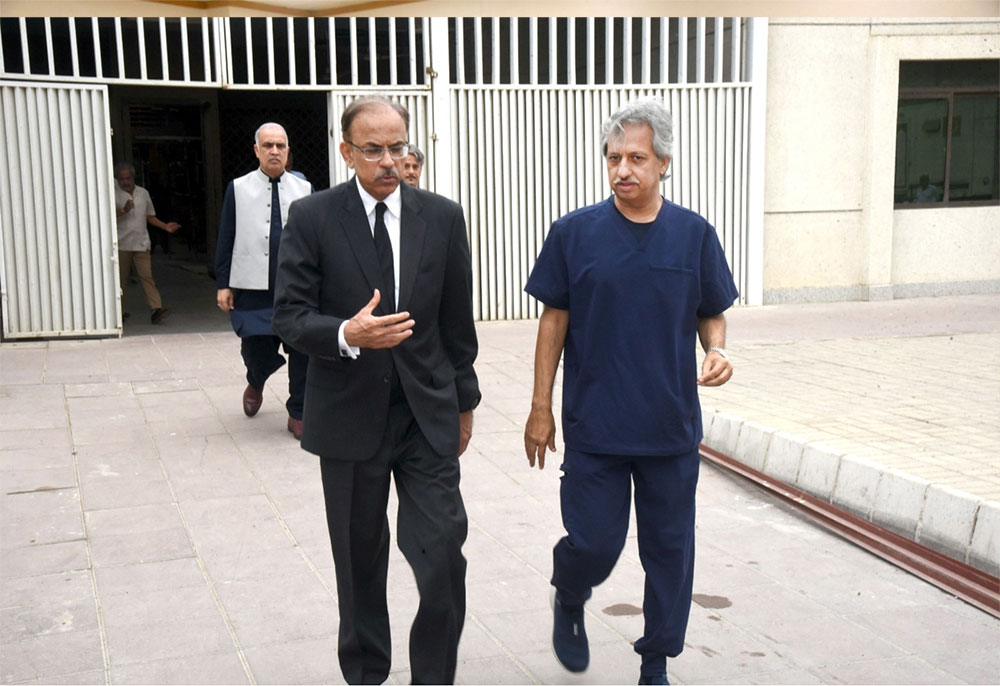
KARACHI: The Honourable Chief Justice of the Sindh High Court, Justice Muhammad Junaid Ghaffar, on Saturday visited the Radiation Oncology Section at Jinnah Postgraduate Medical Centre (JPMC), Karachi, where he lauded the world-class, free-of-cost cancer diagnosis and treatment services being offered under a successful public-private partnership model.
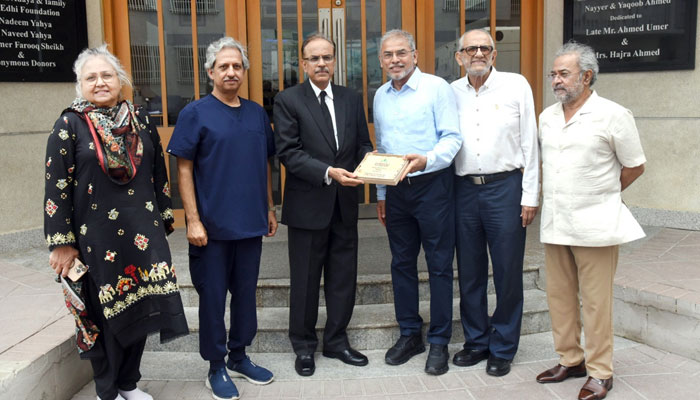
The facility is jointly operated by the Patients’ Aid Foundation (PAF-JPMC) and the Government of Sindh (GoS). Upon arrival, Justice Ghaffar was received by board members of PAF-JPMC, including Mr. Mushtaq Chhapra, Mr. Shabbir Diwan, and Prof. Tariq Mahmood.
During a presentation, the Chief Justice was briefed on the extraordinary transformation of JPMC, which has expanded from a 1,185-bed to a 2,208-bed tertiary care hospital in just 13 years. He was informed that once the upcoming 12-storey, 550-bed Sardar Yasin Malik Medical Complex and 7-storey Rabia Rashid Soorty Employees’ Ward are completed, JPMC will become the largest healthcare facility in Pakistan.
Highlighting the commitment to universal access, officials emphasized that all services at JPMC are completely free, irrespective of patients’ nationality, religion, or ethnicity. So far, patients from 15 countries and 167 cities have received treatment at the CyberKnife and radiation units.
Cutting-Edge Cancer Care
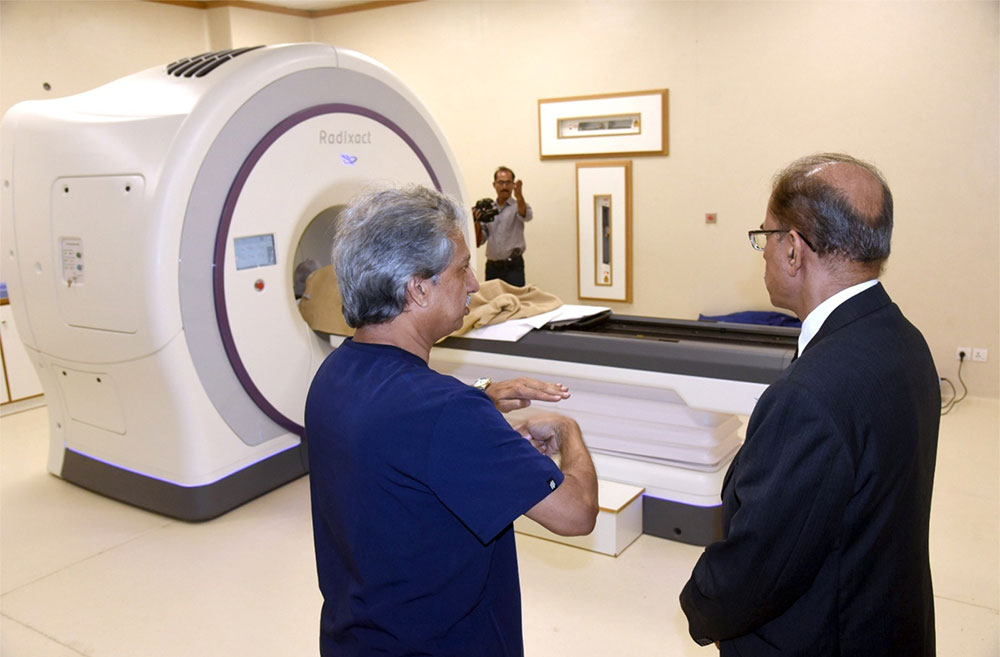
The Chief Justice was particularly impressed by the advanced cancer treatment technologies in use. He was informed that JPMC now hosts three CyberKnife systems, a globally recognized technology for non-invasive cancer treatment:
- The first CyberKnife, installed in 2012, required 150 minutes per session.
- The second system, added in 2018, reduced treatment time to 60 minutes.
- The third and latest unit, donated by the Sindh Government in 2024, can now complete treatment in just 23 minutes.
CyberKnife is now being used not only for brain conditions but also for treating Stage-1 Prostate Cancer, marking a significant advancement in public cancer care.
Breakthrough in Breast Cancer Treatment
The Chief Justice was also briefed on the nearing completion of the Bilquis and Abdul Sattar Edhi Breast Radiation Bay, a dedicated unit that will host two new Tomotherapy machines equipped with Surface Guided Radiation Therapy (SGRT). This precision-based technology will reduce treatment sessions for breast cancer patients from the traditional 16–28 sessions to just five sessions.
This unit, exclusively staffed by female professionals, will have the capacity to treat up to 160 patients daily, making it the first of its kind in Pakistan.
Praise for Public-Private Model
Justice Ghaffar described the cancer treatment services at JPMC as a “beacon of hope” for patients and praised the Patients’ Aid Foundation and the Government of Sindh for their forward-thinking approach to health system strengthening. He commended Karachi's citizens and philanthropists for their generous support, acknowledging that the collaborative spirit of public-private partnerships is key to transforming healthcare delivery in Pakistan.
He also encouraged replication of this model across other public hospitals in the country to ensure free, quality healthcare for all.
Human Resource Challenges Discussed
Officials also discussed ongoing challenges, especially the shortage of trained healthcare professionals. The Chief Justice was informed that the expansion of facilities demands timely recruitment of qualified staff to maintain service quality and manage critical care efficiently.
At the conclusion of the visit, a souvenir was presented to Justice Muhammad Junaid Ghaffar by PAF-JPMC officials in appreciation of his visit and continued support.