

LAHORE: Pakistan Drug Lawyer Forum (PDLF) President Noor Muhammad Mahar has demanded a clearly defined legal scope of practice for pharmacists, including basic patient-care and pharmacy services and a regulated framework for limited prescribing, warning of a nationwide protest in Lahore on September 25 if authorities fail to make tangible progress.
Mahar, a pharmacist and Advocate High Court, called upon the Pharmacy Council of Pakistan, provincial pharmacy councils and relevant government institutions to play an effective role in protecting pharmacists’ professional rights and defining their scope of practice, comparable to the regulatory role performed by the Pakistan Medical and Dental Council (PMDC) for medical professionals.
He said a Pharmacy Council serves little purpose if it remains confined to registration, renewal and issuance of certificates but is unable to translate its own approved educational curriculum and professional standards into an effective and legally protected scope of practice.
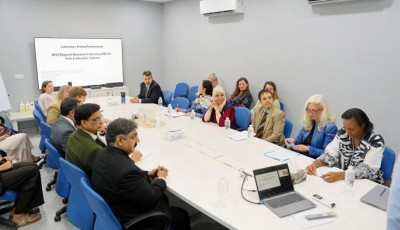
Referring to a consultation held on August 31 under the Pharmacy Council of Pakistan and Punjab Pharmacy Council, Mahar described its practical outcome as disappointing. He demanded that the Pharmacy Council of Pakistan, Punjab Pharmacy Council and other relevant institutions present clear conditions, limitations and a regulatory framework governing basic pharmacy services and proposed limited prescribing within one week.
Mahar said Doctor of Pharmacy education covers clinical pharmacy, hospital pharmacy, patient care, safe and effective use of medicines, patient counselling and practical pharmacy services. Pharmacists trained in these areas, he argued, should have a clearly defined legal pathway to utilise their professional competencies after graduation.
He demanded that registered pharmacists, subject to prescribed training and patient-safety requirements, be given a defined scope for services including blood pressure monitoring, blood glucose testing, basic first aid and wound care, counselling on the safe and appropriate use of medicines and other specifically approved basic pharmacy and patient-care services.
He said additional services, including administration of injections or insulin, approved vaccinations, relevant basic screening procedures and patient referral, could also be considered, but only after appropriate training and certification and where expressly authorised by law or regulation.
Mahar proposed that the Pharmacy Council establish a structured training and certification programme for limited prescribing. He suggested that an initial two-month training programme could be considered, while its final duration, curriculum, examination system, practical competency assessment and professional limits should be determined through expert consultation with patient safety as the primary consideration.
He stressed that limited prescribing should not be regarded as an encroachment upon the professional domain of physicians. Rather, he said, it could provide a lawful and regulated mechanism for appropriately trained pharmacists to deal with minor and clearly defined conditions and specified categories of medicines.
Any such framework, he added, must include mandatory referral protocols requiring serious, complicated or diagnosis-dependent conditions to be referred to qualified medical practitioners.
Mahar said that, subject to legal approval and appropriate safeguards, regulators could consider specified categories of common over-the-counter medicines, including certain medicines for pain and fever, selected anti-allergy medicines, common non-prescription gastrointestinal products, calcium carbonate, magnesium hydroxide and Oral Rehydration Salts (ORS).
He stressed that the final determination of medicines pharmacists may supply, recommend or prescribe, and the circumstances under which they may do so, must be made by competent legal and regulatory authorities through a clearly defined list and professional guidelines.
The PDLF president also called upon the Punjab Healthcare Commission to coordinate with the Pharmacy Council and other competent authorities to clearly define and interpret pharmacists’ lawful scope of practice before taking enforcement action against them.
He said regulatory uncertainty should not be allowed to persist while pharmacists simultaneously face the possibility of legal proceedings over professional services whose boundaries have not been clearly defined.
“If a legal or regulatory gap exists regarding a particular professional service, it is the responsibility of the relevant institutions to establish clear rules rather than leave trained healthcare professionals in a state of uncertainty,” Mahar said.
He maintained that pharmacists are academically and practically trained in dispensing, compounding and preparation of permissible pharmaceutical products, including solutions, lotions, creams and powders, and argued that ambiguity surrounding basic pharmaceutical care and patient counselling should therefore be addressed through clear regulations.
Mahar said Pharmacy Councils must not be reduced to registration and certificate-issuing bodies, but should assume a leadership role in developing the profession, maintaining professional standards, improving training, protecting professional dignity and ensuring safe pharmacy services for the public.
“Just as the PMDC acts as a central regulatory institution in relation to the professional status and scope of its registered medical professionals, the Pharmacy Council of Pakistan must become a strong and effective institution for pharmacists,” he said.
He warned that if the existing Pharmacy Councils continued to fail to make their legal and regulatory role effective in accordance with pharmacists’ education, training and professional requirements, the pharmacist community could demand fundamental reforms in the existing Pharmacy Council framework and stronger legislation.
Mahar announced that if a clear regulatory framework and tangible progress were not achieved within the stipulated period, pharmacists from across Pakistan would be invited to participate in a major peaceful protest in Lahore on September 25 at 3:00pm.
He said pharmacists would raise their voice for their legal and professional rights at Lahore Press Club and other relevant public and government forums.
Mahar emphasised that the proposed expansion of pharmacists’ scope should not be portrayed as an already established legal right where existing law does not expressly recognise it.
He specifically clarified that services and medicines including Flagyl (metronidazole), insulin administration, vaccination, blood-group testing, prescription medicines and proposed prescribing by pharmacists were not being asserted as unrestricted legal rights already available to pharmacists.
Rather, he said, such areas were being proposed for consideration under a future framework involving specific training, certification, clearly defined professional limits and explicit legal or regulatory authorisation.
He also stressed that the proposed protest was not directed against doctors, the medical profession or any institution. Its objective, he said, was to secure lawful recognition of pharmacists’ legitimate professional scope, improve pharmacy services for patients and compel Pharmacy Councils to fulfil their statutory and professional responsibilities.
Mahar further announced that if the relevant institutions failed to take clear and workable measures, the PDLF would initiate proceedings on September 27 for approaching the Lahore High Court.
The proposed legal proceedings would seek, among other reliefs, a clear interpretation of pharmacists’ professional scope, formulation of an appropriate regulatory framework and removal of legal ambiguity surrounding pharmacy practice.
Mahar said the issue was not merely a professional demand but also concerned public health, safe use of medicines and the legal and constitutional rights of pharmacists.
He noted that pharmacists’ professional roles have been expanded in various healthcare systems around the world subject to additional training, certification and legal safeguards. Pakistan, he said, should develop a safe model appropriate to its own legal and healthcare system in which doctors, pharmacists, nurses and other healthcare professionals complement rather than replace one another.
“A pharmacist is one of the most extensively trained professionals in the field of medicines. Preventing pharmacists from performing their legitimate professional role between the patient and the medicine is not the solution,” Mahar said.
He urged the Pharmacy Council of Pakistan to demonstrate strong leadership, establish clear professional boundaries, develop training and certification systems and provide pharmacists with legal protection consistent with their education, training and responsibilities.
“If the institutions themselves fail to fulfil this responsibility, pharmacists will pursue every constitutional and legal avenue available to them, including peaceful protest and recourse to the courts,” he concluded.