
KARACHI – The Pakistan Nursing and Midwifery Council (PNMC) has issued a directive to Dow University of Health Sciences (DUHS) to arrange special or re-sit examinations for more than 200 nursing students terminated for exceeding the four-attempt exam limit, but the university has yet to comply, creating a worsening crisis for students and their families.
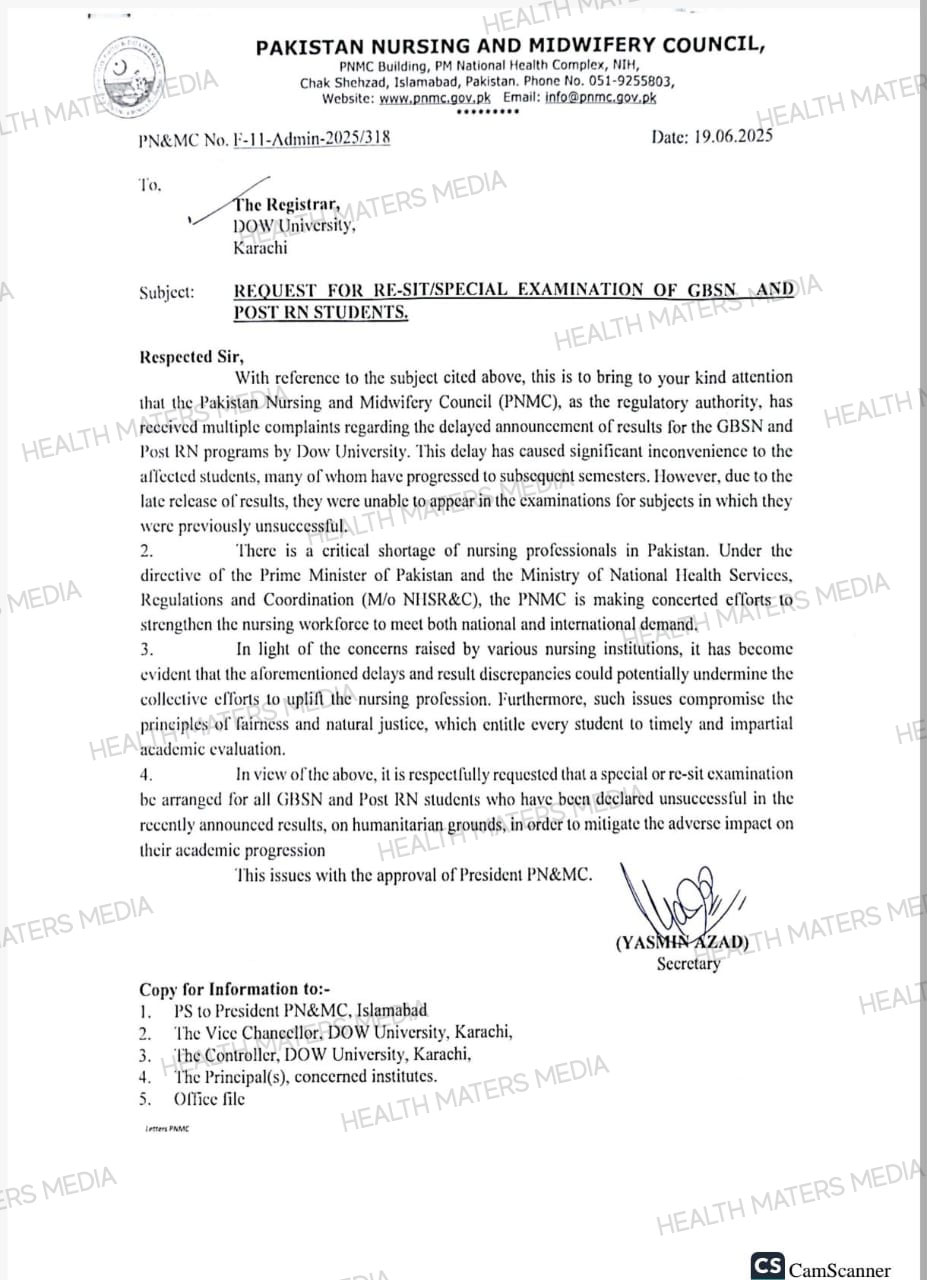
The PNMC intervention followed urgent appeals from nursing colleges after DUHS terminated students from the Generic Bachelor of Science in Nursing (GBSN) and Registered Nurse (RN) programs, including candidates specializing in Specialized Intensive Care Unit (SICU) training. In its letter dated June 19, 2025, the PNMC instructed DUHS to immediately conduct special examinations on humanitarian grounds to protect the academic progression of the affected candidates.
The council’s directive highlighted that delayed result announcements by DUHS had prevented many students from reappearing in failed subjects within the permitted timeframe. PNMC warned that these administrative lapses and subsequent terminations compromise fairness, natural justice, and national efforts to strengthen Pakistan’s nursing workforce during a time of critical shortage.
The PNMC action was warmly welcomed by the nursing community, which hailed the directive as a bold and compassionate step. Nursing associations publicly thanked PNMC Secretary Yasmeen Azad, describing the move as a “courageous, empathetic, and future-saving decision” that supports both the students’ education and the country’s urgent need for trained nurses. Community statements praised the council for recognizing the gravity of the crisis and urged Dow University leadership to implement the directive without delay.
Despite the regulatory directive and strong public support, DUHS has not allowed the special or re-sit examinations. The continued refusal to comply is causing severe distress among students, parents, and nursing institutions. Hundreds of SICU nursing students—who have invested years in critical-care training—remain at risk of losing their degrees and careers, while the country’s shortage of intensive-care nurses grows more acute.