
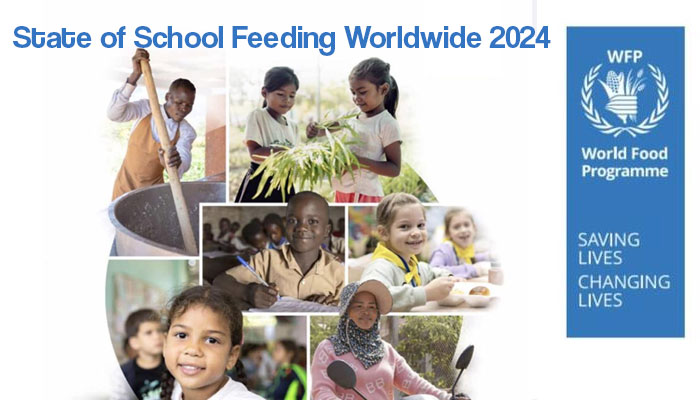
Rome/New York: The United Nations’ flagship publication The State of School Feeding Worldwide 2024, produced biennially by the World Food Programme (WFP) as secretariat of the School Meals Coalition, reveals an unprecedented expansion in school meal programmes globally.
According to the report, 466 million children are now reached worldwide — 80 million more since 2020. Governments are investing US$84 billion annually, reflecting the recognition of school meals as a strategic policy tool with multisectoral impacts on education, health, nutrition, jobs, and food systems.
The findings underscore a major shift in global priorities. School feeding is no longer seen merely as a donor-driven initiative, but rather as a nationally owned investment in children’s futures. Countries are increasingly integrating school health and nutrition into their policy agendas, identifying school meals as a cost-effective mechanism to build stronger societies and food systems.
The report draws on comprehensive data sources, including direct government reporting, global surveys, WFP estimates, and World Bank data, offering the most extensive assessment of coverage, financing, implementation practices, and emerging evidence of impact.
As a flagship global monitoring tool, The State of School Feeding Worldwide highlights the crucial role of the School Meals Coalition in driving progress and ensuring that millions more children benefit from safe, nutritious meals each school day.