
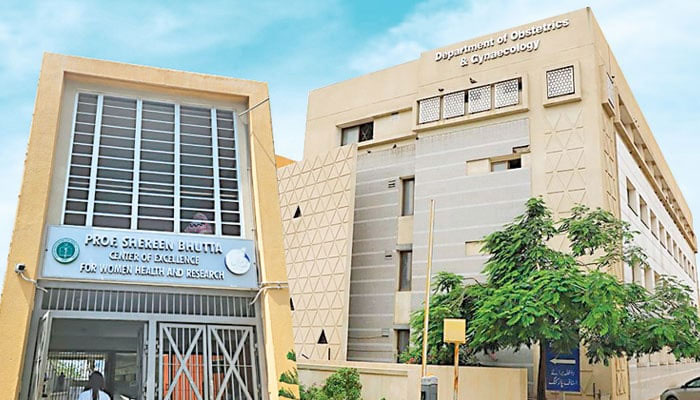
KARACHI: A shocking incident at the Jinnah Postgraduate Medical Centre (JPMC) has raised serious questions about the hospital’s security arrangements after armed men exchanged fire within the hospital premises, resulting in the death of a woman and injuries to another person on Saturday.
According to police, the deceased, identified as Fahmida, was walking outside the Gynecology Ward, where her daughter was under treatment, when a stray bullet struck her in the chest. The bullet was reportedly fired during an exchange of gunfire between two unidentified assailants outside the hospital. Another victim, Razaq, a laborer who was heading to a nearby hotel for tea, was also injured in the crossfire.
The incident has sparked outrage and panic among hospital staff, patients, and attendants, exposing a severe security lapse within one of the country’s largest public-sector hospitals. Witnesses and staff members said there was no visible security mechanism to stop armed individuals from entering or operating near sensitive hospital zones.
Despite having a dedicated security department and private guards, sources revealed that most deployed personnel are primarily tasked with traffic control and parking management, rather than active protection or surveillance. There are no effective security checks at entry points, and the hospital lacks a modern monitoring system or trained response team to handle emergencies.
Healthcare professionals at JPMC have expressed deep concern over their safety, saying that such incidents have created an atmosphere of fear and insecurity.
“If armed men can freely enter hospital premises and open fire, it shows how vulnerable we are while saving lives,” said a senior doctor requesting anonymity.
The Young Doctors Association (YDA) has also raised serious concerns over the incident and the overall security situation at JPMC, calling for immediate government action to safeguard healthcare workers, patients, and attendants. The association stressed that hospitals must be protected zones and that repeated incidents of violence reflect administrative negligence and poor law enforcement coordination.
Human rights and healthcare organizations have echoed these demands, urging an urgent audit of security protocols at all major government hospitals in Karachi, emphasizing that medical institutions must remain safe zones, free from violence and fear.
Authorities have launched an investigation, and police claim to be searching for the suspects involved in the firing. However, the tragic death of Fahmida and the injury of an innocent laborer serve as a grim reminder of the urgent need for robust security reforms at public healthcare institutions.
This scribe contacted the Executive Director of JPMC, Prof. Dr. Shahid Rasul — a surgeon currently occupying the administrative post — and his spokesperson, Mr. Jahangir Durrani, for their version, but no response was received from either of them till the filing of this report.