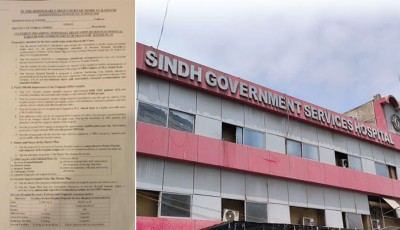

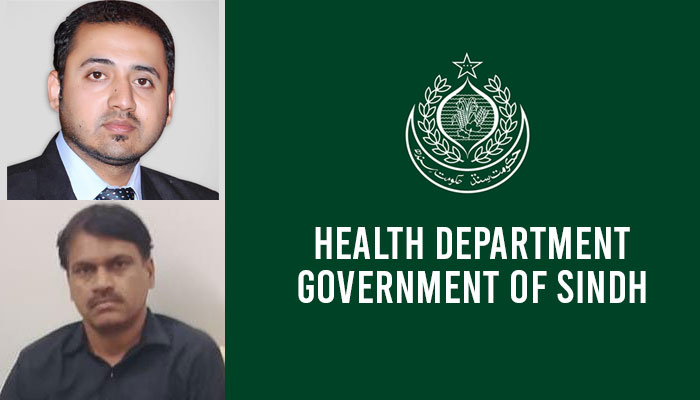
KARACHI: A senior Assistant in the Directorate General of Health Services Sindh has appealed for justice, alleging serious irregularities, favoritism, and violation of Supreme Court orders in the final seniority list of Assistants (BPS-16) issued by the Health Department.
Mr. Muhammad Akram Mallah, who has been serving since 1999 in the Establishment Section of the RMNCH program in Hyderabad, submitted a formal complaint to the Secretary of Health, Government of Sindh, requesting correction in the seniority list. He claims his rightful seniority has been unlawfully undermined in favor of another officer, Mr. Muhammad Sohaib Roomi.
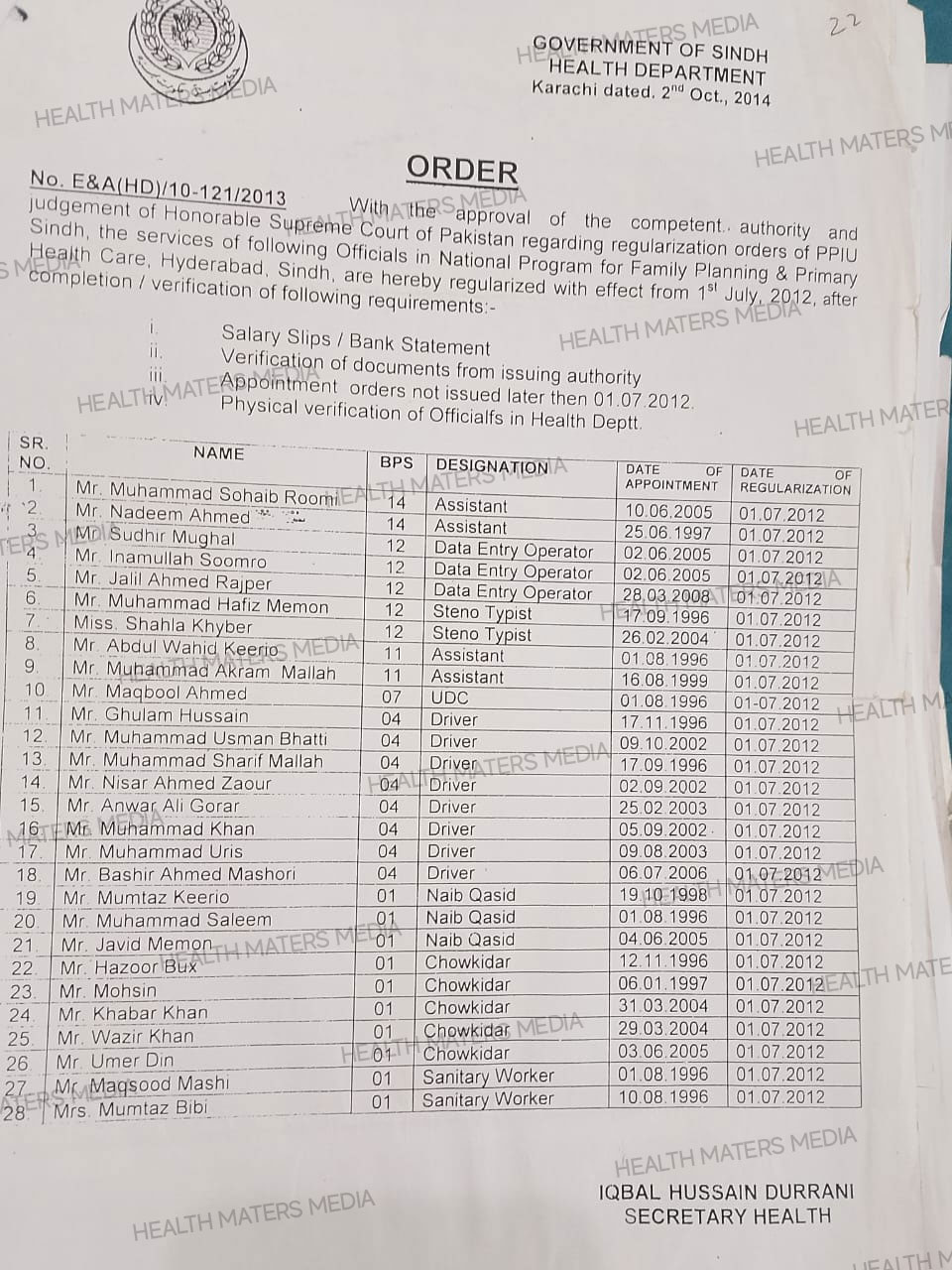
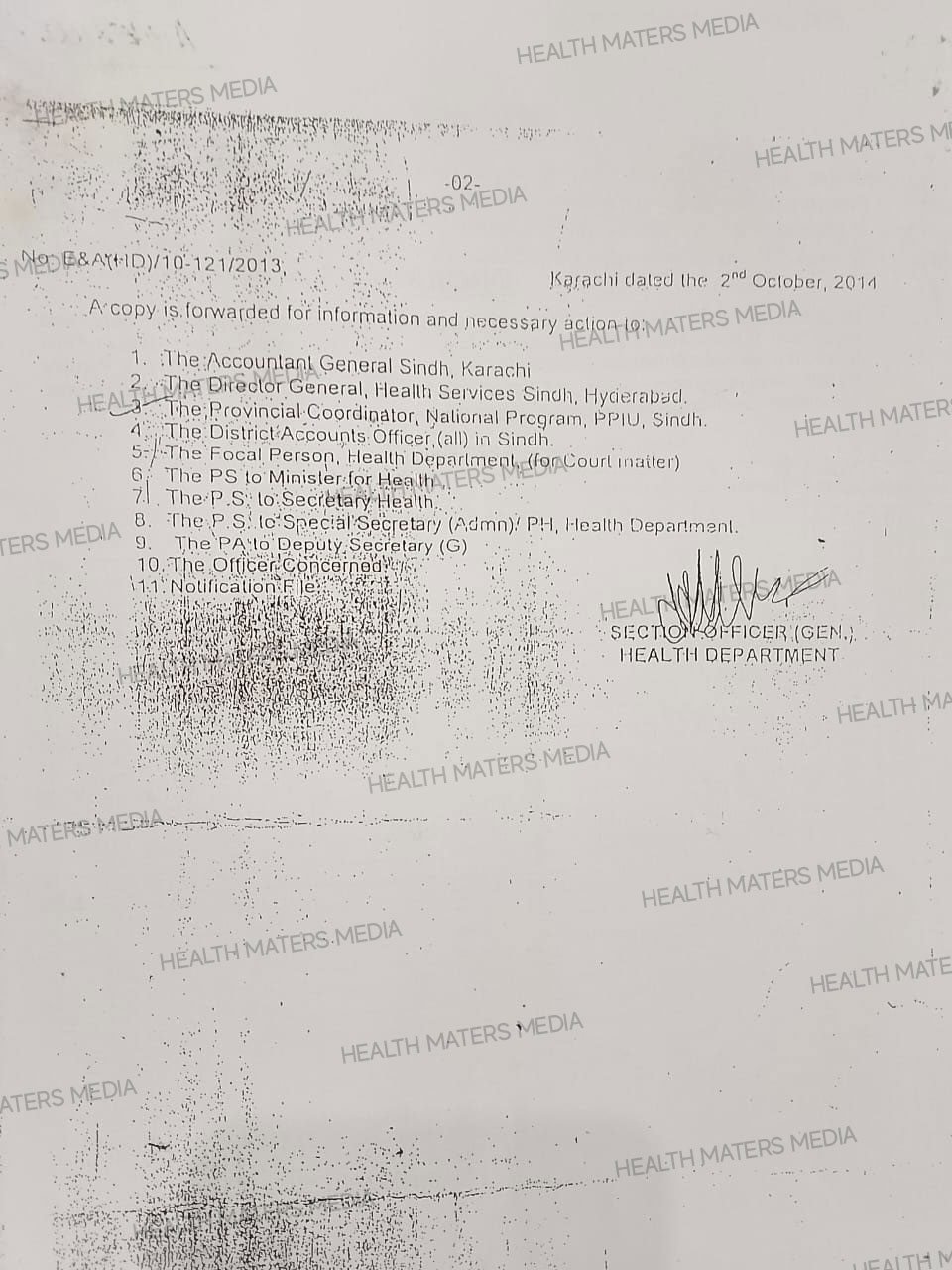
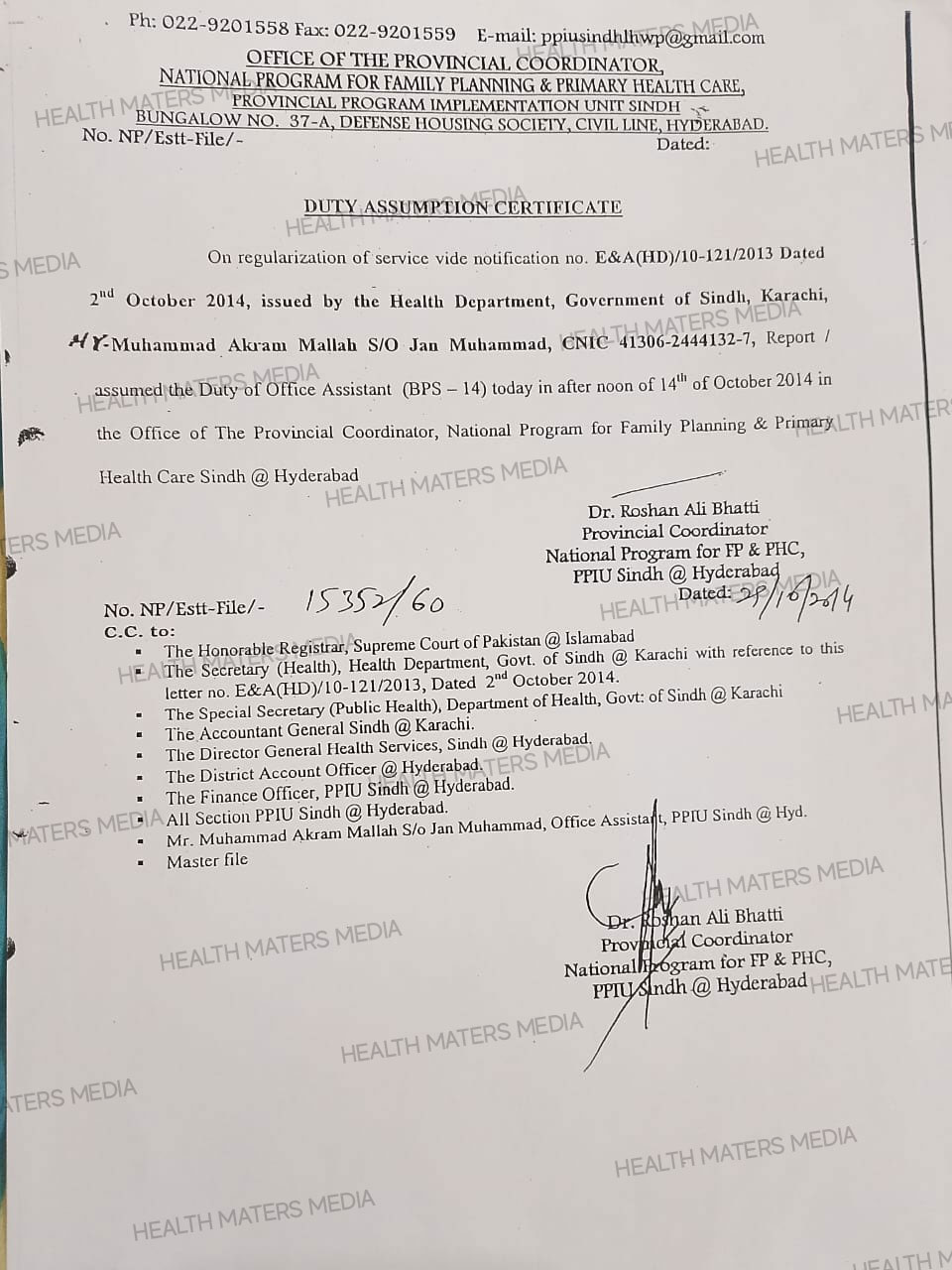
In his detailed appeal dated April 10, 2025, Mallah states that both he and Roomi were regularized as Assistants with effect from July 1, 2012, following the judgment of the Honourable Supreme Court of Pakistan. As per regularization order No. E&A(HD)/10-121/2013 dated October 2, 2014, Mallah’s date of appointment was recognized as August 16, 1999, while Roomi’s appointment was recorded as June 10, 2005.
Citing clear provisions under the Sindh Civil Servants Seniority Rules 1975 and APT Rules 1974, Mallah emphasized that he also holds seniority by age—his date of birth being May 16, 1978, compared to Roomi’s June 21, 1981. Despite these facts, Mallah alleges that the final seniority list approved by the Health Department has placed his name at Serial No. 51, while Roomi has been unjustly placed at Serial No. 32.
Mallah’s complaint specifically points to Section Officer Dr. Muhammad Asad Khatri (PM-II) for allegedly altering the list due to personal bias or "gratification." He argues that this action infringes on legal directives and constitutes clear discrimination. The applicant has appealed to both the Secretary Health and Director General Health Services to restore his rightful position on the seniority list at Serial No. 31.
“This is not only a matter of personal injustice but a violation of merit, transparency, and Supreme Court directives,” Mallah stated in his letter. He further demanded urgent intervention to avoid legal prejudice and restore fairness in departmental proceedings.
The case, if proven, may raise broader concernns about transparency, accountability, and meritocracy within the Sindh Health Department's human resource policies.